
Distal Radius Fracture: Volar Locking Plate Fixation, Early Pronation-Supination, and Hand Function
In short
Volar locking plates provide rigid subchondral fixation for distal radius fractures; early forearm rotation and active digital motion prevent debilitating wrist and hand stiffness.
In this guide (4 sections)
The Surgical Biomechanics of Volar Locking Plate Fixation
Distal radius fractures are the most common skeletal injuries of the upper extremity, accounting for nearly 20% of all fractures seen in emergency departments. While historically managed with cast immobilization or external fixation, Open Reduction and Internal Fixation (ORIF) with a pre-contoured Volar Locking Plate (VLP) has become the gold-standard surgical approach.
Volar locking plates utilize fixed-angle threaded screws that lock directly into the plate, creating a rigid subchondral cantilever beam construct. This fixed-angle stability resists dorsal collapse and articular subsidence even in severely osteoporotic metaphyseal bone, eliminating the necessity for prolonged cast immobilization. Consequently, patients can initiate early active forearm pronation, supination, and digital motion within days of surgery.
Radiographic Parameters and Postoperative Recovery Milestones
| Radiographic / Clinical Parameter | Normal Anatomical Standard | Acceptable Post-Surgical Alignment | Rehabilitation & Functional Milestone | |
|---|---|---|---|---|
| Radial Inclination | 21° to 25° (frontal plane) | >= 15° (prevents carpal scaphoid impingement) | Weeks 1-2: Full active finger composite flexion/extension to prevent edema | |
| Radial Height (Length) | 11 mm to 12 mm | Within 2 mm of contralateral uninjured radius | Weeks 2-4: Active forearm pronation and supination drills; light wrist flexion | |
| Volar (Palmar) Tilt | 11° to 12° palmar tilt | Neutral tilt (0°) to 15° palmar tilt | Weeks 4-6: Gentle isometric wrist strengthening; tenodesis active wrist ext | |
| Ulnar Variance | Neutral (0 mm +/- 1 mm) | Less than 2 mm positive ulnar variance | Weeks 6-8: Progressive progressive resistive loading, putty, light dumbbells | |
| Articular Step-Off | 0 mm (perfect congruent joint) | < 1 mm step-off (prevents radiocarpal arthritis) | Weeks 8-12: Full unrestricted loading; functional lifting and sports return |
Standardized Clinical Rehabilitation Protocols and Tendon Protection
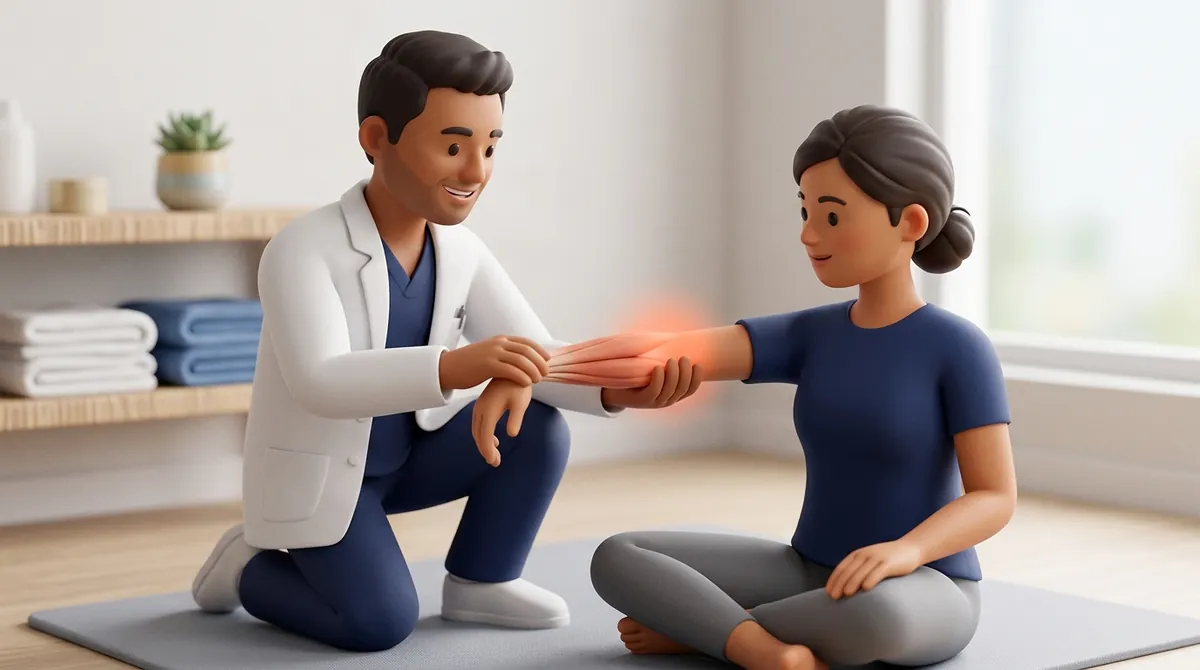
- Active Forearm Pronation and Supination in 90° Elbow Flexion: Anchor the patient's elbow firmly against their rib cage at 90 degrees of flexion to eliminate compensatory shoulder abduction; guide smooth active forearm rotation passes from full pronation to full supination, holding end-range positions for 5 seconds; perform 15 repetitions 4 times daily.
- Flexor Pollicis Longus (FPL) Tendon Rupture Vigilance: Monitor closely for Soong Grade 2 plate prominence (plate extending distal to the 'watershed line'); if the patient reports sudden crepitation or pain during active thumb interphalangeal flexion, discontinue aggressive wrist extension immediately to prevent iatrogenic FPL tendon rupture.
- Prophylactic Vitamin C and Complex Regional Pain Syndrome (CRPS) Screening: Administer 500 mg of Vitamin C daily for 50 days post-injury (demonstrated in randomized trials to significantly reduce the incidence of CRPS); monitor for disproportionate burning pain, shiny skin, or severe edema.
Frequently Asked Questions
How soon after wrist plate surgery can I start moving my fingers and wrist?
You can start moving your fingers, thumb, and elbow immediately on day one after surgery! For the wrist itself, most surgeons allow gentle active bending and twisting (pronation and supination) within 1 to 2 weeks, because the titanium locking plate holds the broken bone firmly in place.
Why is my thumb clicking or aching after my wrist fracture surgery?
The tendon that bends your thumb (flexor pollicis longus) glides directly over the titanium plate. If the plate sits slightly low, the tendon can rub against the metal edge. Always tell your physiotherapist if your thumb starts clicking so we can adjust your exercises and protect the tendon.
Why do my fingers feel stiff and swollen even though it was my wrist that broke?
All the tendons that control your fingers pass directly over your broken wrist bone. Swelling from the fracture glues these tendons together. Making full fists and stretching your fingers straight up toward the ceiling every hour pumps swelling out and stops your fingers from freezing.
Related condition guides


Related recovery guides & articles
BookPhysio.in Editorial Team
The BookPhysio.in editorial team writes and maintains this content, checking it against reliable clinical sources. Content follows our medical review policy: general information only, and no page claims a clinical review until a named registered physiotherapist has signed it off.
Read our medical review policy