
Dry Needling for Peroneal Myofascial Trigger Points: Trigger Point Release and Pain Modulation
In short
Understand how trigger point dry needling of the peroneus longus and brevis releases myofascial tightness, modulates pain, and restores dynamic eversion.
In this guide (4 sections)
Following an acute lateral ankle sprain, clinical attention is overwhelmingly directed toward ligamentous scarring and osseous alignment. However, secondary myofascial pathology within the dynamic lateral evertor musculature represents a major, frequently overlooked source of persistent lateral leg pain, subjective stiffness, and delayed neuromuscular recovery. When an inversion trauma violently stretches the contracting lateral musculature, the peroneus longus and peroneus brevis frequently develop hyperirritable taut bands containing active myofascial trigger points (MTrPs). These trigger points perpetuate localized ischemia, biochemical inflammation, and sustained muscular guarding that inhibits normal reflexive motor control. Trigger point dry needling (DN), administered by certified musculoskeletal physiotherapists, has emerged as a powerful, minimally invasive intervention that mechanically disrupts dysfunctional motor endplates, normalizes local biochemical environments, and accelerates functional restoration.
Navigating Continuous Foot-Down Driving, Potholes, and Indian Urban Commutes
In Indian urban centers, driving automobiles with manual transmissions or commuting on two-wheelers creates repetitive low-grade stress on the peroneal musculature. Navigating heavy traffic across cities like Bengaluru, Mumbai, and Delhi requires continuous, repetitive clutch and accelerator pedal modulation, keeping the lateral ankle stabilizers in sustained isometric tension for hours. For an individual recovering from a lateral ankle sprain, this static loading on an already sensitized peroneal system exacerbates myofascial trigger point development, causing deep, aching lateral leg pain that radiates down into the outer ankle and dorsal foot. Furthermore, walking across uneven street pavements demands continuous, guarded contractions from the outer calf to prevent re-inversion. This chronic protective guarding cements taut muscle bands, turning simple daily walking into a painful, fatiguing ordeal that conventional stretching alone cannot resolve.
The Integrated Trigger Point Hypothesis, Local Twitch Response, and Washout
The neurophysiological mechanism of dry needling is grounded in the integrated trigger point hypothesis formulated by Simons and Travell. Severe eccentric stretch trauma during an ankle sprain causes focal sarcoplasmic reticulum rupture and excessive acetylcholine leakage at the neuromuscular junction. This initiates sustained sarcomere contracture, compressing local capillary beds and inducing severe focal hypoxia. Under hypoxic conditions, local tissues enter an energy crisis: adenosine triphosphate (ATP) is depleted, preventing the calcium re-uptake necessary for muscle relaxation, while pH drops and inflammatory neuropeptides (substance P, calcitonin gene-related peptide, and tumor necrosis factor-alpha) accumulate. Inserting a sterile solid filiform needle into the active trigger point elicits a local twitch response (LTR), an involuntary spinal reflex contraction of the taut muscle fibers. Eliciting an LTR mechanically breaks actin-myosin cross-links, resets muscle spindle tension, and initiates immediate local hyperemia that washes out nociceptive chemical mediators.
Integration into Active Rehabilitation: Post-Needling Mobilisation and Loading
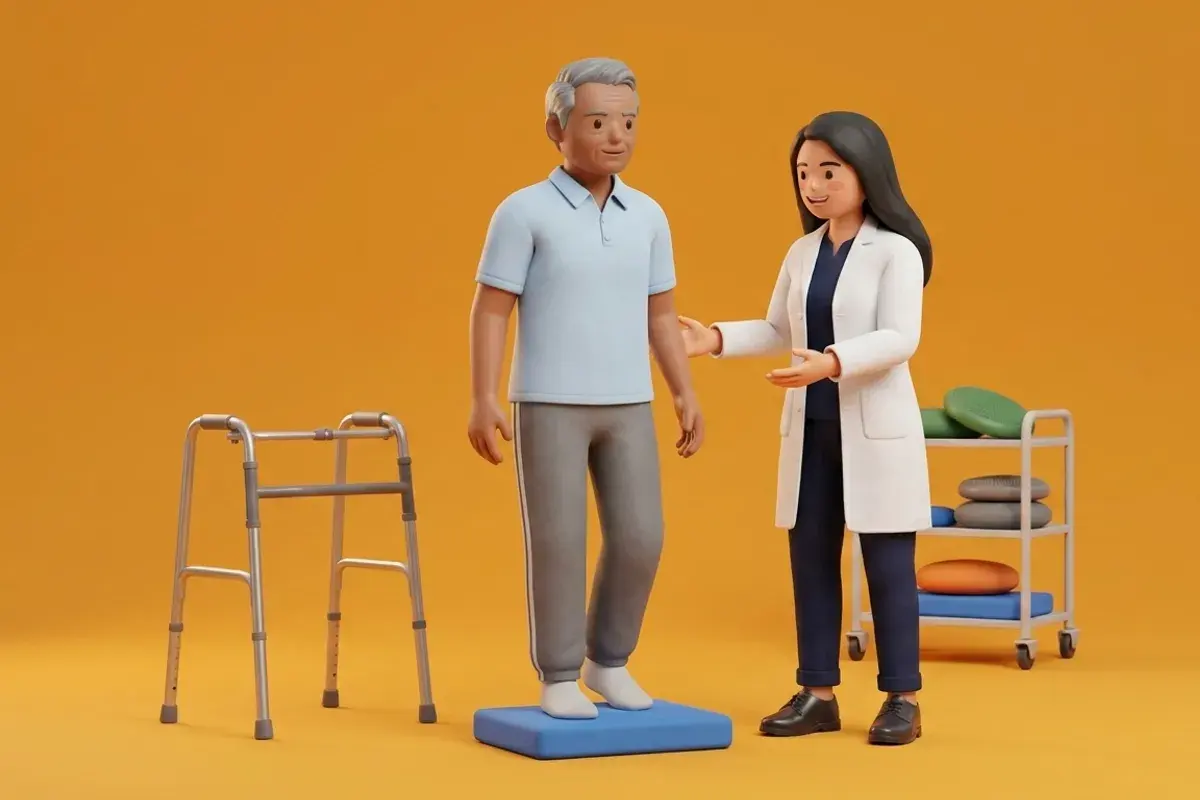
Trigger point dry needling is never utilized as an isolated, standalone passive therapy; rather, registered physiotherapists leverage the post-needling window of reduced pain and muscle release to advance active rehabilitation. Immediately following dry needling, clinicians perform gentle active range-of-motion drills, manual soft-tissue mobilization, and low-load eccentric lengthening of the peroneus longus and brevis to consolidate newly restored muscle resting length. Within twenty-four hours, as post-needling soreness dissipates, patients engage in progressive closed-chain eversion strengthening, balance board perturbations, and dynamic single-leg stabilization drills. Releasing hyperactive myofascial trigger points eliminates reciprocal inhibition of the antagonistic tibialis anterior, restores full joint excursion, and allows the dynamic evertor muscles to recruit motor units rapidly during unexpected balance challenges.
Post-Needling Eccentric Peroneal Muscle Lengthening and Self-Release
Objective: Maintain restored muscle resting length and promote tissue circulation following dry needling intervention
- 1Sit comfortably on the floor with your legs straight out in front of you, placing a tennis ball or foam massage ball beneath the outer upper third of your calf.
- 2Support your body weight with your hands placed behind you, gently rolling your outer calf over the ball until you locate a tight muscular spot.
- 3Pause on the tight area for 30 seconds with gentle, sustained pressure, breathing deeply and avoiding sharp bruising discomfort.
- 4While maintaining light pressure on the ball, slowly point your foot downward and inward (plantarflexion and inversion), feeling a gentle stretch in the outer calf.
- 5Smoothly reverse the movement by pulling your foot upward and outward (dorsiflexion and eversion) for 10 slow, fluid repetitions.
| Physiological Domain | Pre-Needling Myofascial Trigger Point State | Immediate Post-Needling Response | Clinical Functional Benefit |
|---|---|---|---|
| Biochemical Environment | Acidic pH (less than 5.5) with high Substance P and CGRP concentrations | Rapid normalization of local pH and marked washout of inflammatory mediators | Immediate reduction in spontaneous nociceptive pain and hyperalgesia |
| Motor Endplate Activity | Continuous excessive spontaneous electrical activity (SEA) on EMG | Immediate cessation or dramatic reduction of abnormal motor endplate noise | Relief of chronic muscle guarding and involuntary resting spasm |
| Local Microcirculation | Severe focal ischemia and capillary compression within the taut band | Marked reactive hyperemia with enhanced capillary perfusion and oxygenation | Restores cellular ATP synthesis and accelerates tissue recovery |
| Muscle Recruitment Timing | Delayed electromyographic reflex latency (often greater than 90 ms) | Accelerated motor unit recruitment and restored stretch reflex sensitivity | Enhanced dynamic protection against sudden accidental inversion sprains |
When performing dry needling in the upper lateral leg near the fibular head, certified physiotherapists must maintain precise anatomical awareness of the superficial peroneal nerve and the common peroneal nerve winding around the fibular neck. Needling too proximally or in an incorrect orientation can cause direct nerve irritation, presenting as electrical radiating pain or transient numbness down the lateral leg and dorsum of the foot.
Frequently Asked Questions
Will dry needling hurt, and how many sessions will I need for my ankle pain?
During dry needling, you will feel a mild prick as the fine needle enters the skin, followed by a brief, deep ache or sudden muscle twitch as the tight knot releases. Most patients experience mild muscle soreness for twelve to twenty-four hours, followed by substantial relief. Typically, two to four sessions spaced one week apart, combined with active exercise, are sufficient to resolve chronic peroneal trigger points.
Do I need a doctor referral to see an ankle sprain physiotherapist on BookPhysio.in?
BookPhysio.in does not require a doctor referral. Under the National Commission for Allied and Healthcare Professions (NCAHP) Act 2021, patients across India enjoy direct access to autonomous registered physiotherapists. Through BookPhysio.in, you connect directly with verified clinicians and pay per session with transparent fees, completely free from advance package commitments, commission markups, or platform subscription charges.
Related condition guides



Related recovery guides & articles
BookPhysio.in Editorial Team
The BookPhysio.in editorial team writes and maintains this content, checking it against reliable clinical sources. Content follows our medical review policy: general information only, and no page claims a clinical review until a named registered physiotherapist has signed it off.
Read our medical review policy