
Exercise-Induced Lymphokinetic Flow: Deep Breathing and Muscle Pumps
In short
Musculoskeletal contractions and diaphragmatic breathing drive physiological lymphatic return. Discover structured exercise protocols to maximize fluid mobilization.
In this guide (6 sections)
Unlike the cardiovascular system, which relies on the continuous pumping action of the heart, the human lymphatic system possesses no central pump. Lymph propulsion depends entirely on extrinsic mechanical forces (principally rhythmic skeletal muscle contractions, arterial pulsations, and respiratory pressure fluctuations) coupled with the intrinsic contractility of individual lymphangions. Exercise-induced lymphokinetic flow represents a powerful physiological mechanism in Complete Decongestive Therapy. By coordinating diaphragmatic breathing with progressive, low-resistance active muscle contractions under compression containment, patients can significantly accelerate the clearance of protein-rich interstitial fluid and maintain long-term limb volume reduction.
Domestic and Cultural Indian Realities
In Indian society, there is a widespread cultural belief that any person with a swollen arm or leg must avoid all physical activity and maintain total bed rest. Family members frequently discourage recovering cancer survivors or filariasis patients from lifting even light objects or walking around the neighborhood. This prolonged immobility severely reduces skeletal muscle pump activity, causing sluggish venous stasis and rapid pooling of interstitial fluid. Conversely, some enthusiastic individuals attempt aggressive yogic contortions or heavy gym training without wearing compression, which provokes acute microvascular hyperaemia and dramatic swelling rebound. Physiotherapists play a vital role in dismantling myths around bed rest, introducing structured, gentle movement routines that integrate traditional practices like gentle pranayama safely.
Clinical Biomechanics and Microvascular Physiology
Lymphokinetic flow operates through a dual pumping mechanism: the peripheral musculoskeletal pump and the central respiratory thoraco-abdominal pump. When a skeletal muscle contracts against a rigid external compression garment, intramuscular and subcutaneous tissue pressures rise from baseline levels of -1 to +2 mmHg up to 40 to 60 mmHg. This high pressure forces interstitial fluid through open junctions into initial lymphatics and compresses deep collecting channels, propelling fluid past unidirectional bicuspid valves. Concurrently, deep diaphragmatic inspiration lowers intrathoracic pressure to -5 to -8 cmH2O while raising intra-abdominal pressure, compressing the cisterna chyli and drawing large volumes of lymph upward into the thoracic duct to discharge into the left subclavian vein.
Clinical Assessment and Exercise Dosing Framework
Before prescribing an exercise regimen, the clinician assesses cardiovascular fitness, joint range of motion, muscle strength, and baseline limb volume. Exercises must always follow a proximal-to-distal-to-proximal sequence: beginning with central diaphragmatic breathing and neck/shoulder girdle clearance to empty central reservoirs, moving to distal extremity muscle pumps (fingers, wrists, toes, ankles) to mobilise peripheral fluid, and concluding with repeat central breathing to evacuate collected fluid into central circulation.
Targeted Decongestion and Compression Protocols
All remedial exercises must be performed while wearing prescribed medical compression garments or multilayer short-stretch bandages. Performing active exercises without compression produces arterial vasodilation without an external containment wall, which increases capillary filtration and worsens swelling. Sessions should last 15 to 30 minutes, performed at low resistance with slow, deliberate repetitions, allowing sufficient resting intervals to prevent muscular fatigue.
Coordinated Diaphragmatic Breath and Calf Pump Sequence
Objective: Synchronize thoracic duct suction with lower extremity muscle pumping to maximize central lymphatic flow
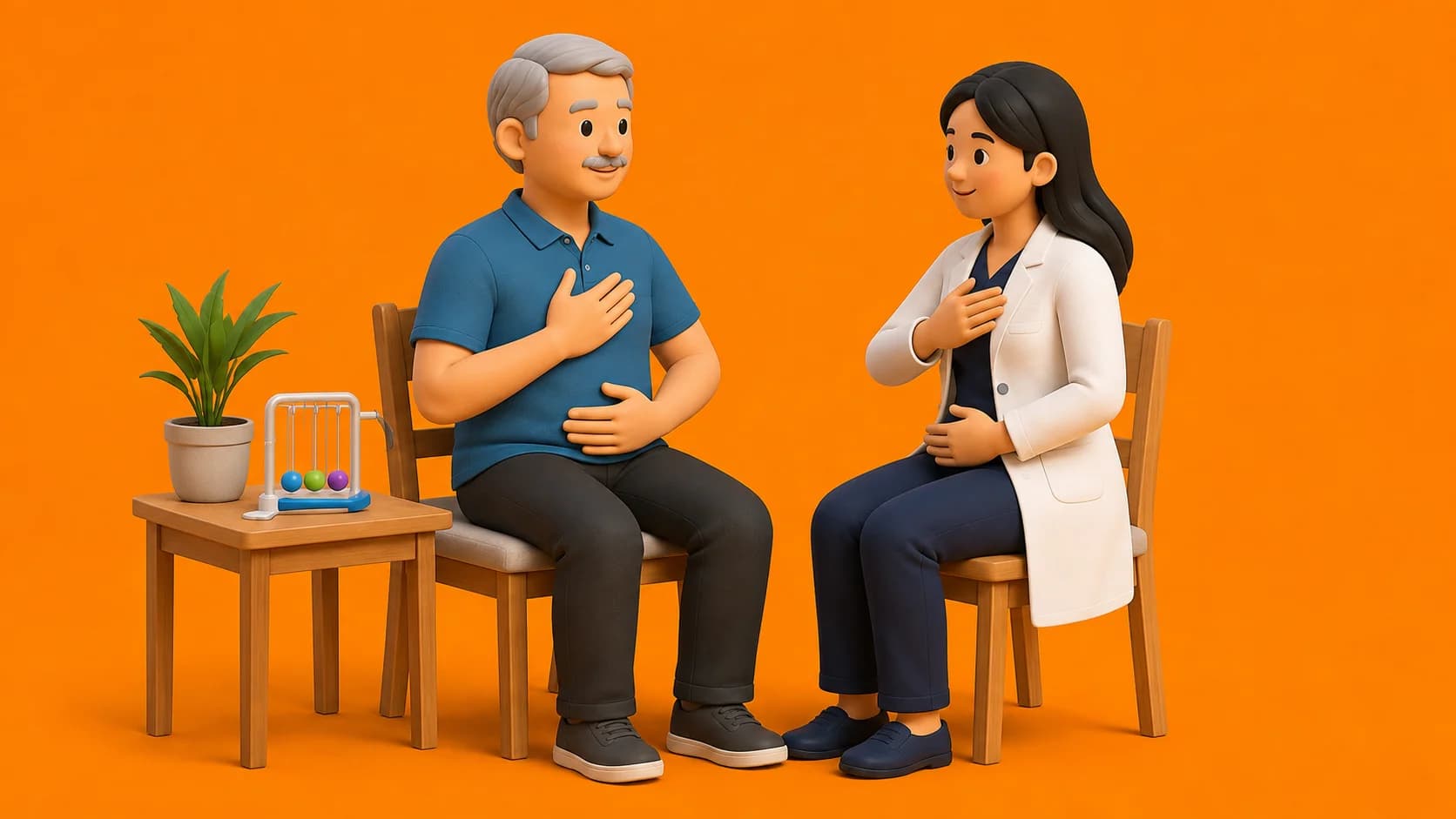
- 1Sit tall on a sturdy chair with your feet flat on the floor, wearing your prescribed lower limb compression garment.
- 2Place one hand on your chest and one hand on your lower belly.
- 3Inhale deeply through your nose for 4 seconds, allowing your belly to expand outward while keeping your chest quiet.
- 4As you slowly exhale through pursed lips over 6 seconds, firmly lift both heels off the floor, squeezing your calf muscles.
- 5Lower your heels smoothly back to the floor, pause for 2 seconds, and repeat the breathing and pumping rhythm.
| Physiological Pump | Anatomical Structure Involved | Primary Lymphokinetic Effect |
|---|---|---|
| Thoraco-Abdominal Pump | Diaphragm, cisterna chyli, thoracic duct | Creates negative intrathoracic suction, drawing abdominal and pelvic lymph into venous angle |
| Skeletal Muscle Pump | Gastrocnemius-soleus complex; biceps and forearm muscles | Compresses deep lymphatic collectors against rigid compression garments, driving fluid past valves |
| Arterial Pulsatile Pump | Adventitial pulsations of accompanying deep paired arteries | Transmits mechanical pressure waves to adjacent collecting lymphatics within shared vascular sheaths |
| Joint Articular Pump | Flexion and extension of ankle, knee, wrist, and elbow joints | Stretches and relaxes surrounding capsular lymphatics, promoting alternating suction and filling |
Red Flags and Urgent Infection Escalation
Patients must halt exercise immediately if they experience sudden dizziness, chest tightness, joint pain, or rapid, uncomfortable swelling in the limb. If the skin becomes hot, fiery red, and acutely tender, or if fever and chills develop, all exercise must cease immediately to prevent spreading bacterial cellulitis, and prompt medical antibiotic assessment must be arranged.
Frequently Asked Questions
Can remedial exercises cure chronic lymphoedema completely?
Remedial exercises cannot regenerate damaged lymphatic vessels or cure chronic lymphoedema. However, structured physiotherapy helps manage swelling and maintain skin integrity by stimulating physiological fluid propulsion, preventing joint stiffness, and maintaining muscle pump efficiency.
Do I need a doctor referral in India to start an exercise programme for lymphoedema?
Under the National Commission for Allied and Healthcare Professions (NCAHP) Act 2021, registered physiotherapists are recognized as primary contact practitioners who independently design therapeutic exercise protocols. You can consult verified clinicians directly via BookPhysio.in and pay directly per session.
Related condition guides


Related recovery guides & articles
BookPhysio.in Editorial Team
The BookPhysio.in editorial team writes and maintains this content, checking it against reliable clinical sources. Content follows our medical review policy: general information only, and no page claims a clinical review until a named registered physiotherapist has signed it off.
Read our medical review policy