
Family Caregiver Bed-Transfer Coaching in Indian Stroke Wards
In short
Coaching family caregivers in acute stroke wards. Safe transfer pivots, spine-sparing body mechanics, and preventing caregiver burnout in Indian households.
In this guide (2 sections)
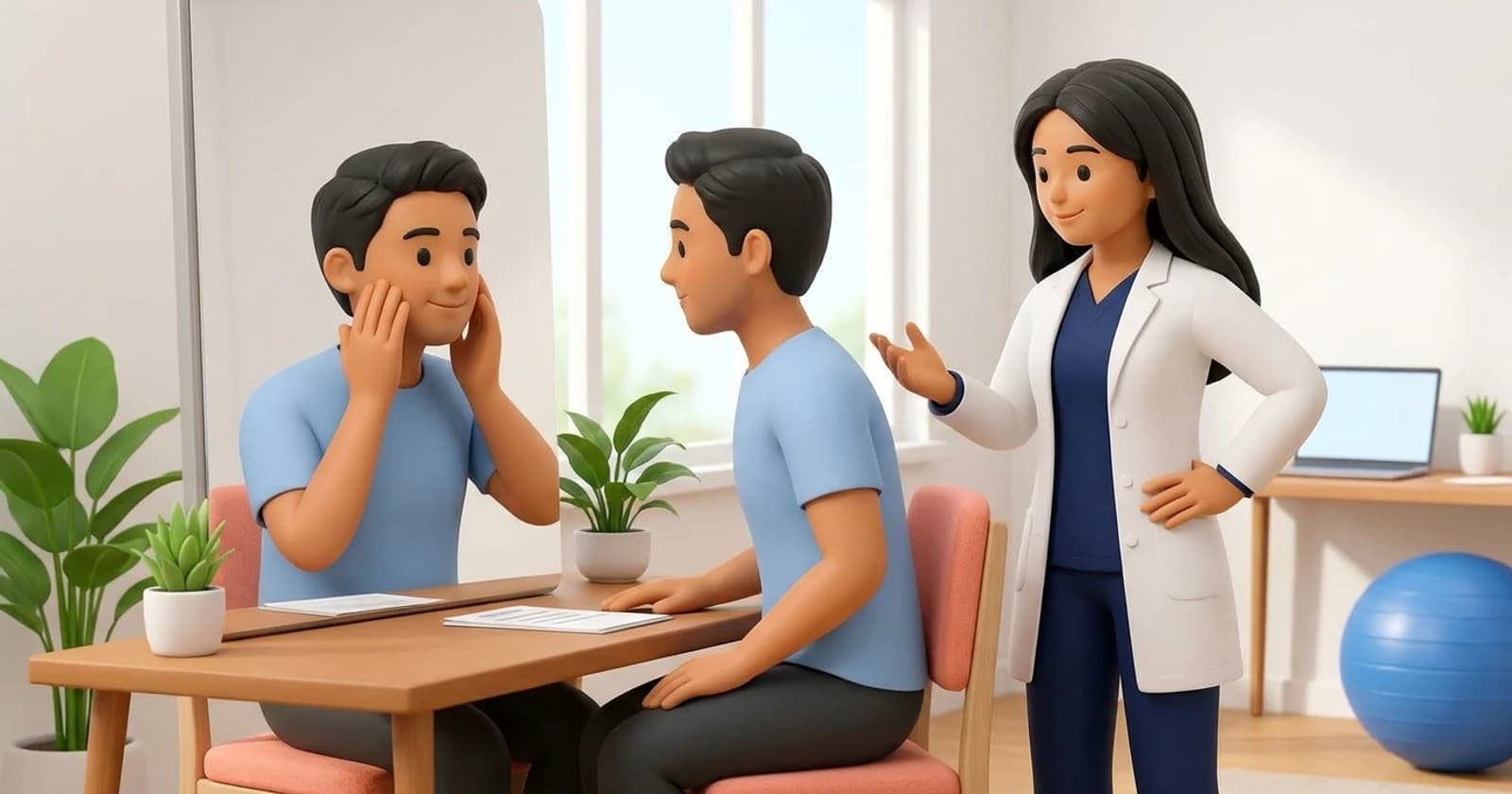
In the Indian healthcare ecosystem, family members serve as the primary bedside attendants and long-term domestic caregivers for acute stroke survivors. Without structured professional training, well-meaning relatives frequently pull on paralyzed limbs, adopt hazardous lifting postures, and risk both patient injury and severe caregiver musculoskeletal strain. Implementing hands-on caregiver coaching in the stroke ward transforms family members into confident, skilled partners in rehabilitation.
Kinesiology of Caregiver Transfers and Biomechanical Safety
Assisting a dependent hemiplegic patient involves substantial mechanical loading: lifting a 70-kilogram patient with a rounded lumbar spine generates over 4,000 Newtons of compressive shear force across the L5-S1 intervertebral disc. Teaching family members the fundamentals of transfer mechanics: wide base of support, bending at the hips and knees, keeping the patient center of gravity close to their own, and utilizing transfer pivot belts, eliminates dangerous spinal flexion while safeguarding the patient vulnerable hemiplegic shoulder from traction trauma.
| Transfer Skill Domain | Common Hazardous Mistake | Biomechanical Safety Technique | Competency Verification | |
|---|---|---|---|---|
| Bed Rolling Preparation | Yanking the paretic arm across the chest to pull body | Bend knees, cross arm gently, roll pelvis and scapula together | Caregiver rolls patient smoothly without arm traction | |
| Supine-to-Sit Transfer | Lifting patient by neck or dragging under the armpits | Lower legs off bed first; push up from pelvis and upper back | Caregiver guides transfer using leg counterweight | |
| Bed-to-Chair Pivot | Lifting patient vertically while twisting lumbar spine | Block paretic knee with caregiver knees; pivot on heels | Caregiver performs transfer with neutral spine | |
| Gait Belt Utilization | Grabbing patient waistband or trousers loosely | Fasten wide webbing gait belt snugly around waist | Caregiver maintains upward underhand grip on belt |
Stepwise Caregiver Coaching and Demonstration Protocol
Caregiver education follows a structured four-stage pedagogy: explanation, therapist demonstration, caregiver practice under direct supervision, and unassisted execution with verbal feedback.
Supervised Stand-Pivot Transfer Coaching Drill for Family Caregivers
Objective: Train family attendants to execute a safe bed-to-chair transfer using proper knee blocking and pelvic control.
- 1Position the destination wheelchair or sturdy armchair at a 45-degree angle to the bed on the patient sound side.
- 2Fasten a wide canvas gait belt securely around the patient waist, ensuring two fingers can slide underneath comfortably.
- 3Instruct the caregiver to position their feet in a wide stance, placing their outer foot against the patient paretic foot.
- 4Instruct the caregiver to hold the gait belt with an underhand grip, cueing the patient: 'Nose over toes, push up and stand.'
- 5Guide the caregiver to brace the patient weak knee with their own knee, pivoting smoothly toward the chair in small steps.
Navigating Joint Family Dynamics and Task Sharing in India
In Indian joint families, caregiving duties often fall disproportionately on a single female relative (daughter-in-law, spouse, or daughter), leading to rapid physical exhaustion and depression. Physiotherapists hold family conferences to distribute caregiving responsibilities: creating a rotating schedule where different family members manage night repositioning, morning bathing, and walking practice, ensuring sustainable home care.
Long-Term Caregiver Health and Sustainable Home Rehabilitation
Equipping family caregivers with ergonomic transfer skills reduces patient readmission rates for falls by over 40 percent and prevents chronic caregiver lumbar disc herniations, ensuring a stable domestic recovery environment.
- Underhand Belt Grip: Always grip the transfer belt with palms facing up; an overhand grip can slip and sprain the caregiver wrists.
- Pivot Toward Sound Side: Whenever possible, position the chair so the patient pivots toward their sound, stronger side initially.
- Family Caregiver Respite: Establish rotating caregiving duties among family members to prevent caregiver burnout and chronic fatigue.
Emphasize to every family member that grabbing a stroke survivor under the armpits (axillae) to lift them is strictly prohibited. This single handling error causes permanent brachial plexus palsy and severe shoulder subluxation.
What is a gait belt, and why is it essential for home care?
A gait belt is a sturdy canvas or nylon belt secured around the patient waist. It provides the caregiver with secure, firm gripping points to assist transfers and walking without pulling on the patient clothing or limbs.
How can an elderly spouse safely transfer a heavy stroke patient?
By using proper mechanical advantage: lowering the bed to match chair height, keeping the patient close, blocking the weak knee, and rocking smoothly forward. If the weight difference is too great, a two-person transfer or mechanical hoist must be arranged.
Do I need a doctor referral to begin home neuro-physiotherapy in India?
Under the National Commission for Allied and Healthcare Professions (NCAHP) Act 2021, patients in India enjoy direct access to registered physiotherapists without requiring a mandatory doctor referral. At BookPhysio.in, you consult verified physiotherapists and pay directly per session without hidden fees or platform commissions.
Related condition guides

Related recovery guides & articles
BookPhysio.in Editorial Team
The BookPhysio.in editorial team writes and maintains this content, checking it against reliable clinical sources. Content follows our medical review policy: general information only, and no page claims a clinical review until a named registered physiotherapist has signed it off.
Read our medical review policy