
Floor Sitting (Sukhasana) and Kneeling Tolerance in Anterior Knee Pain: Biomechanical Adaptations
In short
Discover practical modifications, bolster elevations, and gradual desensitization to maintain traditional Indian floor sitting without knee ache.
In this guide (4 sections)
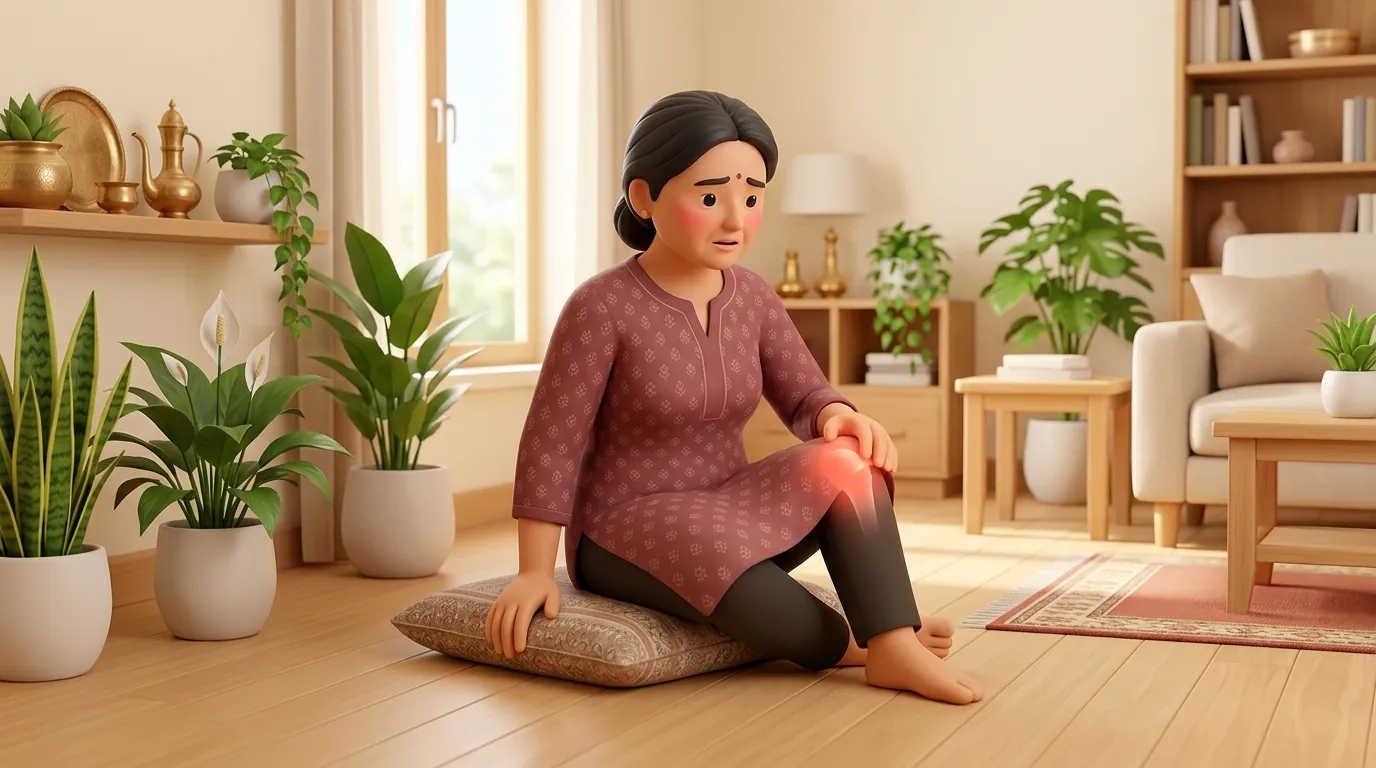
Sitting cross-legged on the floor in traditional postures such as Sukhasana (easy pose), Siddhasana (accomplished pose), or Padmasana (lotus pose), as well as kneeling postures like Vajrasana or Islamic Namaz prayer, forms a fundamental part of daily cultural, religious, and domestic life across India. Whether participating in daily family dining, performing morning meditation and puja, attending temple ceremonies, or gathering for social community functions, floor sitting is deeply woven into social existence. However, maintaining the knees in deep flexion combined with external rotation and axial compression challenges the patellofemoral joint and surrounding periarticular tissues. For individuals developing anterior knee pain or chondromalacia, prolonged floor sitting often produces intense retropatellar throbbing, joint stiffness, and difficulty rising, leading many to fear that they must abandon traditional customs permanently.
Cultural Social Norms, Floor Dining, and Spiritual Practice in India
In traditional Indian households, declining to sit on the floor during religious ceremonies or family meals can cause social discomfort and feelings of premature physical decline. Elders, homemakers, and yoga practitioners frequently force themselves to endure severe knee pain during extended prayers or meditation rather than sit on a chair. Furthermore, rising from the floor requires an explosive concentric quadriceps effort combined with significant hip extension torque, often provoking sharp pain and unsteady balance. By understanding the mechanical principles of joint offloading, physiotherapists can provide practical ergonomic modifications, such as firm meditation bolsters and gradual desensitization, that allow patients to preserve cherished cultural traditions safely.
Flexion-Rotation Mechanics, Capsular Stretch, and Cartilage Shear in Sukhasana
The biomechanics of Sukhasana involve approximately one hundred and ten to one hundred and twenty degrees of knee flexion paired with hip abduction and external rotation. In this orientation, the patella is seated deeply within the trochlear groove, subjected to continuous passive tensile compression from the quadriceps tendon and patellar retinacula. When the hip lacks sufficient external rotation mobility, compensatory rotational torque is transmitted into the knee joint, forcing the tibia into external rotation. This torsional shear displaces the patella laterally against the lateral femoral condyle. In kneeling postures like Vajrasana, body weight is transmitted directly through the anterior tibial tuberosity, patellar tendon, and inferior pole of the patella, provoking intense focal compression on the infrapatellar fat pad and superficial prepatellar bursa.
Pelvic Bolster Elevation, Hip Mobility Drills, and Progressive Floor Conditioning
Physiotherapy enables safe floor sitting by addressing underlying biomechanical bottlenecks and modifying sitting posture. Elevating the pelvis by three to six inches using a firm yoga block, folded cotton blanket, or meditation cushion (zafu) significantly alters lower extremity geometry. By positioning the hips higher than the knees, the required knee flexion angle decreases from one hundred and twenty degrees to eighty or ninety degrees, dramatically reducing retropatellar contact stress and capsular tension. Concurrently, rehabilitation focuses on improving passive and active hip external rotation mobility (piriformis, obturator, and gluteus maximus flexibility), which prevents compensatory knee twisting. Graduated exposure protocols, starting with short five-minute floor sitting intervals followed by active extension movements, safely restore joint tolerance over time.
Bolster-Supported Sukhasana with Pelvic Elevation and Gentle Hip Opening
Objective: Preserve cross-legged floor sitting posture while reducing knee flexion angle and retropatellar contact stress
- 1Place a firm, non-collapsible cushion, yoga block, or folded hard blanket (3 to 6 inches thick) on a carpeted floor.
- 2Sit firmly on the front third of the elevated cushion so your pelvis tilts slightly forward into a comfortable neutral lumbar curve.
- 3Cross your legs loosely in front of you (Sukhasana), allowing your knees to rest comfortably below the level of your hip joints.
- 4If your knees hover without support, place two soft rolled towels directly beneath the outer thighs for additional comfort.
- 5Maintain this supported posture for 5 to 10 minutes, breathing deeply and keeping your spine relaxed and tall, then gently extend both legs straight forward.
| Floor Posture | Knee Joint Angles | Primary Mechanical Stress | Recommended Clinical Adaptation |
|---|---|---|---|
| Sukhasana (Cross-Legged) | 110 to 125 degrees flexion with hip external rotation | Passive retropatellar compression and lateral torsional shear | Elevate hips on 4 to 6-inch firm cushion; support knees with towels |
| Padmasana (Full Lotus) | 130 to 145 degrees flexion with extreme hip external rotation | Severe capsular tension and extreme patellofemoral contact pressure | Avoid during active PFPS; substitute with supported half-lotus or Sukhasana |
| Vajrasana (Kneeling) | 140 to 150 degrees extreme knee flexion | Direct axial body weight compression on patellar tendon and fat pad | Place thick cushion between buttocks and heels to open knee angle |
| Floor-to-Stand Transition | Rapid dynamic excursion from 140 to 0 degrees under load | High concentric quadriceps peak torque and joint reaction force | Use sturdy low stool or chair armrest for upper-body assistance |
Patients who perform frequent kneeling prayers or chores must be monitored for prepatellar or infrapatellar bursitis. If direct kneeling produces localized, ballotable, water-balloon-like swelling over the front of the kneecap, accompanied by warmth and superficial burning pain, direct kneeling must be halted immediately. This condition reflects acute bursal inflammation rather than cartilage wear and requires targeted compression, ice therapy, and soft kneeling pads.
Frequently Asked Questions
Can I ever sit cross-legged on the floor again if I have chondromalacia or knee pain?
Yes, in most cases you can safely return to cross-legged floor sitting by making simple mechanical adjustments. Elevating your hips on a firm cushion or yoga block keeps your knees lower than your hips, which significantly opens the knee angle and removes intense pressure from your kneecap. As your hip flexibility and thigh strength improve through therapy, your tolerance for floor sitting will progressively increase.
Do I need a doctor referral to treat patellofemoral pain on BookPhysio.in?
BookPhysio.in does not require a doctor referral. Under the National Commission for Allied and Healthcare Professions (NCAHP) Act 2021, patients across India enjoy direct access to autonomous registered physiotherapists. Through BookPhysio.in, you connect directly with verified clinicians and pay per session with transparent fees, completely free from advance package commitments, commission markups, or platform subscription charges.
Related condition guides



Related recovery guides & articles
BookPhysio.in Editorial Team
The BookPhysio.in editorial team writes and maintains this content, checking it against reliable clinical sources. Content follows our medical review policy: general information only, and no page claims a clinical review until a named registered physiotherapist has signed it off.
Read our medical review policy