
Foot Drop Rehabilitation and Ankle-Foot Orthosis (AFO) Prescription in Severe L5 Radiculopathy
In short
Master the clinical management of foot drop caused by severe L5 radiculopathy, exploring AFO bracing options, gait retraining, and motor nerve recovery timelines.
In this guide (4 sections)
Foot drop represents one of the most debilitating motor complications of severe lumbar disc herniation, resulting from dense axonal compression of the L5 nerve root or severe common peroneal neuropathy. Clinically characterized by the inability to actively dorsiflex the foot at the ankle joint and extend the great toe, foot drop profoundly disrupts normal human gait biomechanics. During the swing phase of walking, the patient cannot lift the forefoot to clear the ground, forcing the adoption of compensatory movement strategies such as a steppage gait (excessive hip and knee flexion) or circumduction (swinging the leg outward in a wide arc). Beyond the immediate physical disability, foot drop dramatically increases trip-and-fall risks, leads to compensatory hip and knee pain, and signals profound neuro-axonal distress that demands structured orthotic support and intensive neuro-muscular rehabilitation.
Two-Wheeler Pothole Shocks, Indian Squatting Commode Hazards, and IT Chair Stress
In the Indian domestic environment, living with untreated foot drop poses severe safety hazards. Indian homes frequently feature raised stone door sills, loose rugs, floor mattresses, and slippery wet bathroom tiles. An individual with an insensate, dropped foot easily catches their toes on these minor obstacles, leading to severe traumatic falls and bone fractures. Outside the home, navigating uneven street pavements, open storm drains, and crowded public transport becomes hazardous. Commuters who ride motorcycles cannot shift gears upward with an L5 foot drop, while driving manual transmission cars becomes unsafe because the foot cannot smoothly release the clutch or transition between pedals. Early prescription of an appropriate Ankle-Foot Orthosis (AFO) restores immediate gait safety and prevents fall-related injuries.
Annular Disruption, Chemical Radiculitis, and Dermatomal Nerve Root Compression
The neuromuscular pathophysiology of foot drop involves conduction failure within motor axons supplying the tibialis anterior, extensor hallucis longus (EHL), and extensor digitorum longus muscles. In low-grade neuropraxia, direct compression causes localized myelin sheath deformation, creating a temporary conduction block while axonal continuity remains intact; recovery typically occurs over six to twelve weeks once compression is relieved. However, in severe axonotmesis, physical pressure or ischemia causes Wallerian degeneration of the axon distal to the L4-L5 herniation. Peripheral nerve regeneration occurs at a rate of approximately one millimeter per day (roughly one inch per month). Because the distance from the lumbar spine to the tibialis anterior muscle is approximately 600 to 700 millimeters, complete neurological recovery can require twelve to eighteen months, provided compressive forces are removed promptly.
McKenzie Centralization, Neural Dynamic Sliders, and Graded Lumbar Mobilization
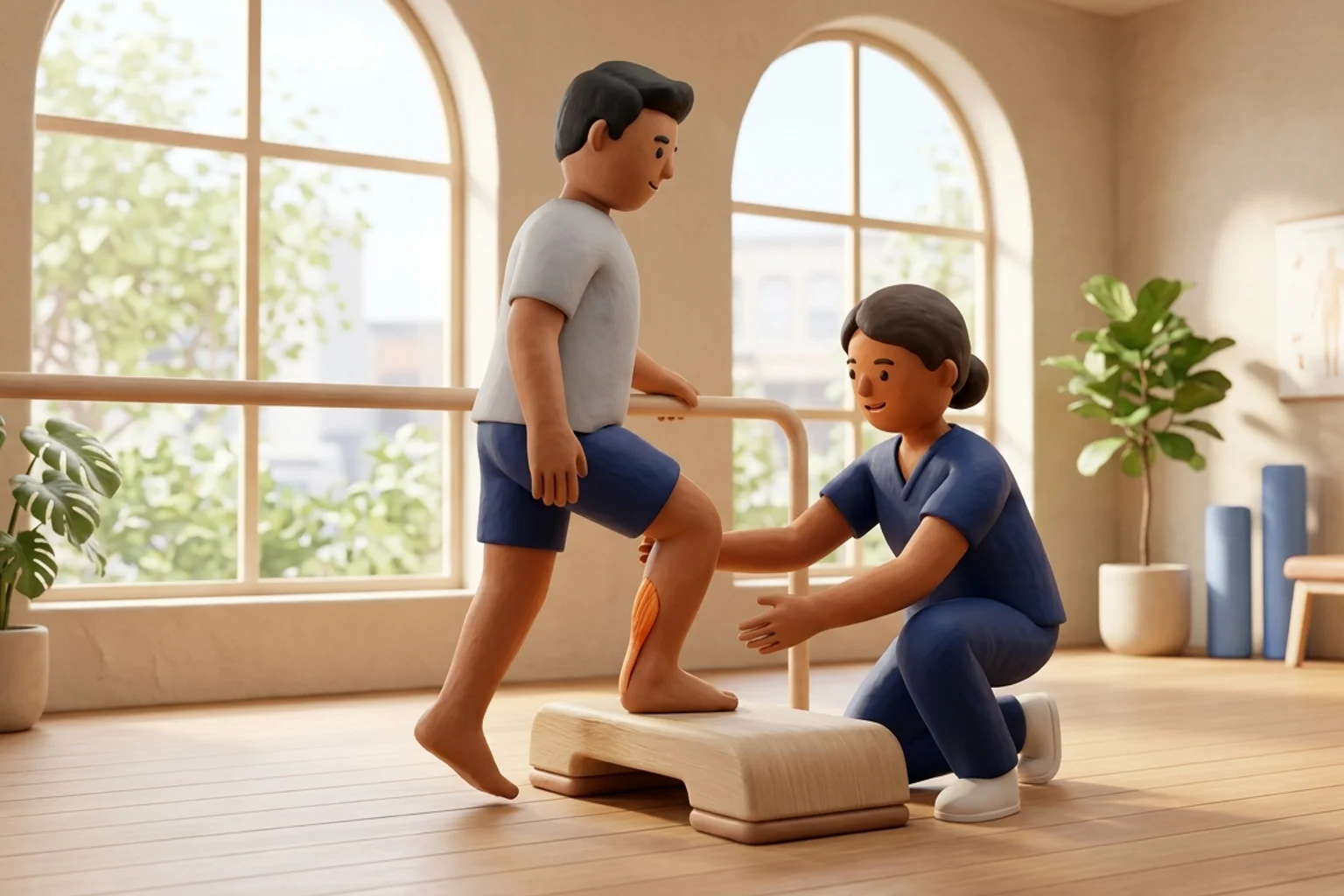
Rehabilitation for foot drop operates on two parallel tracks: immediate biomechanical compensation and long-term neuro-muscular re-education. Immediate safety requires prescribing an appropriate Ankle-Foot Orthosis (AFO). Modern carbon-fiber dynamic response AFOs or low-profile elastic foot-up splints fit comfortably inside standard walking shoes, holding the ankle in neutral dorsiflexion during swing phase while providing energy return at push-off. Active rehabilitation incorporates Neuromuscular Electrical Stimulation (NMES) applied directly over the deep peroneal nerve motor point on the anterior shin, producing rhythmic, functional contractions to prevent muscle fibrosis. Concurrently, physiotherapists guide active-assisted dorsiflexion drills, eccentric lower extremity control, and proprioceptive balance training on firm surfaces.
Active-Assisted Ankle Dorsiflexion with Elastic Resistance Band
Objective: Stimulate motor unit recruitment in the tibialis anterior while protecting the recovering nerve from fatigue
- 1Sit upright on a firm chair with your legs extended forward, resting your heels lightly on the floor.
- 2Loop a light resistance band or a soft cotton towel securely around the ball of your affected foot, holding the ends in your hands.
- 3Actively attempt to pull your foot and toes upward toward your shin using your own muscle strength.
- 4Use your hands on the band to provide gentle assistance at the exact moment your foot stalls, pulling it into full dorsiflexion.
- 5Hold the elevated position for 3 seconds while consciously focusing on activating your shin, then lower the foot slowly over 4 seconds under control.
| Orthotic Device Type | Biomechanical Mechanism & Design | Clinical Advantages | Best Patient Candidate |
|---|---|---|---|
| Dynamic Carbon Fiber AFO | Lightweight composite strut running along posterior calf with flexible footplate | Stores energy during stance; provides dynamic toe clearance and springy push-off | Active individuals, professionals, and patients with partial to moderate weakness |
| Custom Thermoplastic Leaf Spring AFO | Rigid polypropylene shell molded to the posterior calf and plantar foot surface | Maximum mechanical stability; completely eliminates toe drag during swing phase | Patients with complete motor paralysis (Grade 0/5 power) and ankle instability |
| Soft Elastic Foot-Up Orthosis | Padded ankle cuff with an elastic tension strap connecting to shoe eyelets | Extremely low profile; comfortable in domestic settings; fits regular footwear | Mild weakness (Grade 3/5 power) needing slight clearance assistance at low speeds |
Foot drop is a major neurological deficit. If your foot drop develops suddenly over a few hours, continues to worsen rapidly, or is accompanied by numbness around your groin and loss of bladder control, this indicates a surgical emergency requiring immediate hospital admission.
Frequently Asked Questions
Will wearing a foot-drop brace make my leg muscles lazy and weaker?
No, this is a dangerous misconception. When an L5 nerve root is compressed, the muscle cannot receive electrical signals from your spine. An AFO brace simply holds your foot in a safe position to prevent you from tripping, falling, and fracturing bones. Wearing the brace allows you to walk with a normal gait, which actually keeps your hip and leg muscles active while the nerve heals.
Do I need a doctor referral to treat a herniated disc on BookPhysio.in?
BookPhysio.in does not require a doctor referral. Under the National Commission for Allied and Healthcare Professions (NCAHP) Act 2021, patients across India enjoy direct access to autonomous registered physiotherapists. Through BookPhysio.in, you connect directly with verified clinicians and pay per session with transparent fees, completely free from advance package commitments, commission markups, or platform subscription charges.
Related condition guides



Related recovery guides & articles
BookPhysio.in Editorial Team
The BookPhysio.in editorial team writes and maintains this content, checking it against reliable clinical sources. Content follows our medical review policy: general information only, and no page claims a clinical review until a named registered physiotherapist has signed it off.
Read our medical review policy