
Footwear Upper Stitching: Foot Pedal Asymmetry and Postural Care
In short
Industrial footwear factory stitching operators sit at heavy sewing machines with asymmetric foot pedal action. Learn targeted clinical rehabilitation.
In this guide (6 sections)
Industrial shoe manufacturing factories in Ranipet, Ambur, and Jalandhar employ thousands of upper stitching operators. Workers sit at high-speed industrial sewing machines to stitch leather, synthetic panels, and linings into finished shoe uppers. The workstation setup requires continuous unilateral depression of a floor-mounted treadle pedal with the right foot while the upper body leans forward over the needle. This asymmetric setup induces sacroiliac joint dysfunction, pelvic torsion, Achilles tendinopathy, and chronic cervical spondylosis.
Domestic and Cultural Indian Realities
Export shoe factories operate on assembly line systems with high output targets per worker. Operators sit on backless wooden benches or unpadded metal stools for 8 to 10 hours daily. Because the sewing machine motor is controlled by a single right-sided foot pedal, the operator keeps the right hip extended and the right ankle actively pumping while the left leg remains stationary. To monitor stitching accuracy on small leather panels, operators stoop forward with their necks flexed at 50 degrees, maintaining an asymmetric seated posture throughout shifts.
Clinical Biomechanics and Occupational Overuse
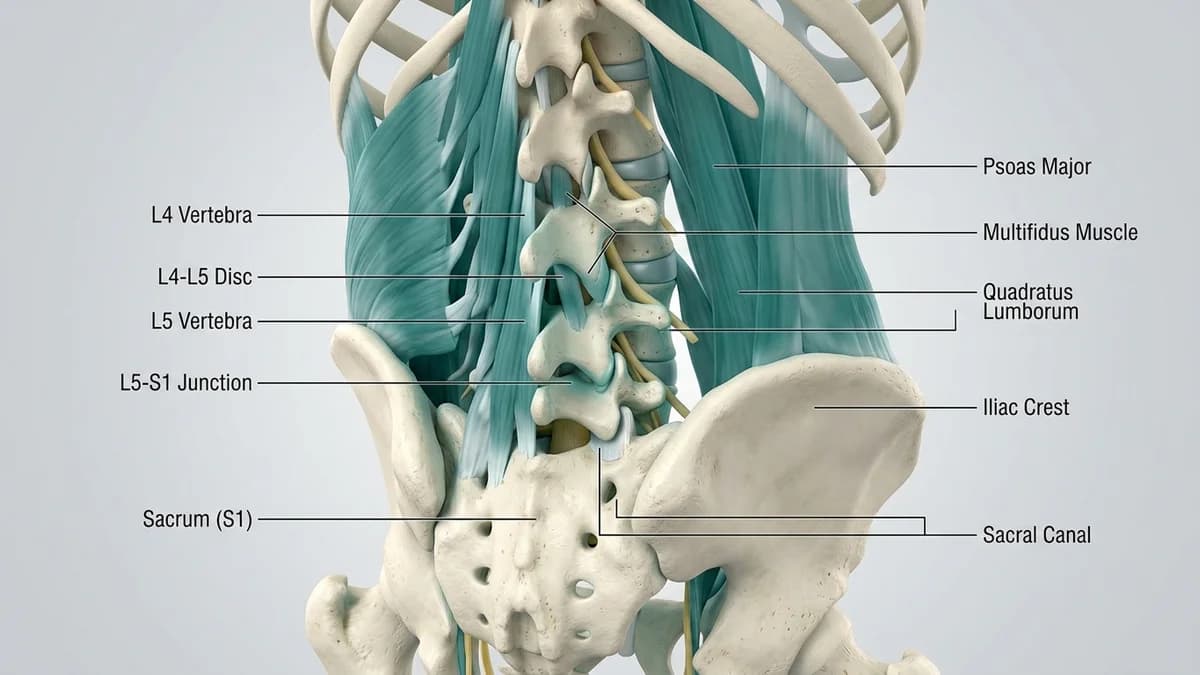
Unilateral foot pedalling creates asymmetric muscular activation across the pelvic girdle. Repeated contraction of the right iliopsoas, rectus femoris, and gastrocnemius rotates the right hemipelvis anteriorly relative to the left, straining the right sacroiliac joint and stretching the sacrotuberous ligament. Simultaneously, leaning forward over the needle flattens the lumbar lordosis and increases intradiscal pressures at L4-L5, while continuous cervical flexion strains the posterior neck extensors.
Workplace Ergonomic Assessment and Postural Metrics
Clinical examination includes the Faber test and Gaenslen test to evaluate sacroiliac joint irritation. Pelvic symmetry is measured by palpating the anterior and posterior superior iliac spines in standing and sitting. Clinicians assess ankle active dorsiflexion with a goniometer and evaluate cervical active range of motion. Palpation reveals spasm across the right piriformis, right quadratus lumborum, and levator scapulae.
Targeted Workplace Conditioning and Stretching Protocols
Ergonomic solutions prioritize providing adjustable operator chairs with firm lumbar backrests and padded armrests. Machine tables should feature dual-switch foot pedals or electronic knee switches, allowing operators to alternate driving legs between morning and afternoon shifts. Rehabilitation emphasizes pelvic realignment exercises, piriformis stretching, and cervical extension drills.
Seated Figure-4 Piriformis Stretch and Pelvic Reset
Objective: Relieve unilateral piriformis spasm and restore sacroiliac joint alignment
- 1Sit upright in your chair with your back tall and feet flat on the floor.
- 2Cross your right ankle over your left knee, creating a figure-4 shape with your legs.
- 3Gently press your right knee downward toward the floor with your right hand.
- 4Keeping your back straight, hinge forward slightly from your hips until a stretch forms in the right glute.
- 5Hold the stretch for 15 seconds while breathing smoothly, then repeat on the opposite side.
| Anatomical Structure | Pathomechanical Impact | Physiotherapy Remediation |
|---|---|---|
| Right Sacroiliac Joint | Pelvic torsion and anterior rotation from unilateral pedal action | Install alternating dual-foot pedal switch and perform pelvic reset drills |
| Right Achilles Tendon | Achilles tendinopathy and restricted ankle dorsiflexion | Eccentric calf drops and active ankle mobility exercises |
| Cervical Motion Segments | 50-degree forward stoop monitoring needle precision | Incline sewing machine table by 15 degrees toward operator |
| Lumbosacral Spine | Flattened lordosis on unpadded stools without back support | Provide ergonomic industrial task chairs with adjustable lumbar support |
Red Flags and Specialist Escalation
Sudden sharp tearing pain in the posterior ankle accompanied by an audible snap and inability to stand on tiptoes indicates an acute Achilles tendon rupture requiring immediate orthopaedic consultation. Severe radiating pain down the leg with foot numbness or progressive weakness demands urgent spinal evaluation for acute disc herniation.
Frequently Asked Questions
Can physiotherapy relieve pelvic and back pain in shoe factory stitchers?
Physiotherapy aims to relieve repetitive strain and restore functional capacity through pelvic realignment exercises, piriformis stretching, and alternating pedal adaptations. Balancing pedal use between both legs rebalances pelvic muscle strain.
Do I need a doctor referral to see a physiotherapist for pelvic pain in India?
Under the National Commission for Allied and Healthcare Professions (NCAHP) Act 2021, patients in India enjoy direct access to registered physiotherapists without requiring a mandatory prior medical referral. At BookPhysio.in, you consult verified physiotherapists and pay directly per session without hidden fees or platform commissions.
Related condition guides



Related recovery guides & articles
BookPhysio.in Editorial Team
The BookPhysio.in editorial team writes and maintains this content, checking it against reliable clinical sources. Content follows our medical review policy: general information only, and no page claims a clinical review until a named registered physiotherapist has signed it off.
Read our medical review policy