
Frozen Shoulder and Diabetes: Glycation Pathophysiology, Bilateral Risks, and Staged Physiotherapy in India
In short
Diabetes multiplies frozen shoulder risk five-fold, causing stubborn capsular cross-linking. Learn the biological mechanisms of glycation, recovery timelines, and specialized physiotherapy.

In this guide (5 sections)
Adhesive capsulitis: frozen shoulder: represents one of the most agonizing and protracted musculoskeletal complications affecting adults with diabetes in India. While frozen shoulder affects roughly 2 to 5 percent of the non-diabetic population, its incidence skyrockets to between 20 and 30 percent among individuals with type 1 or type 2 diabetes mellitus. Given that India is home to over 101 million individuals diagnosed with diabetes, diabetic frozen shoulder represents an enormous clinical challenge across urban and rural healthcare settings alike.
Diabetic frozen shoulder is not simply regular adhesive capsulitis that happens to occur in a diabetic patient; it is a biologically distinct, more aggressive clinical entity. Diabetic patients suffer from higher rates of bilateral involvement (both shoulders affected in up to 40% of cases), substantially more severe loss of external rotation and abduction, a more protracted clinical course often lasting 2 to 3 years, and relative resistance to standard oral anti-inflammatory medications. Specialized, biologically informed physiotherapy is crucial for restoring joint health.
1. Molecular Pathophysiology: Advanced Glycation End-Products (AGEs)
Under sustained systemic hyperglycemia, excess glucose molecules react non-enzymatically with long-lived collagen proteins in synovial tissues: a biochemical pathway known as the Maillard reaction. This process forms irreversible chemical cross-links termed Advanced Glycation End-Products (AGEs) within the dense type I and type III collagen fibrils of the glenohumeral joint capsule, coracohumeral ligament, and subacromial bursa.
These AGE cross-links alter the mechanical properties of the capsule. Normal healthy collagen is pliable and elastic; glycated collagen becomes yellowed, stiff, and brittle, losing its physiological capacity to stretch and glide. Furthermore, AGEs bind to specific cell receptors (RAGE) on synovial fibroblasts, stimulating continuous secretion of inflammatory cytokines (TGF-beta and PDGF). This induces persistent myofibroblastic proliferation, effectively shrinking the joint volume from a healthy 20-30 millilitres down to less than 3-5 millilitres.
| Clinical Characteristic | Diabetic Adhesive Capsulitis | Idiopathic (Non-Diabetic) Adhesive Capsulitis |
|---|---|---|
| Bilateral Involvement Rate | High (35% to 42% develop symptoms in both shoulders) | Low to moderate (10% to 15% experience bilateral spread) |
| Severity of Motion Loss | Profound, rigid capsular contracture; external rotation often <10 degrees | Moderate to severe restriction; responsive to early mobilisation |
| Response to Steroid Injections | Muted relief; carries risk of transient blood sugar spikes (HbA1c monitoring mandatory) | Excellent short-term anti-inflammatory and pain-relieving response |
| Typical Recovery Duration | Extended: 18 to 36 months if unaddressed | Standard: 12 to 24 months with regular conservative care |
2. Glycaemic Control and Indian Dietary Influences
In Indian clinical practice, diabetic frozen shoulder is heavily influenced by glycemic status. Patients with high glycated hemoglobin (HbA1c exceeding 8.0%) experience accelerated collagen glycation and heightened capsular inflammation. Traditional carbohydrate-heavy diets: rich in polished white rice, refined flour (maida), fried snacks, and sweetened tea: promote chronic systemic microvascular inflammation that delays tissue repair.
Physiotherapy for diabetic frozen shoulder must be integrated with strict medical blood glucose regulation. As diabetic patients regain arm mobility, engaging in regular active physical exercise assists in glucose clearance via GLUT-4 transporter translocation, creating a virtuous cycle of improved metabolic control and enhanced capsular compliance.
3. Three-Phase Low-Load Staged Capsular Protocol
Because diabetic collagen is brittle, aggressive high-velocity mobilisations can cause micro-tears and secondary fibrotic scarring. Gentle, prolonged low-load stretching is essential.
Phase 1: Low-Load Prolonged Capsular Stretch (Towel Axillary Slide)
Objective: Gently deform the inferior capsular pouch using low-load prolonged stress (LLPS) to stimulate collagen creep.
- 1Sit beside a smooth dining table with your affected forearm resting on a small folded hand towel.
- 2Slowly slide the towel across the table away from your body, allowing your torso to gently lean forward.
- 3Stop at the point where you feel a firm, comfortable pulling sensation in your armpit, well before sharp pain.
- 4Hold this end-range position steadily for 30 to 45 seconds, breathing smoothly to allow plastic elongation of fibrotic collagen.
- 5Use your torso muscles to sit back upright, sliding the towel back to the start position.
Phase 2: Supported Supine External Rotation with Towel Roll
Objective: Restore anterior capsule glide without stressing the hypertonic subscapularis tendon.
- 1Lie supine on a firm bed with a rolled hand towel placed under your elbow to align the humerus in the scapular plane.
- 2Bend your elbow to 90 degrees with fingers pointing toward the ceiling.
- 3Hold a light wooden stick across your chest with both hands.
- 4Use your healthy arm to push the stick, guiding your affected hand outward toward the bed.
- 5Pause at the barrier of stiffness for 5 seconds, breathing relaxed breaths, and return smoothly to the vertical position.
Phase 3: Scapular Retraction and Glenohumeral Isometric Centring
Objective: Rebuild rotator cuff dynamic stabilization and correct severe scapular dyskinesis.
- 1Stand tall with arms at your sides and elbows bent to 90 degrees.
- 2Gently pinch your shoulder blades together and down toward your waist, opening your chest.
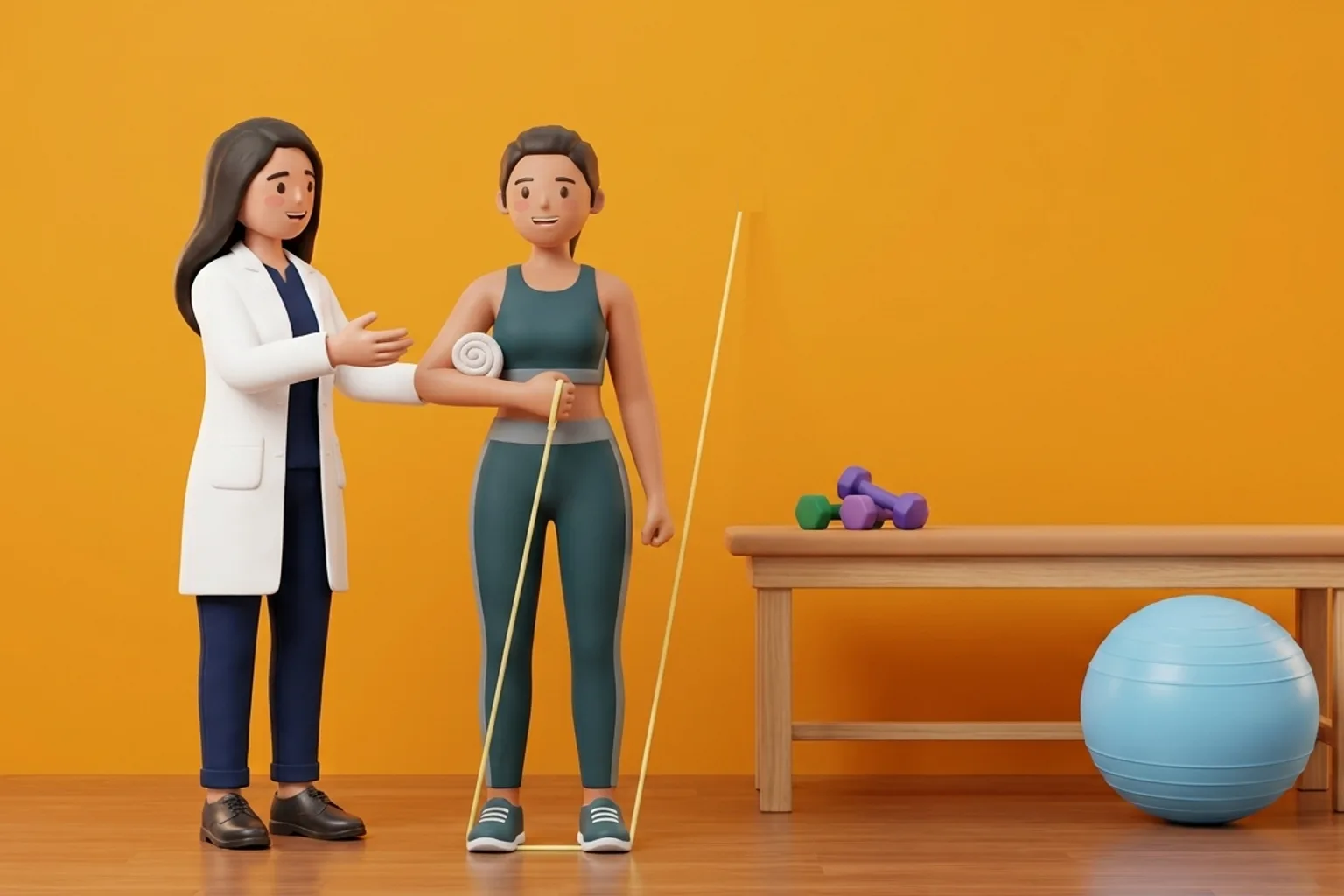
- 3Without letting your elbows drift away from your ribs, perform a subtle outward press against a light resistance loop or towel.
- 4Hold the isometric contraction for 3 seconds, focusing on activating the infraspinatus and lower trapezius muscles.
- 5Release smoothly to neutral.
While subacromial or intra-articular steroid injections are frequently prescribed to relieve severe freezing-stage pain, diabetic patients must be carefully warned: systemic absorption of corticosteroids routinely causes significant spikes in blood glucose levels that can last from 3 to 10 days. Diabetic patients considering a steroid injection must consult their diabetologist, monitor capillary blood glucose 3 to 4 times daily, and temporarily adjust insulin or oral hypoglycaemic medications as directed.
4. Treatment Pathways and Transparent Fee Standards in India
Managing diabetic frozen shoulder requires consistent, long-term therapeutic commitment over several months. Home-visit physiotherapy is especially valuable during acute freezing flare-ups when sleep deprivation and pain make traveling to a clinic difficult. Home visits also allow the physiotherapist to inspect daily home setups and family support.
In major Indian cities, clinic physiotherapy fees range from ₹400 to ₹1,500 per session, while home visits range from ₹600 to ₹2,000. Transparent platforms uphold fair direct-payment standards with zero commission markups.
5. Frequently Asked Questions Regarding Diabetic Frozen Shoulder
Why does diabetes make frozen shoulder so much harder to treat?
Diabetes accelerates the formation of Advanced Glycation End-Products (AGEs), creating dense covalent bonds between collagen fibers that make the joint capsule exceptionally stiff, thickened, and resistant to stretching. Furthermore, diabetes impairs microvascular blood circulation to synovial tissues and blunts the body's natural anti-inflammatory signaling. Consequently, diabetic frozen shoulder requires longer, gentler, and more consistent physical rehabilitation than non-diabetic cases.
Can controlling my HbA1c help my shoulder recover faster?
Yes. Optimizing blood glucose control (aiming for an HbA1c target below 7.0% under your doctor's supervision) reduces the rate of new AGE cross-link formation and dampens systemic low-grade inflammation. While tight glycemic control cannot instantly reverse pre-existing fibrotic scarring, it creates a much healthier metabolic environment that allows physiotherapy exercises to remodel the joint capsule effectively.
Is surgery (arthroscopic capsular release) recommended for diabetic frozen shoulder?
Arthroscopic capsular release or manipulation under anesthesia (MUA) is considered only as a last resort after at least 6 to 9 months of diligent, guideline-adherent physiotherapy have failed to restore functional reach. In diabetic patients, surgical manipulation carries higher risks of postoperative stiffness recurrence, capsular re-adhesion, and delayed wound healing. Conservative physiotherapy remains the gold standard primary treatment.
If my right shoulder has frozen, will my left shoulder get it too?
Between 35 and 42 percent of diabetic individuals who experience frozen shoulder in one arm eventually develop the condition in the other arm within a few years. To minimize this risk, maintain tight glycemic control and incorporate gentle daily shoulder mobility exercises (like pendulum swings and doorway stretches) for both arms, even if the other shoulder feels completely healthy.
Can I do yoga for diabetic frozen shoulder?
Gentle, modified yoga postures that respect your current joint limitations can be helpful for general relaxation and posture. However, forcing stiff shoulders into advanced poses like downward dog, wheel pose, or deep binds can tear the contracted capsule and trigger severe inflammation. Always consult your physiotherapist before attempting yoga, and avoid any pose that places heavy weight on the affected shoulder.
Related condition guides

Related recovery guides & articles
BookPhysio.in Editorial Team
The BookPhysio.in editorial team writes and maintains this content, checking it against reliable clinical sources. Content follows our medical review policy: general information only, and no page claims a clinical review until a named registered physiotherapist has signed it off.
Read our medical review policy