
Rickshaw Pullers: Knee Joint Wear and Biomechanics
In short
Cycle rickshaw and hand-pulled rickshaw pullers transport heavy loads across urban streets. Learn clinical rehabilitation to protect knees and spine.
In this guide (6 sections)
Cycle rickshaw and hand-pulled rickshaw operators in Kolkata, Delhi, and Varanasi perform demanding physical labour under extreme environmental conditions. Operators propel heavy passenger vehicles weighing 150 to 300 kilograms across congested city streets. To overcome resting inertia and climb road bridges, pullers stand on the pedals, leaning their entire body forward with forceful knee extension. This repetitive high-resistance propulsion produces severe patellofemoral joint loading, meniscus tear risk, Achilles tendinopathy, and lumbar facet irritation.
Domestic and Cultural Indian Realities
Rickshaw pullers are typically migrant workers living in shared rented spaces or sleeping on their vehicles. They work 10 to 12 hours daily, navigating traffic, monsoon-flooded roads, and steep flyovers. Single-gear pedal drivetrains demand immense muscular effort to start from a standstill. Many pullers use basic rubber flip-flops, which slip on wet metal pedals and provide no arch cushioning. Pullers accept knee crepitus and leg exhaustion as routine physical tolls of their trade.
Clinical Biomechanics and Occupational Overuse
Pedalling a loaded rickshaw from a dead stop generates compressive forces across the patellofemoral joint exceeding five times body weight. When the puller stands on the pedals, the knee extends under heavy quadriceps contraction against a fixed resistance. This mechanism forces the patella firmly against the femoral trochlea, wearing away articular cartilage and causing chondromalacia patellae. Simultaneously, sustained forward trunk lean stretches the hamstrings and strains the lumbosacral erector spinae.
Workplace Ergonomic Assessment and Postural Metrics
Clinical examination includes patellar crepitus assessment, the Clarke test, joint line tenderness evaluation, and measurement of quadriceps angle (Q-angle). Clinicians test hamstring and calf flexibility with a goniometer. Cardiovascular evaluation monitors resting heart rate and blood pressure to assess baseline cardiorespiratory endurance.
Targeted Workplace Conditioning and Stretching Protocols
Ergonomic interventions advocate retrofitting cycle rickshaws with multi-speed gear hubs or electric motor-assist kits (e-rickshaws), reducing peak pedalling resistance by up to 60 percent. Pullers perform closed-chain isometric quadriceps sets and gastrocnemius stretching during layover intervals at rickshaw stands.
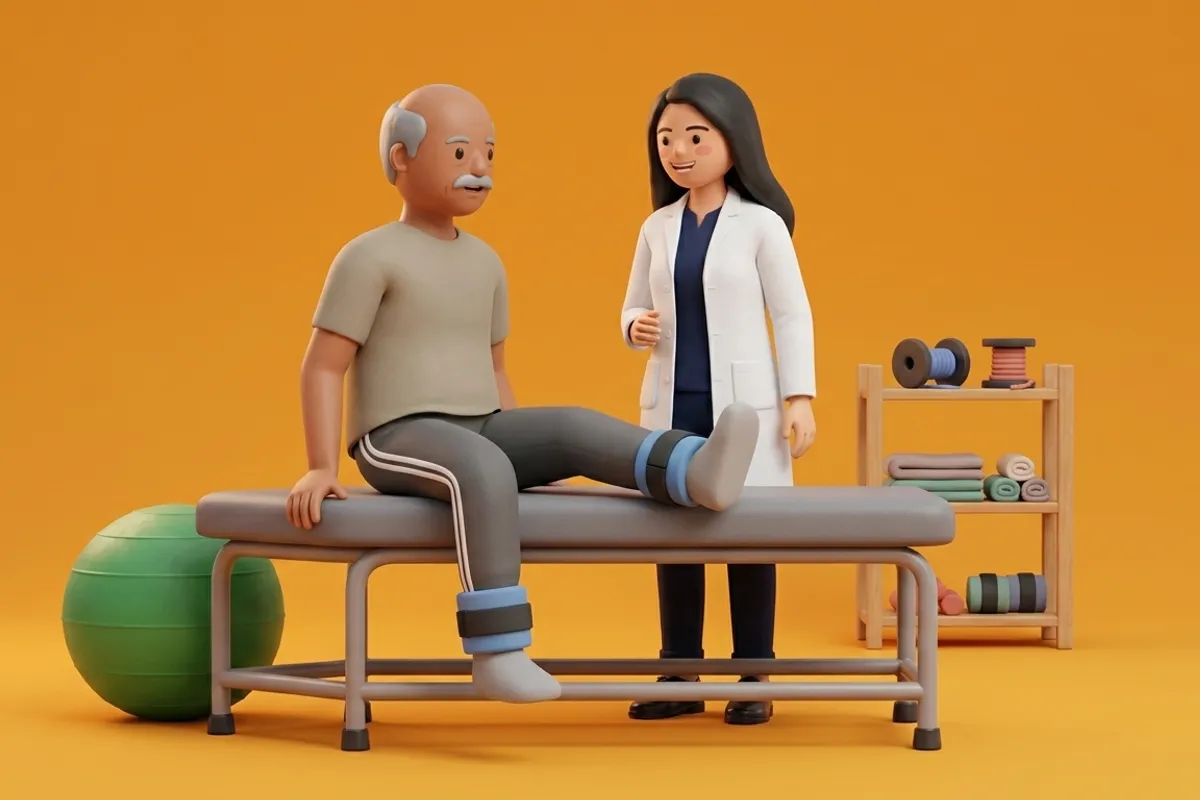
Seated Isometric Quadriceps Set with Knee Towel Roll
Objective: Strengthen the vastus medialis obliquus and improve patellar tracking without joint friction
- 1Sit on your rickshaw seat or a bench with your affected leg extended straight in front of you.
- 2Place a small rolled towel or cloth beneath the back of your knee.
- 3Tighten your thigh muscles firmly, pressing the back of your knee down into the towel roll.
- 4Hold the strong contraction for 6 seconds while keeping your toes pointing straight up.
- 5Relax the thigh completely for 3 seconds, then repeat the contraction smoothly.
| Joint Region | Mechanical Stress Mechanism | Physiotherapy Remediation |
|---|---|---|
| Patellofemoral Articulation | High compressive joint friction during standing pedal starts | Install electric assist kits and perform isometric VMO sets |
| Achilles Tendon | Repetitive high-torque plantarflexion against pedal resistance | Eccentric calf drops and wear stiff-soled laced footwear |
| Lumbar Spine | Excessive forward trunk lean to apply body weight | Core stabilization drills and adjust handlebar height upward |
| Subtalar Joint | Foot slippage on wet pedals leading to inversion sprains | Fit wide serrated pedal cages with non-slip rubber grip |
Red Flags and Specialist Escalation
True joint locking where the knee cannot be fully straightened, significant joint effusion with heat, or inability to bear weight after a painful pop indicates an acute meniscal or cruciate ligament tear requiring prompt orthopaedic surgical evaluation. Exertional chest pressure, severe breathlessness, or dizziness during pedalling demands immediate emergency cardiovascular care.
Frequently Asked Questions
Can physiotherapy help cycle rickshaw pullers with severe knee pain?
Physiotherapy aims to relieve repetitive strain and restore functional capacity through isometric quadriceps strengthening, patellar mobilization, and hamstring stretching. Strengthening stabilizing muscles relieves pressure on knee cartilage and restores pain-free pedalling.
Do I need a doctor referral to see a physiotherapist for knee pain in India?
Under the National Commission for Allied and Healthcare Professions (NCAHP) Act 2021, patients in India enjoy direct access to registered physiotherapists without requiring a mandatory prior medical referral. At BookPhysio.in, you consult verified physiotherapists and pay directly per session without hidden fees or platform commissions.
Related condition guides



Related recovery guides & articles
BookPhysio.in Editorial Team
The BookPhysio.in editorial team writes and maintains this content, checking it against reliable clinical sources. Content follows our medical review policy: general information only, and no page claims a clinical review until a named registered physiotherapist has signed it off.
Read our medical review policy