
Hemiplegic Shoulder Subluxation Prevention in the Flaccid Day 1-3 Stage
In short
Preventing hemiplegic shoulder subluxation during acute flaccid stroke. Sulcus sign assessment, supportive positioning, and avoiding traction injuries.
In this guide (2 sections)
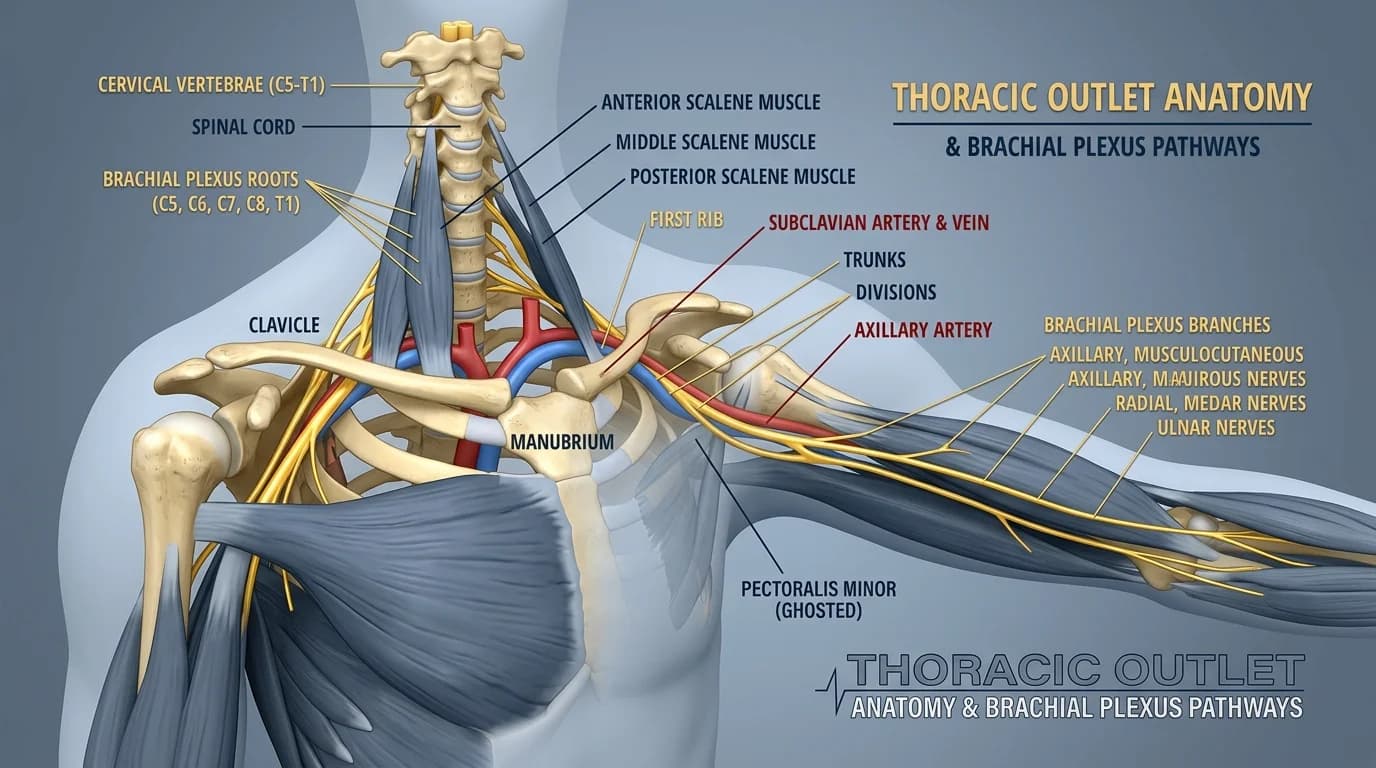
Hemiplegic shoulder subluxation occurs in up to 80 percent of stroke survivors presenting with dense flaccidity during the acute Day 1 to 3 stage. The human glenohumeral joint is an intrinsically unstable ball-and-socket mechanism reliant almost entirely on dynamic rotator cuff and deltoid tone to keep the humeral head seated within the shallow glenoid fossa. When acute stroke abolishes dynamic muscle tone, the dead weight of the arm pulls the humeral head inferiorly, over-stretching the joint capsule and precipitating chronic joint pain.
Biomechanics of Inferior Glenohumeral Subluxation in Flaccidity
In normal shoulder mechanics, the supraspinatus and posterior deltoid contract tonically to seat the humeral head snugly into the glenoid cavity, while the serratus anterior and trapezius maintain upward glenoid inclination. Acute corticospinal disruption leads to flaccid paralysis (Brunnstrom Stage 1). The scapula downwardly rotates and retracts, tilting the glenoid fossa downward. Gravity acts unopposed on the dangling arm, stretching the superior capsule and coracohumeral ligament, resulting in a visible gap between the acromion and humeral head known as the sulcus sign.
| Subluxation Grade | Palpable Fingerbreadth Gap | Capsuloligamentous Risk | Immediate Support Requirement | |
|---|---|---|---|---|
| Grade 0: None | No gap between acromion and humeral head | Normal joint integrity preserved | Proper positioning during sleep and turns | |
| Grade 1: Minimal | Half to one fingerbreadth palpable gap | Early capsule stretching, minimal micro-trauma | Contoured pillow support in bed, arm trough in chair | |
| Grade 2: Moderate | One to two fingerbreadths palpable gap | Significant capsular laxity, brachial plexus traction risk | Neuromuscular taping, lap tray support, supportive sling | |
| Grade 3: Severe | Greater than two fingerbreadths palpable gap | Severe mechanical dislocation, high risk of complex regional pain | Rigid strapping, functional electrical stimulation, zero arm dangle |
Bedside Subluxation Palpation and Supportive Positioning Protocol
Shoulder assessment is conducted with the patient supported in sitting or high recline. The clinician palpates the space between the lateral acromion edge and the apex of the humeral head. If subluxation is detected, supportive positioning is immediately established.
Passive Scapular Upward Rotation and Humeral Approximation Drill
Objective: Re-align the humeral head into the glenoid fossa and relieve tensile stress on the superior shoulder capsule.
- 1Support the patient in sitting with the trunk stabilized against a firm backrest.
- 2Cradle the paretic forearm in your own forearm, holding the elbow flexed at 90 degrees.
- 3Place your opposite hand over the lateral border and inferior angle of the patient scapula.
- 4Gently guide the scapula into upward rotation and protraction, bringing the glenoid fossa under the humeral head.
- 5Apply gentle, pain-free axial compression through the humerus upward into the glenoid cavity, seating the joint.
Indian Domestic Bedside Realities and Caregiver Coaching
In Indian households, well-meaning family caregivers frequently pull the patient by the weak arm or under the axilla to help them sit up in bed or reach for a glass of water. This single handling error causes irreversible rotator cuff tears and painful subluxation. Physiotherapists must teach family members to support the patient through the shoulder blade and pelvis, keeping the arm securely cradled in a folded dupatta or supportive sling.
Long-Term Prevention of Hemiplegic Shoulder Pain
Uncorrected early subluxation leads directly to hemiplegic shoulder pain, adhesive capsulitis, and complex regional pain syndrome (CRPS type 1) within 4 to 8 weeks. Systematic joint protection in the first 72 hours preserves soft tissue architecture, ensuring that when voluntary motor recruitment returns, the joint remains supple and pain-free.
- Daily Fingerbreadth Tracking: Palpate the acromiohumeral sulcus daily to detect emerging subluxation before gross deformity develops.
- Strict No-Pull Mandate: Enforce a zero-tolerance policy against pulling or lifting the patient by the paretic arm or axilla.
- Comprehensive Bed and Chair Support: Ensure the arm is supported at all times: on a pillow in bed, an arm trough in a wheelchair, or a sling during transfers.
Never allow anyone to pull the weak arm during rolling, sitting, or standing transfers. A single forceful tug on a flaccid arm can permanently rupture the rotator cuff and stretch the brachial plexus.
How do you measure shoulder subluxation at the bedside?
The clinician uses the fingerbreadth palpation method. Place your index or middle finger horizontally between the acromial arch and the top of the humeral head. A gap of one, two, or more fingers indicates moderate to severe subluxation.
Should a hemiplegic arm be kept in a sling all day?
No. Standard collar-and-cuff slings hold the arm in internal rotation and adduction, promoting contracture. Slings should only be used during upright transfers and walking; while sitting or resting in bed, the arm should be supported on a lap tray or pillow.
Do I need a doctor referral to begin home neuro-physiotherapy in India?
Under the National Commission for Allied and Healthcare Professions (NCAHP) Act 2021, patients in India enjoy direct access to registered physiotherapists without requiring a mandatory doctor referral. At BookPhysio.in, you consult verified physiotherapists and pay directly per session without hidden fees or platform commissions.
Related condition guides



Related recovery guides & articles
BookPhysio.in Editorial Team
The BookPhysio.in editorial team writes and maintains this content, checking it against reliable clinical sources. Content follows our medical review policy: general information only, and no page claims a clinical review until a named registered physiotherapist has signed it off.
Read our medical review policy