
Hip Internal Rotation Deficit (HIRD): Restoring Capsule Compliance without Impingement
In short
Learn how restoring hip internal rotation compliance decompress the joint and eliminates anterior groin pinching without provoking bony impingement.
In this guide (4 sections)
Loss of physiological hip internal rotation represents the earliest, most sensitive, and most clinically reliable physical finding in both degenerative hip osteoarthritis and femoroacetabular impingement. While normal asymptomatic hips demonstrate thirty to forty degrees of passive internal rotation in flexion, individuals with joint pathology frequently exhibit a severe Hip Internal Rotation Deficit (HIRD), with motion restricted to less than ten or fifteen degrees. This restriction is primarily driven by progressive contracture and thickening of the posterior and inferior joint capsule, combined with protective guarding in the deep external rotators. Crucially, a tight posterior capsule acts like an unyielding tether: as the hip flexes during daily activities, the contracted posterior tissues prevent the femoral head from gliding backward, forcing it into an obligate anterior and superior translation. This abnormal excursion jams the femoral neck directly into the anterosuperior labrum, worsening impingement symptoms. Restoring capsular compliance is essential for re-establishing normal joint kinematics.
Tying Shoelaces, Cutting Toenails, and Indian Floor Sitting Realities
The functional consequences of a hip internal rotation deficit are felt throughout daily domestic life in Indian households. Everyday personal hygiene and dressing tasks become frustratingly difficult: reaching down to wash one's feet, trimming toenails, or tying shoelaces requires the hip to flex and rotate simultaneously. When internal rotation is lost, patients cannot reach their feet without twisting their spine awkwardly or experiencing sharp groin pinching. Furthermore, while traditional Indian floor sitting (Sukhasana) requires substantial external rotation, transitioning out of floor sitting back to standing necessitates smooth internal rotation to clear the floor. Individuals with severe HIRD find themselves trapped on the floor, unable to pivot their legs without acute discomfort. Restoring capsular extensibility eases these daily personal routines, allowing patients to care for themselves with comfort and dignity.
Posterior Capsular Contracture, Obligate Anterior Glide, and Chondral Stress
The biomechanical link between posterior capsular tightness and anterior impingement is explained by capsular constraint mechanics. In a flexible hip joint, flexion is accompanied by an essential posterior-inferior arthrokinematic glide of the femoral head within the acetabular cup, which maintains the center of rotation and prevents bony abutment. When the posterior-inferior capsule becomes fibrotic and contracted, this posterior glide is mechanically blocked. According to the capsular constraint model, the unyielding posterior tissues push the femoral head forward into an obligate anterior translation during flexion. In an individual with CAM morphology, this forward translation drives the osseous head-neck prominence directly into the acetabular rim much earlier in the movement arc. Over time, repetitive impingement causes delamination of the hyaline cartilage, labral fraying, and subchondral cystic remodeling. Safely restoring posterior capsular extensibility allows the femoral head to glide posteriorly, eliminating anterior conflict.
Safe Guided Mobility Protocols: Eliminating Provocative End-Range Pinching
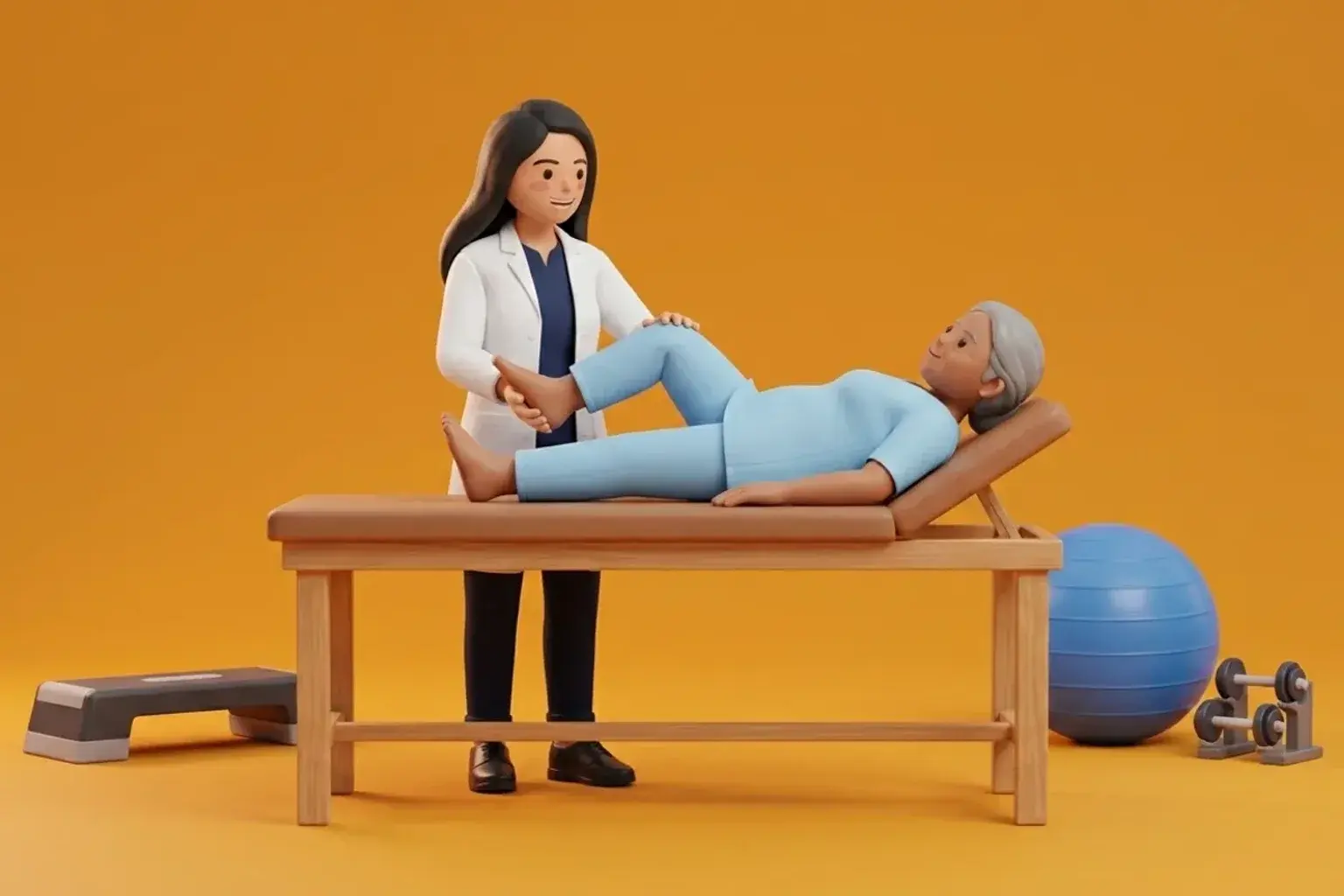
Restoring hip internal rotation requires precise clinical execution to avoid provoking anterior impingement. Traditional stretches that force the hip into combined flexion, adduction, and internal rotation (the provocative FADIR position) must be strictly avoided, as they directly crush the labrum between bones. Instead, physiotherapy utilizes gentle guided stretching in the loose-packed position or in prone extension. In the prone position with the knee bent at ninety degrees, the hip is in neutral extension, where the anterior joint space is naturally cleared. The clinician or patient allows the foot to fall gently outward into comfortable internal rotation, holding the position for thirty seconds while engaging in contract-relax cycles. Furthermore, manual therapy incorporates posterior and inferior joint mobilizations with belt distraction to stretch the deep capsular fibers before active movement retraining, consolidating restored range safely.
Prone Guided Passive-to-Active Hip Internal Rotation Mobility Drill
Objective: Restore posterior capsular compliance in an open-packed position that completely eliminates anterior bony impingement
- 1Lie face down on a firm, comfortable bed or exercise mat with your legs extended straight and your forehead resting on your arms.
- 2Bend your knee on the affected side to a ninety-degree angle, keeping your thigh resting flat and relaxed against the mat.
- 3Keeping your hips and pelvis flat against the floor, slowly let your foot fall outward away from your body into comfortable internal rotation.
- 4Allow gravity to gently stretch the hip capsule for fifteen seconds, ensuring zero pinching occurs in your front groin.
- 5Gently engage the muscles on the outside of your hip to actively press the foot outward another half-inch, hold for five seconds, then return to center.
| Clinical Severity Category | Passive Internal Rotation Range | Arthrokinematic Joint Effect | Recommended Physiotherapy Strategy |
|---|---|---|---|
| Normal Physiological Mobility | 30 to 45 degrees in 90 degrees flexion | Normal posterior-inferior femoral glide; optimal joint centration | Maintenance stretching, dynamic multi-planar sports conditioning |
| Moderate Deficit (Early FAI / OA) | 15 to 25 degrees with mild capsular end-feel | Partial loss of posterior glide; early anterior femoral translation | Prone internal rotation drills, inferior capsular belt mobilization |
| Severe Deficit (Advanced OA / FAI) | Less than 10 degrees with hard, painful end-feel | Severe obligate anterior translation; continuous labral impingement | Gentle loose-packed manual traction, avoid all aggressive flexion stretches |
Never forcefully push a stiff hip joint into internal rotation if the end-feel is sudden, hard, and bony. In patients with large CAM bumps, severe acetabular retroversion, or advanced osteophytes, restricted motion is structural rather than capsular. Forcing internal rotation against osseous blockage can fracture subchondral bone or tear the labrum.
Frequently Asked Questions
Why does my physiotherapist measure how far my foot turns outward when checking my hip rotation?
When you lie on your stomach and bend your knee, swinging your foot outward to the side actually turns your thigh bone inward inside your hip socket. This movement is called hip internal rotation. It is the very first movement lost when you develop hip arthritis or impingement. Measuring this movement tells your physiotherapist exactly how tight your joint capsule is.
Do I need a doctor referral to see a hip physiotherapist on BookPhysio.in?
BookPhysio.in does not require a doctor referral. Under the National Commission for Allied and Healthcare Professions (NCAHP) Act 2021, patients across India enjoy direct access to autonomous registered physiotherapists. Through BookPhysio.in, you connect directly with verified clinicians and pay per session with transparent fees, completely free from advance package commitments, commission markups, or platform subscription charges.
Related condition guides



Related recovery guides & articles
BookPhysio.in Editorial Team
The BookPhysio.in editorial team writes and maintains this content, checking it against reliable clinical sources. Content follows our medical review policy: general information only, and no page claims a clinical review until a named registered physiotherapist has signed it off.
Read our medical review policy