
Kabaddi and Football Cutting Maneuvers: Injury Prevention Drills Post-ACL
In short
Navigate the intense rotational and collision demands of kabaddi and football post-ACL reconstruction with sport-specific cutting and deceleration protocols.
In this guide (4 sections)
In the Indian sporting culture, football and kabaddi represent two of the most physically demanding, popular, and high-risk field sports. While modern commercial turf football has expanded exponentially across Indian urban centers, kabaddi remains an indigenous sporting obsession played at elite levels (Pro Kabaddi League) and grassroots mud maidans across Haryana, Punjab, Maharashtra, and Tamil Nadu. Both sports place extraordinary, multi-planar stresses on the knee joint. Kabaddi raiders must execute explosive unilateral accelerations, deceptive toe-touches, sudden 180-degree direction reversals, and evasive maneuvers (such as dubkis and frog jumps) while defenders dive to trap the lower limbs. Football requires high-speed sprint decelerations, sharp 90-degree cuts, and tackling on high-traction artificial turf. Without rigorous, sport-specific neuromuscular conditioning, returning to these contact sports invites catastrophic graft re-rupture.
Indian Playing Surfaces: Clay Courts, Hard Maidans, and High-Traction 3G Turfs
The physical surfaces upon which Indian athletes compete drastically alter knee injury biomechanics. Grassroots kabaddi is traditionally contested on packed clay or loose mud courts, which become slick during monsoon rains and unforgivingly hard during peak summer months. Urban amateur football is predominantly played on rented 5-a-side and 7-a-side artificial turf arenas. These synthetic 3G and 4G surfaces generate extremely high rotational traction; when rubber studs grip the artificial turf carpet, the shoe becomes locked while the player’s body momentum continues to rotate, transmitting massive torsional loads directly through the knee. Athletes returning to sport must be conditioned specifically for their local playing surfaces, using appropriate footwear to modulate surface-shoe friction.
Torsional Joint Trauma: Ankle Trapping, Raid Retreats, and Collision Kinetics
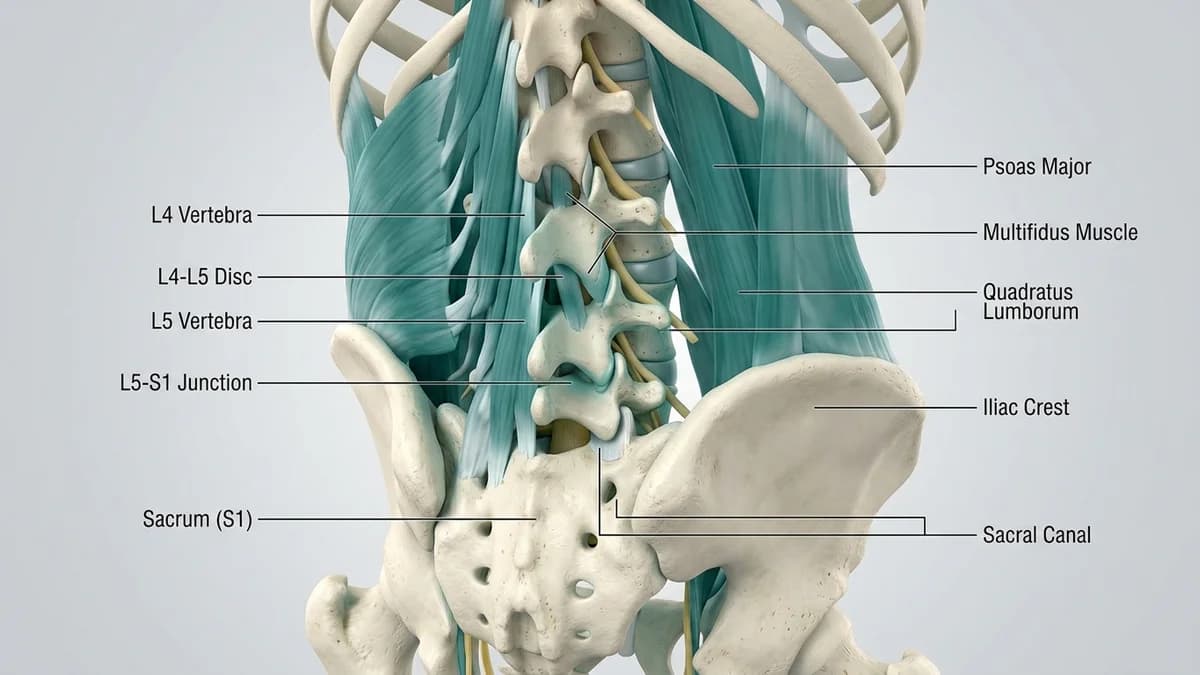
The pathomechanics of ACL injury in kabaddi and football involve a lethal combination of high rotational momentum and external contact forces. In kabaddi, a classic rupture occurs during the "ankle hold" (paon pakadna). As the raider plants a foot and twists their torso to lunge backward toward the midline (baulk line), a defending corner dives and traps the foot against the ground. The raider’s body continues its backward momentum, creating violent hyperextension, internal tibial rotation, and valgus stress that shreds the ACL, capsular ligaments, and menisci. In football, non-contact cuts on high-friction turf produce rapid deceleration with knee abduction. Furthermore, direct collision forces (such as a side tackle striking the lateral thigh of a planted leg) force the knee into severe structural valgus failure.
Sport-Specific Prevention Drills: Low-Stance Raids, Deceleration Stops, and Turf Agility
A specialized return-to-sport program for kabaddi and football integrates rigorous physical conditioning with technical movement retraining. Kabaddi raiders are trained in low-center-of-mass raiding mechanics, practicing rapid cantilever retreats without turning their back on defenders. Football players progress through the FIFA 11+ injury prevention curriculum, emphasizing core stability, eccentric hamstring strength (Nordic curls), and soft jump landings. Dynamic cutting drills are progressed from 45-degree angle cuts to intense 90-degree and 180-degree shuttle turnarounds. Athletes must complete simulated full-contact scrimmages with reactive dual-tasking before receiving full clearance for match play.
Kabaddi Raider Low-Stance Deceleration and Cantilever Retreat Drill
Objective: Build multi-planar eccentric knee stability and trunk control during sudden raider turnarounds and retreats
- 1Set up a raid line on a firm, non-slip training surface, marking a midline 7 yards away.
- 2Adopt an athletic kabaddi raiding stance: hips low, knees flexed to 45 degrees, weight on the balls of your feet.
- 3Accelerate explosively forward toward the line over 5 yards, simulating a touch attempt on a defender.
- 4On an unexpected whistle, execute a rapid 2-step deceleration, dropping your hips into a deep crouch without letting your knees buckle inward.
- 5Immediately push off your front leg to spring backward into a low cantilever retreat, keeping your eyes on the opponent zone.
- 6Decelerate smoothly across the home line, maintaining a wide, stable base of support.
| Sport-Specific Dimension | Kabaddi Biomechanical Demands | Football (Soccer) Demands | Targeted Physiotherapy Conditioning |
|---|---|---|---|
| Primary Deceleration Mechanism | Low-crouch single-leg braking during sudden raid retreats and dodges | High-speed linear sprint braking into sharp 45° to 90° lateral cuts | Eccentric quadriceps and hamstring heavy slow resistance, multi-step stopping |
| Rotational Traction Hazard | Mud or clay court slippage followed by sudden shoe catch; ankle-hold traps | High shoe-surface traction on rubber-crumb artificial turf pitches | Footwear optimization (molded studs vs flat turf shoes), perturbation balance |
| Contact & Collision Dynamics | Direct tackling, ankle traps, chain tackles holding the lower extremity | Lateral side tackles, shoulder charges during contested header landings | Core anti-rotation stability, perturbation tolerance, simulated contact drills |
| Return-to-Play Testing Threshold | LSI >= 90% across hop battery, reactive agility, full cantilever squat | LSI >= 90% on isokinetic dynamometry, FIFA 11+ completion, Y-balance test | Minimum 9 to 12 months post-surgery; ACL-RSI psychological readiness >= 65 |
Never permit an athlete to return to full-contact kabaddi raiding or competitive football matches before 9 months post-surgery, regardless of subjective confidence. Biological graft maturation requires at least 9 to 12 months, and returning to contact sports before this biological window is associated with a catastrophic secondary tear rate exceeding 25 to 30 percent.
Frequently Asked Questions
Can I wear a hinged knee brace to play kabaddi after my ACL reconstruction?
While wearing a functional knee brace is common in sports like football or skiing, rigid metal-hinged braces are strictly prohibited in competitive kabaddi because the exposed metal and hard plastic can cause severe lacerations or fractures to opposing raiders and defenders who dive at your legs. Your true brace must be your own muscles: rigorous training of your quadriceps, hamstrings, and hip rotators is what keeps your knee safe.
Do I need a doctor referral to rehabilitate an ACL reconstruction on BookPhysio.in?
BookPhysio.in does not require a doctor referral. Under the National Commission for Allied and Healthcare Professions (NCAHP) Act 2021, patients across India enjoy direct access to autonomous registered physiotherapists. Through BookPhysio.in, you connect directly with verified clinicians and pay per session with transparent fees, completely free from advance package commitments, commission markups, or platform subscription charges.
Related condition guides


Related recovery guides & articles
BookPhysio.in Editorial Team
The BookPhysio.in editorial team writes and maintains this content, checking it against reliable clinical sources. Content follows our medical review policy: general information only, and no page claims a clinical review until a named registered physiotherapist has signed it off.
Read our medical review policy