
Elder Balance and Inner Ear Recovery in Indian Multi-Generational Homes: The Landmark Clinical Masterclass
In short
Aging inner ears in Indian multi-generational homes face unique architectural and cultural challenges; this landmark masterclass delivers a comprehensive recovery blueprint.
In this guide (8 sections)
The Clinical Epidemiology of Geriatric Vestibular Decline in India
Geriatric vestibular disorders represent one of the most pervasive yet neglected public health crises in India. Over 35 percent of community-dwelling Indian adults aged 65 years and older experience clinically significant balance impairment, a figure that climbs to over 50 percent in seniors aged 80 and above. The aging inner ear undergoes progressive multisensory attrition: gradual degeneration of sensory hair cells across the semicircular canals and otolith organs (presbyastasis), structural breakdown of otoconia leading to recurrent BPPV, and age-related reduction in Scarpa's ganglion neurons.
Unlike western nations where elderly individuals predominantly reside in independent single-occupant living units or assisted-care facilities, Indian seniors live predominantly within multi-generational joint family households. In this cultural structure, an elder's balance, mobility, and dignity are inextricably bound to traditional architecture, spiritual domestic rituals, and multi-generational caregiving dynamics. Standard western rehabilitation protocols that advise seniors to 'stop going to the pooja room' or 'never sit on the floor' fail completely. Effective clinical recovery requires evidence-based vestibular rehabilitation tailored to the realities of Indian domestic life.
Domestic Context: Architectural and Cultural Realities in Indian Homes
Indian domestic architecture presents specific biomechanical challenges for an aging vestibular system. Polished marble, vitrified ceramic tile, and kota-stone flooring provide zero friction when wet. In traditional bucket-bathrooms (balti-mug bath setups), stepping across wet, soapy tiles while managing hot water buckets places extreme demands on damaged vestibulospinal reflexes. The presence of raised marble doorframe thresholds (dehleez or umbar) between rooms creates frequent trip-and-fall hazards, particularly at night during power outages (load shedding).
Culturally, Indian elders derive deep spiritual meaning and social purpose from daily religious rituals. Morning pooja often involves bending deeply forward to light oil lamps (diyas), prostrating on the floor (sashtang pranam), or looking upward at high domestic temple shelves. Telling an 80-year-old grandmother to abandon her prayers causes profound emotional grief and non-compliance. Truly exceptional geriatric vestibular care adapts these sacred rituals using elevated wooden chowkis, grab rails, and stable sitting postures, preserving spiritual dignity while eliminating fall risks.
Comprehensive Bedside Geriatric Balance and Stroke Screening
Evaluating an unsteady elder requires systematic triage to distinguish treatable inner ear conditions from life-threatening posterior circulation strokes.
- The HINTS Stroke Screen in the Elderly: In any senior presenting with acute continuous vertigo, the HINTS exam (Head Impulse, Nystagmus, Test of Skew) must be performed immediately. Under the INFARCT rule, a normal head impulse test, direction-changing gaze nystagmus, or vertical skew deviation indicates cerebellar stroke requiring emergent tertiary hospital transfer.
- Comprehensive Positional Dix-Hallpike and Roll Screen: Testing for posterior and horizontal canal BPPV, which accounts for over 60 percent of sudden dizziness in Indian elders and is completely curable with mechanical manoeuvres.
- Timed Up and Go (TUG) and Berg Balance Testing: Timing sit-to-stand transitions and walking speeds; a TUG score >12 seconds or Berg score <45/56 confirms high fall risk and guides prescription of assistive walking aids.
- Environmental Domiciliary Hazard Audit: Systematic assessment of home lighting, loose floor rugs, bathroom grab rails, bed height (aiming for 18 to 20 inches), and stair handrail adequacy.
Stage-by-Stage Multi-Generational Recovery Protocol
- Stage 1: Mechanical Canal Clearance and Home Hardening (Weeks 1 to 2): Clear active BPPV via verified Epley or Semont manoeuvres; install high-lumen night lighting along hallways, fit stainless steel bathroom grab rails, and place non-skid rubber mats over slippery marble tiles.
- Stage 2: Culturally Adapted Domestic Independence (Weeks 3 to 6): Introduce an elevated wooden prayer stool (chowki at 19-inch height) with armrests in the pooja room; transition to over-toilet commode chairs; deliver daily seated VOR x1 gaze stabilisation and sit-to-stand strength drills.
- Stage 3: Community Reintegration and Family Caregiver Scheduling (Weeks 6 to 12): Train dynamic walking with light-touch cane grounding; coordinate family caregiving schedules (assigning grandchildren morning hydration and music walks); enable the elder to attend family weddings, parks, and religious gatherings with confidence.
Clinical Exercise Protocol: The Elder Daily Vestibular Programme
The Comprehensive Elder Vestibular Daily Programme
Objective: Retrains dynamic vestibulo-ocular reflexes, strengthens lower-limb extensors, and rebuilds balance confidence in multi-generational homes.
- 1Seated Gaze Stabilisation (VOR x1): Sit upright in a supportive armchair, focus on a target card at eye level, and rotate your head gently side-to-side for 45 seconds at 1 Hz.
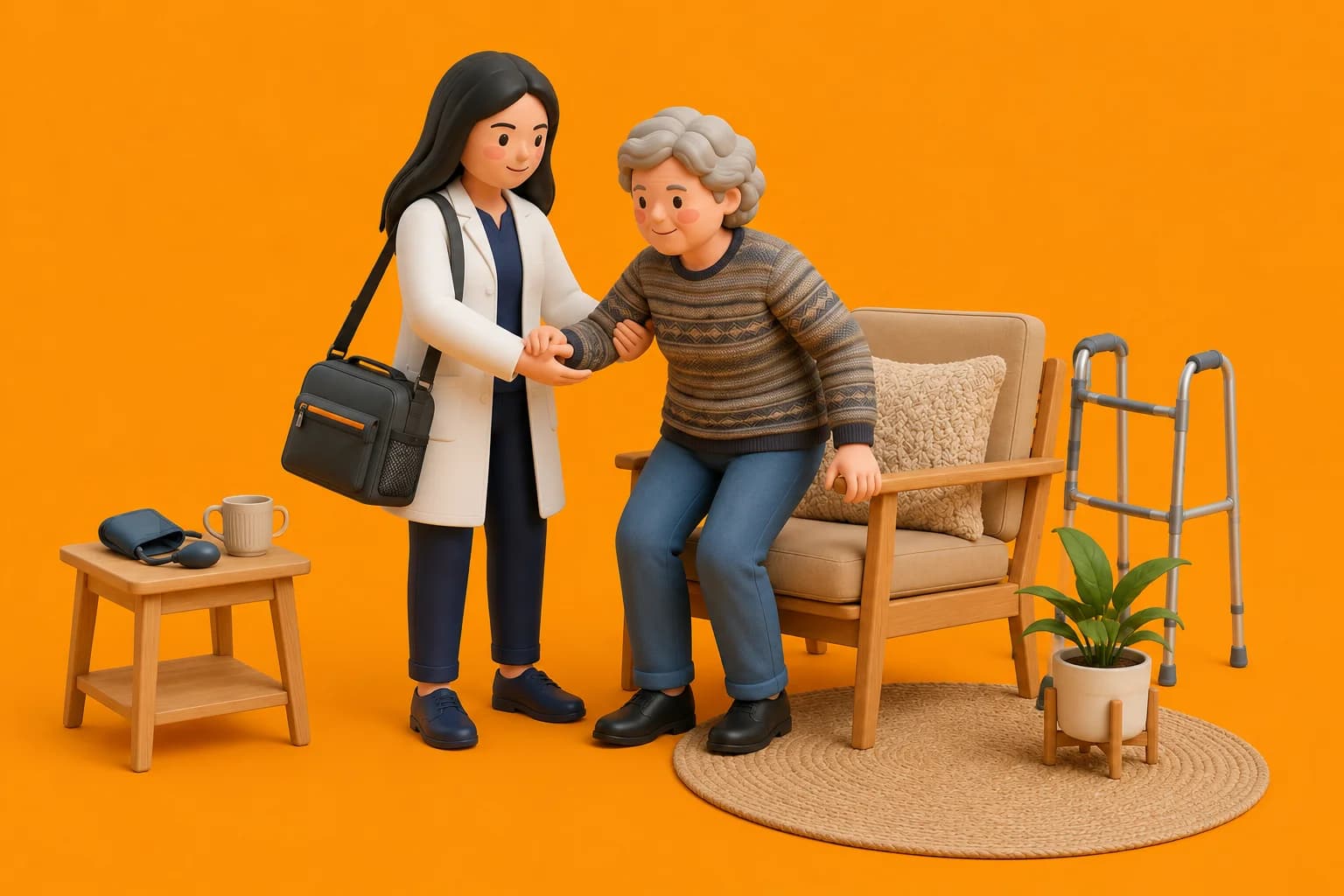
- 2Supported Sit-to-Stand Drill: Rise smoothly from a firm armchair without using armrests if safe, standing upright for 5 seconds before sitting down with control; perform 10 repetitions.
- 3Corner Tandem Balance Stance: Stand in the corner of a room with feet in semi-tandem alignment, hands hovering near the walls, holding a steady balance for 30 seconds per foot placement.
- 4Hallway Dynamic Stepping: Walk 10 steps along a clear hallway while gently turning your head left and right with each step, keeping a family member walking nearby for support.
Clinical Comparison: Common Vestibular Disorders in Indian Elders
| Vestibular Condition | Typical Domestic Trigger | Bedside Clinical Test | Primary Physiotherapy Manoeuvre / Exercise | Family Home Adaptation |
|---|---|---|---|---|
| Posterior Canal BPPV | Bending down for pooja, turning over in bed | Dix-Hallpike test (upbeat torsional nystagmus) | Epley repositioning manoeuvre | Raise bed height to 19 inches; firm mattress |
| Presbyastasis (Hair Cell Loss) | Walking down dark hallways at night | TUG test >12s, abnormal mCTSIB foam test | Multisensory balance drills, VOR x1 adaptation | Install high-lumen LED nightlights in corridors |
| Bilateral Vestibulopathy | Jumping vision (oscillopsia) while walking | vHIT gain <0.6, drop of >3 lines on DVA test | Saccadic substitution, tactile cane walking | Trekking pole with rubber tip for outdoor walks |
| Cervicogenic Dizziness | Sustained neck stiffness, driving two-wheelers | Head-Neck Differentiation Test, JPE >4.5 deg | Laser pointer biofeedback, deep flexor training | Ergonomic low-profile cervical pillow |
| Posterior Circulation Stroke | Sudden continuous vertigo with severe vomiting | HINTS exam: Normal HIT, skew deviation, ataxia | Immediate emergency hospital code stroke transfer | Emergency hospital contact numbers pinned by bedside |
Red Flags: When to Call Emergency Medical Services
Family members and clinicians caring for an elderly Indian parent must be educated on non-negotiable red flags. If dizziness is accompanied by sudden facial asymmetry, slurred speech (dysarthria), new double vision (diplopia), arm or leg weakness, sudden confusion, or an inability to sit upright in bed without toppling over (grade 3 truncal ataxia), family members must not wait or administer home remedies. This is an acute posterior circulation stroke until proven otherwise; immediate ambulance transfer to a comprehensive stroke-ready hospital is mandatory.
Frequently Asked Questions
Can an 80-year-old grandmother with severe knee arthritis still perform vestibular exercises safely?
Yes. Vestibular rehabilitation is fully adaptable. Exercises begin safely in a comfortable armchair with gaze tracking and gentle head turns, progressing to standing balance only when seated stability and confidence are achieved.
How can our joint family support an aging parent recovering from a severe inner ear attack?
Divide caregiving roles constructively: adult children can manage home modifications (fitting bathroom grab bars and nightlights) while grandchildren encourage daily walking and exercise practice. Encouragement and patience restore an elder's confidence.
Related condition guides


Related recovery guides & articles
BookPhysio.in Editorial Team
The BookPhysio.in editorial team writes and maintains this content, checking it against reliable clinical sources. Content follows our medical review policy: general information only, and no page claims a clinical review until a named registered physiotherapist has signed it off.
Read our medical review policy