
Master Total and Partial Knee Arthroplasty Recovery Guide: Clinical Protocols from Day 0 to Year 1
In short
Navigate your complete knee replacement journey from hospital wake-up to lifelong vitality with our comprehensive, evidence-based master clinical recovery guide.
In this guide (4 sections)
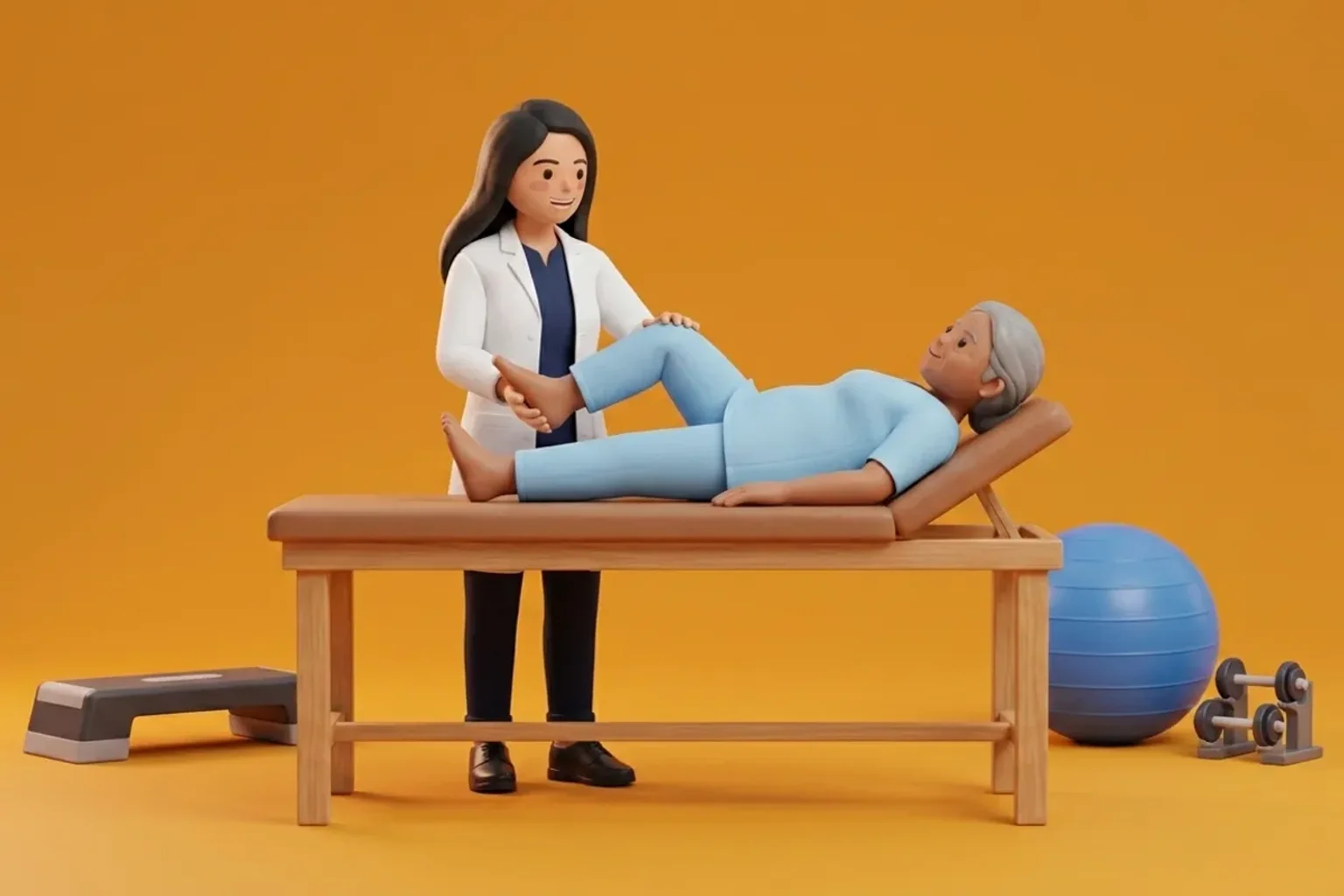
Undergoing total or unicompartmental knee arthroplasty is a transformative, life-enhancing surgical journey that frees patients from the debilitating agony of end-stage joint arthritis. However, surgical excellence on the operating plinth represents only the opening chapter of recovery; the ultimate functional outcome is determined by the discipline, precision, and biological pacing of post-operative rehabilitation. Recovery is not an unstructured period of waiting, but a carefully choreographed, four-phase clinical continuum spanning from immediate hospital mobilization on Day Zero through full subacute functional remodeling at week twelve, and culminating in lifelong implant stewardship at one year. This master recovery guide synthesizes the complete clinical pathway: integrating biological tissue healing, goniometric milestones, closed-chain resistance progressions, red-flag safety triage, and practical Indian domestic adaptations into a unified clinical framework.
The Complete Indian Domestic Blueprint: Furniture, Sanitation, Transit, and Culture
Successfully navigating a knee replacement in an Indian household requires comprehensive environmental adaptation across all recovery stages. During Phase One (Weeks 0 to 2), domestic priorities center on safety: elevating low diwans or charpois to 20 inches with dense coir toppers, installing elevated western commode risers with dual armrests, and securing anti-skid rubber mats across wet bathroom tiles. During Phase Two (Weeks 3 to 6), priorities expand to functional independence: navigating narrow doorways, climbing steep residential stairs using the 'up with the good, down with the bad' mnemonic, and practicing seated car transfers. During Phase Three and Four (Weeks 7 to 52), adaptations focus on social and spiritual re-integration: practicing dignified chair-based pooja rituals, resuming morning walks in neighborhood parks with athletic footwear, and managing auto-rickshaw transit with vibration-dampening cushions.
The Four Biological Healing Phases: Hemostasis, Proliferation, Remodeling, and Longevity
The physiological architecture of arthroplasty recovery spans four biological phases. Phase One (Acute Inflammatory, Days 0 to 14) focuses on hemostasis, resolving intraoperative hemarthrosis, mitigating tourniquet reperfusion injury, and overcoming arthrogenic muscle inhibition to restore vastus medialis motor recruitment. Phase Two (Subacute Proliferative, Weeks 3 to 6) centers on collagen matrix synthesis, where fibroblastic scar tissue matures; therapy emphasizes achieving zero degrees of passive extension, expanding active-assisted flexion to 105 degrees, and initiating closed-chain co-contraction. Phase Three (Functional Remodeling, Weeks 7 to 12) involves cross-linking of Type I collagen, muscular hypertrophy, and sensorimotor balance re-education on rocker boards. Phase Four (Maturation and Joint Stewardship, Months 4 to 12+) consolidates bone osseointegration and reinforces low-impact physical activity to protect the polyethylene bearing from particle-induced osteolysis.
Integrated Clinical Milestones, Exercise Matrix, and Autonomous Pacing
Rehabilitation follows objective milestone gates rather than rigid calendar schedules. Progression from a reciprocal walker to a single elbow crutch requires zero extensor lag on an unassisted straight leg raise and 30 seconds of single-leg standing balance. Advancing from basic heel slides to stationary cycling requires 100 degrees of flexion to crest Top Dead Center smoothly. Conquering stairs step-over-step requires robust eccentric quadriceps control verified via step-down drills. Under the autonomous framework of the NCAHP Act 2021, registered physiotherapists collaborate directly with patients, delivering personalized, pay-per-session clinical guidance that empowers complete self-management and lifelong joint longevity.
Master Integrated Lower-Limb Functional Rehabilitation Circuit
Objective: Combine terminal extension lockout, eccentric deceleration, and dynamic balance into a complete recovery circuit
- 1Perform 10 standing resisted band terminal knee extensions (TKE), locking your knee firmly at zero degrees for 3 seconds.
- 2Transition immediately to 10 kitchen counter supported mini-squats, hinging backward at the hips to 45 degrees.
- 3Step onto a low 4-inch aerobic step block, performing 8 controlled lateral step-downs per side with slow eccentric descent.
- 4Stand in a tandem heel-to-toe stance beside a counter, holding steady motionless balance for 30 seconds.
- 5Conclude with 30 seconds of supine cardiac-level elevation and vigorous active ankle pumping to clear dependent fluid.
| Rehabilitation Phase | Post-Op Timing & Target ROM | Primary Exercise Modalities | Domestic & Functional Milestones |
|---|---|---|---|
| Phase 1: Acute Protection | Days 0 to 14; 0° extension, 80° to 90° flexion | Ankle pumps; isometric quad setting; passive heel props; active-assisted heel slides | Reciprocal walker ambulation; elevated bed and commode transfers; sterile wound care |
| Phase 2: Subacute Mobility | Weeks 3 to 6; 0° extension, 100° to 105° flexion | Short arc quads; closed-chain mini-squats; seated leg presses; stationary bike rocking | Weaning from walker to single elbow crutch; one-step stair negotiation; passenger car transfers |
| Phase 3: Functional Strength | Weeks 7 to 12; 0° extension, 115° to 120°+ flexion | Standing band TKE; eccentric step-downs; rocker board balance; full cycling revolutions | Independent outdoor walking in parks (1-2 km); kitchen cooking; chair prayer rituals |
| Phase 4: Lifelong Longevity | Months 4 to 12+; full functional arc | Low-impact sports (swimming, golf, doubles badminton); elliptical; lifelong maintenance | Full community mobility; auto-rickshaw transit; long-distance train/flight travel; joint care |
Throughout all phases of recovery, maintain zero tolerance for clinical red flags. Spreading wound redness, persistent drainage beyond day five, calf pain, chest tightness, or a sudden loss of active knee extension require immediate emergency medical triage. Early detection and swift clinical action protect both your health and your prosthetic investment.
Frequently Asked Questions
How long will my new total knee replacement realistically last?
Modern total knee replacements constructed with high-grade titanium, cobalt-chromium, and highly cross-linked polyethylene have exceptional longevity. International joint replacement registries show that over 90 to 95 percent of modern knee implants are functioning perfectly at twenty years post-surgery. Maintaining a healthy body weight, avoiding high-impact running, and keeping your surrounding leg muscles strong through regular walking and cycling will maximize your implant longevity.
Do I need a doctor referral for post-knee replacement physiotherapy on BookPhysio.in?
BookPhysio.in does not require a doctor referral. Under the National Commission for Allied and Healthcare Professions (NCAHP) Act 2021, patients across India enjoy direct access to autonomous registered physiotherapists. Through BookPhysio.in, you connect directly with verified clinicians and pay per session with transparent fees, completely free from advance package commitments, commission markups, or platform subscription charges.
Related condition guides



Related recovery guides & articles
BookPhysio.in Editorial Team
The BookPhysio.in editorial team writes and maintains this content, checking it against reliable clinical sources. Content follows our medical review policy: general information only, and no page claims a clinical review until a named registered physiotherapist has signed it off.
Read our medical review policy