
Master Total Hip Arthroplasty Rehabilitation and Recovery Guide
In short
The master clinical guide to total hip replacement recovery, synthesizing surgical approaches, rehabilitation timelines, and practical home adaptations in India.
In this guide (4 sections)
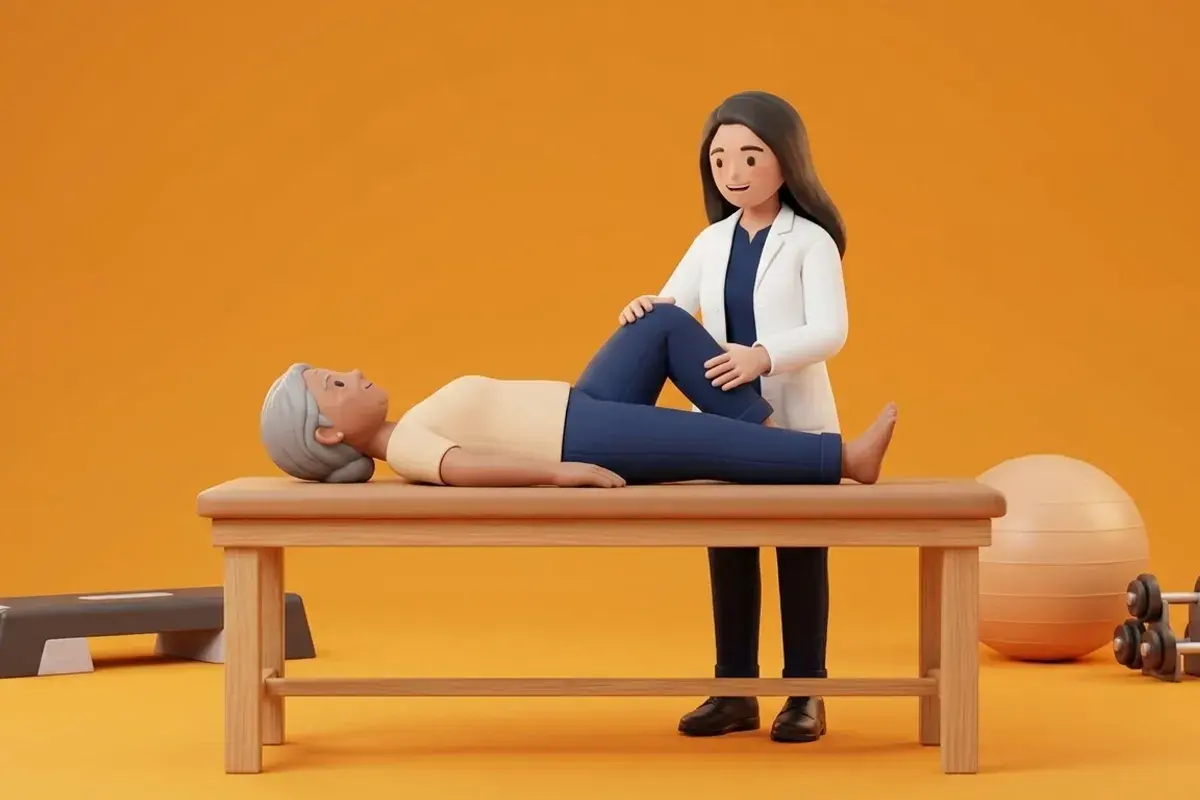
Total hip arthroplasty is widely recognized as one of the most successful, life-transforming surgical interventions in modern medicine, earning the title 'the operation of the century' for its ability to abolish chronic osteoarthritic pain and restore independent mobility. However, an impeccably performed surgical procedure represents only the foundation of functional recovery. Achieving optimal, long-term success requires an evidence-based rehabilitation pathway that respects the unique biological healing timelines of different surgical approaches, whether direct anterior, direct lateral Hardinge, or posterior Moore techniques. This master rehabilitation guide synthesizes surgical biomechanics, phased movement progressions, domestic adaptations for Indian homes, and objective functional milestones to provide an authoritative clinical blueprint for lifelong joint health.
Creating a Safe, Accessible Domestic Environment Across India
Adapting the Indian home environment is a critical prerequisite for safe, successful hip arthroplasty rehabilitation. Traditional Indian living spaces often contain multiple architectural features that challenge a healing hip: low wooden diwans, polished marble floors that become slick when wet, raised bathroom thresholds (choukhat), and multi-level staircases without continuous handrails. Before the patient returns home from the hospital, families must implement essential environmental safeguards: elevate bed and chair seating heights to at least nineteen to twenty inches using firm high-density foam cushions, install a four-inch raised western commode seat with sturdy armrests, clear all loose floor rugs and electrical cords, and secure non-skid rubber drainage mats across bathroom corridors.
Surgical Approach Triad Biomechanics, Capsular Healing, and Muscle Integrity
The biomechanics of post-operative hip stability are governed by the specific surgical approach utilized by the orthopedic surgeon. The direct anterior approach (DAA) utilizes the intermuscular Hueter plane between the tensor fasciae latae and sartorius, preserving all abductor and posterior rotator attachments; its primary precaution is avoiding combined hyperextension beyond neutral and forceful external rotation during the first six to eight weeks of anterior capsular healing. The posterior approach enters through the gluteus maximus and temporarily releases the short external rotators, demanding strict adherence to the ninety-degree flexion, adduction across midline, and internal rotation triad until posterior capsular scar tissue matures. The direct lateral Hardinge approach preserves the posterior capsule with minimal dislocation risk, but detaches and repairs the anterior gluteus medius, requiring strict protection against active unassisted abduction for six to eight weeks.
Master Timeline Milestones: From Day Zero Mobilization to Full Community Return
Rehabilitation progresses through four synchronized phases: Phase One (Acute Inpatient, Days 0 to 7) focuses on early Day Zero standing, deep vein thrombosis prophylaxis through active ankle pumps, quad setting, and safe walker transfers. Phase Two (Early Subacute, Weeks 2 to 6) transitions patients from walkers to elbow crutches and then a single contralateral stick, restores active hip flexion within safe approach limits, and begins closed-chain mini-squats. Phase Three (Advanced Subacute, Weeks 7 to 12) eliminates the walking stick based on a negative Trendelenburg test, progresses stationary cycling, and begins dynamic single-leg proprioception. Phase Four (Functional Independence, Month 4+) returns patients to brisk morning walking, swimming, golf, and safe cultural participation, ensuring decades of joint longevity.
Comprehensive Lower Extremity Master Kinetic Chain Activation Sequence
Objective: Integrate ankle, knee, and hip stabilizers into a unified functional motor pattern for upright posture and gait
- 1Stand tall facing a sturdy counter or table, resting your hands lightly on the surface for balance.
- 2Inhale gently and slowly perform a shallow thirty-degree bilateral mini-squat, pressing your hips slightly backward.
- 3Press through both heels to return to tall standing, firmly contracting your gluteal muscles at the top.
- 4Immediately rise up onto the balls of both feet into a bilateral calf raise, holding for two seconds.
- 5Lower your heels smoothly to the floor, shift your weight onto your unoperated leg, and tap your operative foot back two inches.
| Surgical Approach | Key Anatomic Planes and Sparing | Primary Movement Precautions and Restrictions |
|---|---|---|
| Direct Anterior (DAA) | Intermuscular (TFL-Sartorius); internervous; all abductors and posterior rotators spared | Avoid hip hyperextension beyond neutral combined with external rotation for 6 to 8 weeks |
| Posterior (Moore / Southern) | Splits gluteus maximus; releases and repairs short external rotators and posterior capsule | Strict 90-degree flexion rule; avoid adduction past midline; avoid internal rotation for 8-12 weeks |
| Direct Lateral (Hardinge) | Transgluteal; detaches and repairs anterior half of gluteus medius; posterior capsule intact | No active unassisted hip abduction or side-lying leg lifts for 6 to 8 weeks; lowest dislocation risk |
| Universal Precautions | All approaches require biological bone ingrowth and initial implant stabilization | No high-impact running; avoid low floor sitting without clearance; maintain non-skid bathroom safety |
Regardless of surgical approach, patients must seek immediate emergency medical care if they experience: sudden severe hip pain with leg shortening and inward rotation (dislocation), sudden inability to bear weight following a trip or fall (periprosthetic fracture), active wound leakage of cloudy or foul fluid (periprosthetic infection), or sudden chest pain with shortness of breath (pulmonary embolism).
Frequently Asked Questions
Which surgical approach is best for total hip replacement?
There is no single 'best' approach for every patient. The direct anterior approach offers faster early recovery of walking in the first month because muscles are not cut. The posterior approach is the most widely practiced with excellent fifty-year clinical track records. The direct lateral approach offers the lowest dislocation risk. Your surgeon chooses the approach that best fits your individual anatomy.
Do I need a doctor referral for post-hip replacement physiotherapy on BookPhysio.in?
BookPhysio.in does not require a doctor referral. Under the National Commission for Allied and Healthcare Professions (NCAHP) Act 2021, patients across India enjoy direct access to autonomous registered physiotherapists. Through BookPhysio.in, you connect directly with verified clinicians and pay per session with transparent fees, completely free from advance package commitments, commission markups, or platform subscription charges.
Related condition guides



Related recovery guides & articles
BookPhysio.in Editorial Team
The BookPhysio.in editorial team writes and maintains this content, checking it against reliable clinical sources. Content follows our medical review policy: general information only, and no page claims a clinical review until a named registered physiotherapist has signed it off.
Read our medical review policy