
Motorcycle and Scooter Road Traffic Accidents: Complex Shoulder Dislocation Trauma
In short
Two-wheeler road accidents cause high-energy shoulder dislocations with complex bony and nerve injuries. Discover emergency triage, imaging, and recovery.
In this guide (4 sections)
Two-wheeler road traffic accidents represent the leading cause of high-energy traumatic glenohumeral dislocations across the Indian subcontinent. Commuting via motorcycle, scooter, or moped constitutes the backbone of personal urban and semi-urban transportation in India. Unlike low-energy sporting dislocations seen on grassy athletic pitches, two-wheeler vehicular crashes involve high velocity, asphalt abrasions, and violent multi-directional impact forces. When a rider is thrown from a scooter or strikes an unexpected road barrier, the resulting shoulder trauma is rarely an isolated ligamentous sprain; it frequently involves complex combinations of glenohumeral dislocation, comminuted bony Bankart fractures, large-scale Hill-Sachs defects, and severe traction injuries to the brachial plexus.
Indian Highway Potholes, Monsoon Skids, and Stray Animal Collisions
Indian road environments expose two-wheeler riders to continuous, unpredictable hazards. Poorly lit suburban highways, unmarked speed breakers, monsoon waterlogging concealing deep potholes, and sudden livestock crossings frequently cause riders to lose control at speeds of 40 to 60 kilometers per hour. During an impending collision, riders instinctively extend an outstretched arm to break their fall (FOOSH mechanism) or sustain direct lateral crushing impact when the heavy motorcycle frame collapses onto their shoulder. In rural and peri-urban belts, delayed ambulance response times and transport via bumpy three-wheelers aggravate internal joint bleeding and soft tissue swelling before reaching trauma care.
High-Energy Biomechanics, Concomitant Bony Fractures, and Plexus Traction
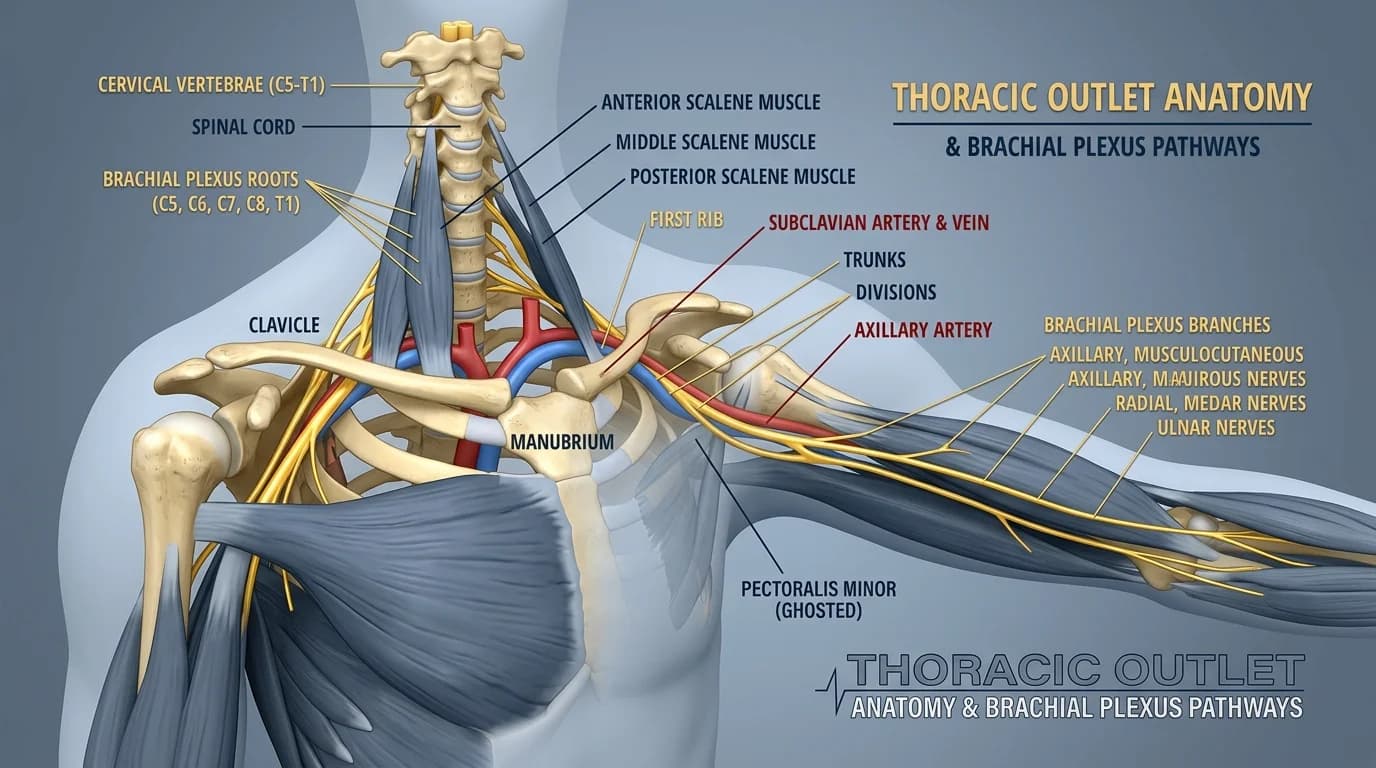
The high-energy nature of vehicular shoulder trauma creates distinct pathological patterns. In patients over 40 years old, anterior dislocation is accompanied by full-thickness rotator cuff tears in over 50 percent of cases and greater tuberosity avulsion fractures in up to 30 percent. In younger riders, the sheer impact velocity shears off substantial chunks of the anterior glenoid rim (bony Bankart exceeding 25 percent) and produces large engaging Hill-Sachs defects. Furthermore, the violent distraction of the neck away from the shoulder stretches the nerve roots of the brachial plexus, generating severe neuropraxia or axonotmesis of the axillary, suprascapular, and musculocutaneous nerves.
Staged Complex Trauma Rehabilitation: Managing Concomitant Injuries
Rehabilitation following high-energy vehicular shoulder dislocations must be meticulously customized based on concomitant skeletal and neurological injuries. When a greater tuberosity fracture is present, active elevation and abduction are deferred for 4 to 6 weeks until radiographic callus formation confirms fragment stability. If axillary nerve neuropraxia is documented, electrical stimulation and passive range-of-motion drills protect the joint from capsular contracture while awaiting spontaneous nerve re-innervation over 3 to 6 months. Certified physiotherapists work closely with orthopedic trauma surgeons to coordinate staged bone healing, nerve regeneration, and gradual active reconditioning.
Active-Assisted Table Slide Forward Elevation in Scapular Plane
Objective: Safely restore forward shoulder elevation using gravity-eliminated surface support following road trauma
- 1Sit upright in a supportive chair positioned directly facing a smooth, polished dining or study table.
- 2Place a folded hand towel beneath the palm of your injured arm, resting your forearm comfortably on the table.
- 3Keep your neck and chest relaxed, ensuring your shoulder blade rests in a neutral, un-shrugged position.
- 4Gently lean your torso forward at the hips, sliding the towel smoothly across the table surface away from you.
- 5Glide forward until a mild, pain-free stretch is felt in the shoulder, pause for 5 seconds, then use your torso to slide back.
| Associated Injury Entity | Incidence and Diagnostic Modality of Choice | Clinical Management and Physiotherapy Adaptation |
|---|---|---|
| Greater Tuberosity Fracture | Occurs in 15-30 percent of traumatic dislocations; diagnosed via AP and axillary shoulder radiographs | Non-displaced fractures (<5mm) managed in sling for 4 weeks; displaced fractures (>5mm) mandate surgical screw fixation |
| Full-Thickness Rotator Cuff Tear | Exceeds 50 percent in patients over 40 years old; diagnosed via high-resolution 3-Tesla MRI arthrogram | Requires early surgical rotator cuff repair to prevent chronic muscle retraction and pseudoparalysis |
| Brachial Plexus / Axillary Neuropraxia | Occurs in 10-20 percent of severe crashes; diagnosed via clinical sensory-motor exam and EMG/NCS studies at 3 weeks | Neuromuscular electrical stimulation (NMES), passive maintenance of motion, and nerve recovery tracking over 6 months |
| Critical Glenoid Bone Loss (>20%) | Frequent in high-velocity crashes; diagnosed via 3D-CT scan with digital humeral head subtraction | Mandates bony reconstruction (Latarjet coracoid transfer) rather than isolated soft-tissue arthroscopic repair |
Any patient over the age of 40 who sustains an acute traumatic shoulder dislocation and cannot actively lift their arm 3 weeks post-reduction must be urgently evaluated for a massive, full-thickness rotator cuff tear. Dismissing this clinical presentation as simple post-traumatic stiffness delays repair until the muscle undergoes irreversible fatty atrophy.
Frequently Asked Questions
How long does a stretched axillary nerve take to recover after a road crash?
Most traction injuries to the axillary nerve are neuropraxias (nerve bruising without structural axon transection). Nerves regenerate at a biological rate of approximately 1 millimeter per day. Clinical recovery of deltoid muscle tone and sensation typically emerges between 6 to 12 weeks, with full functional recovery often taking 6 to 9 months.
Do I need a doctor referral to see a shoulder instability physiotherapist on BookPhysio.in?
BookPhysio.in does not require a physician prescription. Under the National Commission for Allied and Healthcare Professions (NCAHP) Act 2021, patients across India enjoy direct access to autonomous registered physiotherapists. Through BookPhysio.in, you connect directly with verified clinicians and pay per session with transparent fees, completely free from advance package commitments, commission markups, or platform subscription charges.
Related condition guides



Related recovery guides & articles
BookPhysio.in Editorial Team
The BookPhysio.in editorial team writes and maintains this content, checking it against reliable clinical sources. Content follows our medical review policy: general information only, and no page claims a clinical review until a named registered physiotherapist has signed it off.
Read our medical review policy