
Post-ICU Multidisciplinary Follow-Up Clinics: Physical Benchmarking
In short
Establish post-ICU follow-up clinics. Standardized functional outcome measures, 6MWT, SPPB, Frailty scoring, and long-term care in India.
In this guide (2 sections)
Post-ICU Multidisciplinary Follow-Up Clinics represent the gold standard of care for survivors of critical illness. Bringing together intensivists, physiotherapists, clinical psychologists, dietitians, and occupational therapists, these specialized clinics evaluate survivors at two to three months, six months, and twelve months post-discharge. Standardized physical functional benchmarking identifies persistent deficits and tailors restorative interventions.
The Biological Rationale for Longitudinal Follow-Up Surveillance
Without structured post-discharge follow-up, the multi-domain deficits of Post-Intensive Care Syndrome (PICS) frequently go unrecognized in primary healthcare settings. Sarcopenic muscle wasting, subtle foot drop from resolving polyneuropathy, persistent diffusion impairment, and cognitive slowing are often misattributed to normal aging or inevitable post-illness weakness. Standardized longitudinal functional testing provides objective quantitative data that tracks recovery velocity, unmasks hidden physical deficits, and prevents avoidable hospital readmission.
| Assessment Battery | Specific Clinical Test | Target Physiological Construct | Published Normative Benchmark | |
|---|---|---|---|---|
| Cardiopulmonary Endurance | Six-Minute Walk Test (6MWT) | Submaximal aerobic capacity, exertional desaturation | > 450 to 550 meters (Age and sex adjusted) | |
| Lower Extremity Function | Short Physical Performance Battery (SPPB) | Standing balance, gait speed (4m walk), 5x sit-to-stand | Score >= 10 out of 12 (Score < 8 indicates severe frailty) | |
| Isometric Muscle Strength | Jamar Handgrip Dynamometry | Global peripheral skeletal muscle force and sarcopenia | > 27 kg (Males), > 16 kg (Females) | |
| Functional Independence | Barthel Index / Functional Independence Measure (FIM) | Activities of daily living autonomy and caregiver burden | Barthel score 100/100 (Full domestic independence) |
Clinic Workflow and Standardized Evaluation Protocol
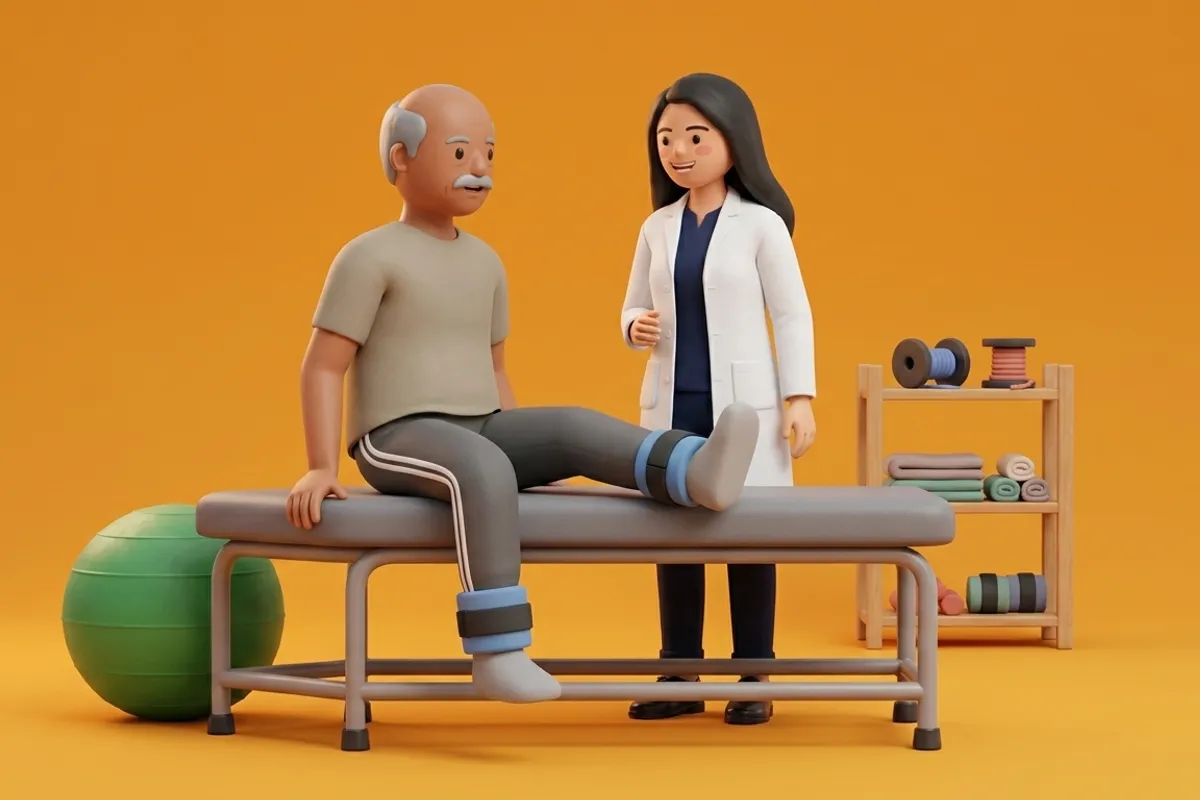
The patient arrives at the follow-up clinic accompanied by family caregivers. The physiotherapist conducts the standardized physical testing battery in a dedicated corridor: measuring resting vitals, administering the SPPB, testing handgrip force, and executing the 6MWT with continuous pulse oximetry. Test results are integrated into a comprehensive clinical summary, and personalized exercise prescriptions are updated accordingly.
Five Times Sit-to-Stand Speed and Power Progression Drill
Objective: Improve lower limb extensor power and benchmark functional performance on the SPPB.
- 1Sit upright in a standard armless chair (45 cm height) with arms crossed across the chest.
- 2Ensure feet are resting flat on the floor, shoulder-width apart.
- 3Upon the command 'Go', stand fully upright as rapidly and safely as possible, locking knees and hips.
- 4Immediately sit back down completely without pausing or using hands.
- 5Repeat for five consecutive stands, recording the total elapsed time in seconds with a stopwatch.
Domestic Recovery in India and Multigenerational Support
In India, specialized post-ICU clinics are growing across major tertiary medical centers in cities like Bengaluru, Mumbai, and Delhi NCR. For families traveling from regional tier-2 towns or rural areas, visiting home physiotherapists bridge the geographic gap, administering the same standardized functional outcome measures at home and coordinating virtually with tertiary clinic specialists.
Long-Term Trajectory and Health-Related Quality of Life
Patients enrolled in structured post-ICU follow-up clinics display significantly higher rates of physical independence, superior 6-minute walk distances, and lower 1-year mortality compared to patients receiving unstructured post-discharge care. Regular benchmarking provides patients with tangible milestones of recovery.
Always assess for psychological distress during physical follow-up. Severe physical functional deficits frequently co-exist with unrecognized depression or PTSD, requiring immediate warm handover to the clinic clinical psychologist.
When should a patient attend their first post-ICU follow-up clinic appointment?
The initial post-ICU clinic visit is typically scheduled between six and twelve weeks following hospital discharge. This timing allows acute medical instability to resolve while capturing early physical deficits before maladaptive compensatory movement patterns become entrenched.
Do I need a doctor referral to consult a home physiotherapist in India?
Under the National Commission for Allied and Healthcare Professions (NCAHP) Act 2021, patients in India enjoy direct access to registered physiotherapists without requiring a mandatory doctor referral. At BookPhysio.in, you consult verified physiotherapists and pay directly per session without hidden fees or platform commissions.
Related condition guides


Related recovery guides & articles
BookPhysio.in Editorial Team
The BookPhysio.in editorial team writes and maintains this content, checking it against reliable clinical sources. Content follows our medical review policy: general information only, and no page claims a clinical review until a named registered physiotherapist has signed it off.
Read our medical review policy