
Olecranon Bursitis: Aspiration Risks vs Compression Care for Student’s Elbow
In short
Navigate olecranon bursitis (student’s elbow). Differentiate septic from aseptic bursitis, understand aspiration risks, and apply compression bandaging.
In this guide (4 sections)
The olecranon bursa is a superficial, fluid-secreting synovial sac situated directly over the subcutaneous tip of the olecranon process, designed to provide frictionless gliding between the skin and the underlying posterior bony prominence of the ulna. Olecranon bursitis, colloquially known as student’s elbow, miner’s elbow, or water on the elbow, manifests as dramatic, egg-like swelling localized over the posterior elbow. The clinical condition arises primarily through three distinct pathways: acute mechanical trauma, repetitive low-grade pressure and friction, or bacterial inoculation producing septic bursitis. While needle aspiration provides immediate cosmetic decompression and essential diagnostic fluid analysis in suspected sepsis, indiscriminate needle aspiration in sterile aseptic bursitis carries high risks of introducing iatrogenic bacterial infection and creating chronic cutaneous fistulas.
Desk Study Ergonomics, Laptop Leaning, and Hard Floor Seating
In India, olecranon bursitis is exceptionally prevalent among school and university students preparing for intensive competitive examinations (such as JEE, NEET, or UPSC). Students frequently spend twelve to fourteen hours daily hunched over wooden desks or library tables, leaning their entire upper body weight directly onto their elbows while reading or typing on laptops. In religious contexts, worshippers performing prostrations on hard stone temple floors or domestic prayer mats subject the posterior olecranon to repetitive compressive microtrauma. Similarly, mechanics and plumbers crawling on hard concrete floors beneath motor vehicles or kitchen sinks experience continuous mechanical friction, triggering massive bursal fluid accumulation.
Synovial Hypertrophy, Septic Inoculation, and Aspiration Complications
The olecranon bursa is normally a potential space lined with a single layer of synovial cells. Repetitive mechanical shearing stimulates synovial lining cells to proliferate and hyper-secrete proteinaceous serous fluid, accompanied by bursal wall thickening and fibrous nodule formation. Septic bursitis occurs in approximately one-third of acute cases, typically caused by Staphylococcus aureus entering through microscopic skin abrasions or folliculitis over the elbow tip. While aseptic bursitis presents with a painless or mildly tender, fluctuant, non-erythematous swelling, septic bursitis features intense peribursal erythema, warmth, severe pain, and systemic fever. In aseptic cases, inserting a needle into the bursa creates an artificial conduit through thin, poorly vascularized skin, with clinical studies documenting an eight to ten percent risk of introducing secondary bacterial contamination or provoking a chronic draining sinus tract.
Conservative Compression Therapy, Padding, and Biomechanical Offloading
Evidence-based conservative management represents the treatment of choice for non-septic olecranon bursitis. Therapy centers on immediate mechanical offloading, application of structured elastic compression bandaging, and avoidance of direct pressure. Patients are instructed to wear thick, donut-shaped foam or gel elbow pads during study and work to distribute pressure onto surrounding healthy tissues while leaving the bursa free of contact. Cryotherapy applied for fifteen minutes three times daily aids in reducing synovial effusion. If aspiration is deemed medically necessary to exclude sepsis, strict aseptic surgical technique must be employed, introducing the needle through healthy, non-inflamed skin away from the bursal apex, followed by tight compressive bandaging for seventy-two hours.
Gentle Active Triceps and Biceps Pumping for Lymphatic Drainage
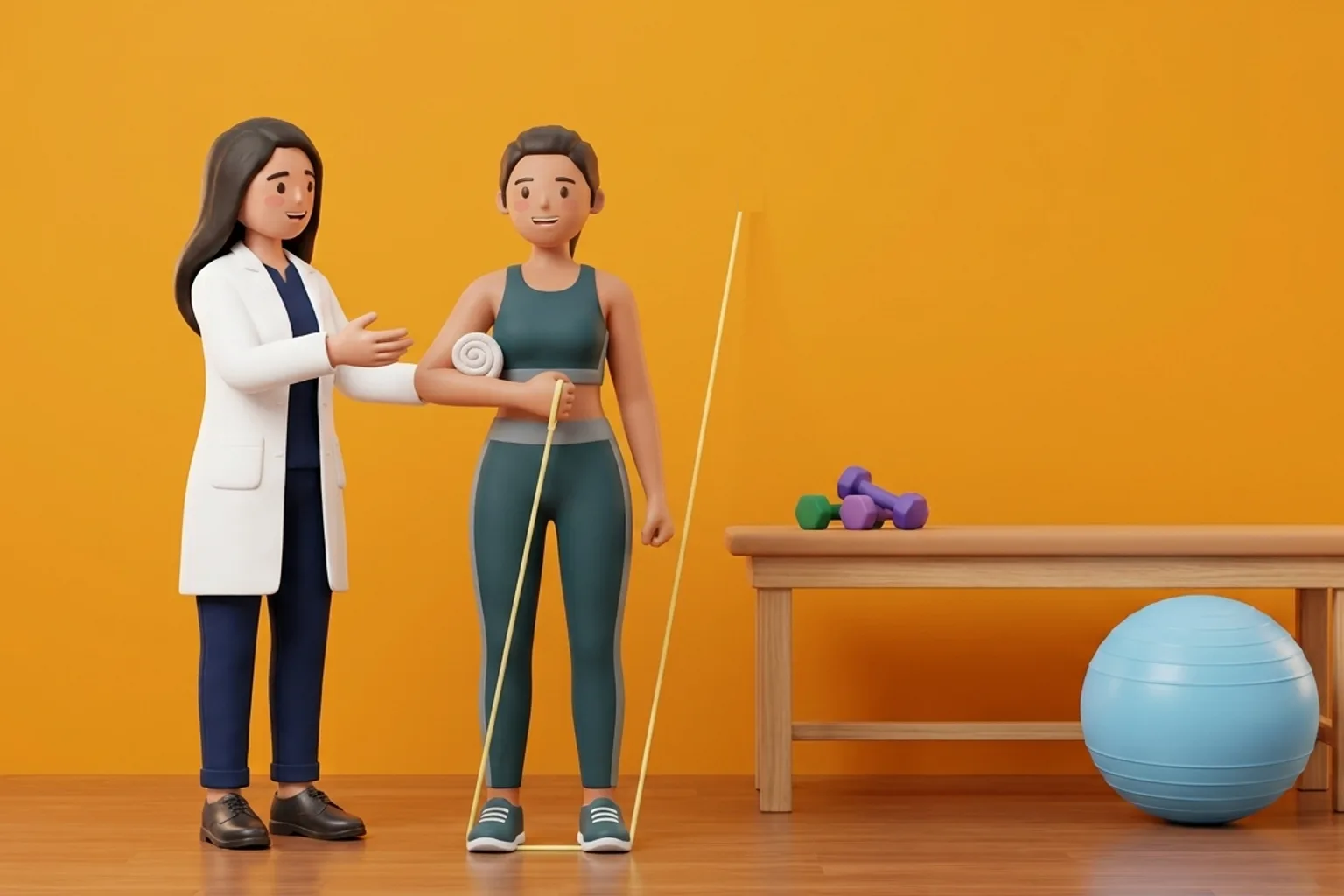
Objective: Stimulate regional lymphatic and venous clearance of bursal swelling through gentle muscle pumping without skin friction
- 1Sit comfortably in an armchair with your arm resting on a supportive cushion, keeping the elbow elevated above heart level.
- 2Slowly bend your elbow to ninety degrees, gently contracting your biceps without clenching your fist.
- 3Slowly straighten your elbow toward comfortable extension, engaging your triceps smoothly without snapping into lockout.
- 4Simultaneously open and close your hand into a gentle fist five times to activate the forearm muscle pump.
- 5Repeat this rhythmic, non-resistant pumping sequence continuously for two to three minutes.
| Clinical Assessment Parameter | Aseptic (Mechanical / Traumatic) Bursitis | Septic (Bacterial Infection) Bursitis |
|---|---|---|
| Erythema and Local Skin Warmth | Absent or minimal; skin appears normal in color or mildly stretched; temperature matches uninjured arm | Prominent, intense erythema spreading beyond the bursa; marked local calor (heat) on palpation |
| Pain and Tenderness | Painless or mild dull discomfort; non-tender to light palpation; full pain-free passive elbow flexion | Severe, throbbing pain; exquisitely tender to the lightest touch; passive elbow flexion severely restricted by pain |
| Systemic Fever and Chills | Systemic signs completely absent; normal body temperature; normal peripheral white blood cell count | Fever present in over 60 percent of cases; chills, diaphoresis, and elevated systemic inflammatory markers (CRP/ESR) |
| Primary Treatment Strategy | Compression bandage, gel padding, avoidance of leaning; needle aspiration generally avoided | Urgent diagnostic aspiration for culture and gram stain; oral or intravenous antibiotics; surgical bursectomy if refractory |
If redness around the elbow tip begins expanding rapidly down the forearm or up the arm, accompanied by ascending red streaks (lymphangitis) or skin bullae, suspect spreading streptococcal or staphylococcal cellulitis. This requires emergency hospital admission for intravenous antibiotic therapy.
Frequently Asked Questions
Should I get the fluid drained from my swollen elbow with a needle?
If your elbow is not hot, red, or severely painful, draining the fluid with a needle is usually not recommended. The fluid almost always returns within a few days, and putting a needle through the thin skin carries a real risk of introducing a dangerous bacterial infection.
Do I need a doctor referral to see an elbow physiotherapist on BookPhysio.in?
BookPhysio.in does not require a physician prescription. Under the National Commission for Allied and Healthcare Professions (NCAHP) Act 2021, patients across India enjoy direct access to autonomous registered physiotherapists. Through BookPhysio.in, you connect directly with verified clinicians and pay per session with transparent fees, completely free from advance package commitments, commission markups, or platform subscription charges.
Related condition guides



Related recovery guides & articles
BookPhysio.in Editorial Team
The BookPhysio.in editorial team writes and maintains this content, checking it against reliable clinical sources. Content follows our medical review policy: general information only, and no page claims a clinical review until a named registered physiotherapist has signed it off.
Read our medical review policy