
Orthopaedic Surgeon Referral Triggers for End-Stage Knee Osteoarthritis
In short
Identify the clinical and structural triggers that indicate conservative physiotherapy has reached its limits and surgical joint replacement is required.
In this guide (4 sections)
Physiotherapy is universally established as the first-line, non-pharmacological foundation of conservative knee osteoarthritis management. High-quality clinical practice guidelines emphasize that patients should undergo at least three to six months of structured, evidence-based conservative care, incorporating therapeutic exercise, weight optimization, biomechanical unloader bracing, and patient education, before considering invasive surgical intervention. However, conservative therapy has physiological boundaries. In a subset of patients with advanced, end-stage knee arthrosis, structural joint destruction reaches a point where articular cartilage is completely obliterated, subchondral bone is severely eburnated, and profound mechanical deformities destabilize the entire lower extremity. In such scenarios, continuing to persist solely with conservative exercises is clinically inappropriate and can lead to irreversible bone loss, severe muscle wasting, and profound psychological distress. Recognizing definitive orthopaedic surgeon referral triggers ensures that patients receive timely, life-transforming joint arthroplasty when conservative modalities have fulfilled their therapeutic potential.
Indian Family Realities: Fear of Surgery, Hospital Reluctance, and Procrastination
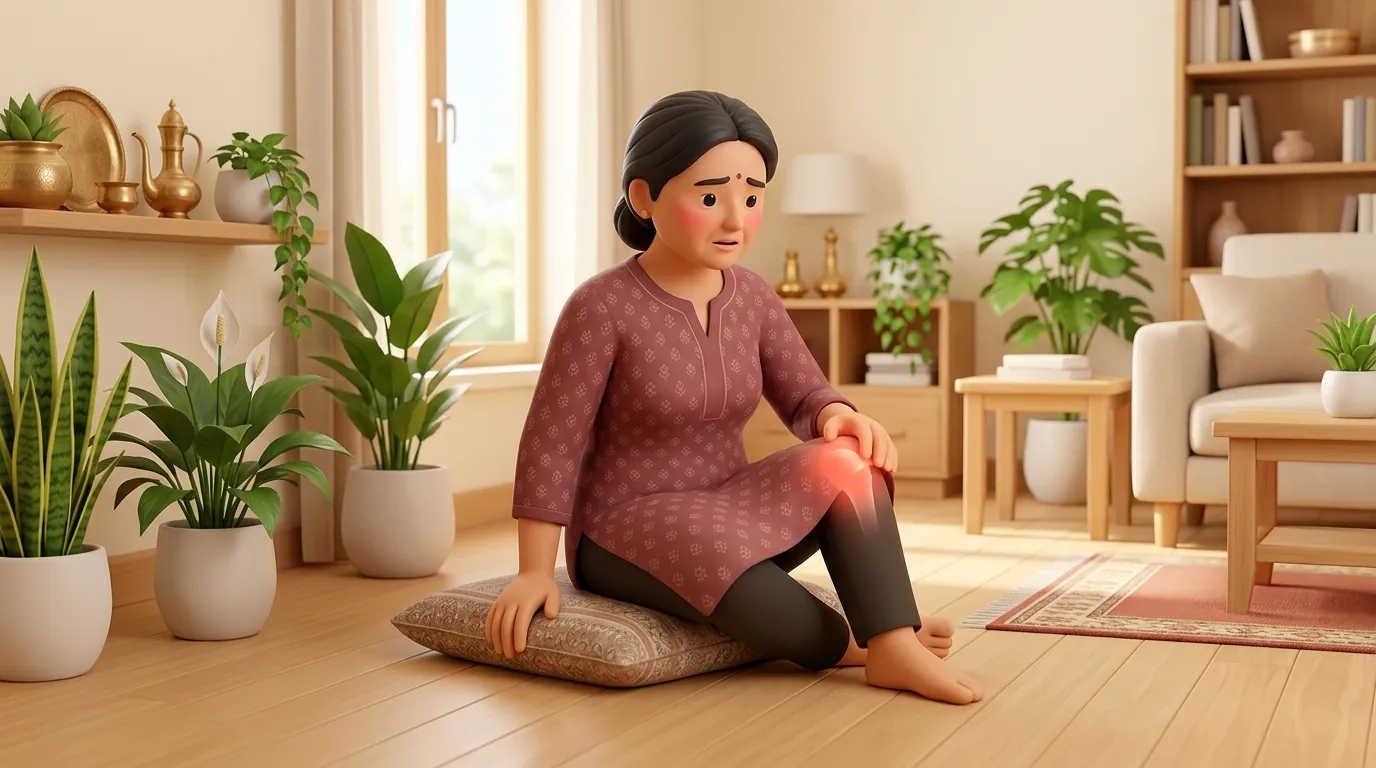
In Indian households, the prospect of total knee replacement surgery frequently evokes immense apprehension. Misconceptions abound: patients worry that surgery will leave them bedridden forever, fear surgical infections, or worry about becoming a financial burden to their adult children. Consequently, elderly family members often endure years of severe, debilitating pain, quietly retreating into homebound isolation. They avoid social gatherings, give up walking to temples, and become completely dependent on family members for basic bathroom transfers. When a physiotherapist objectively identifies that conservative therapy has reached its ceiling and gently guides the family through the surgical referral process, explaining modern surgical techniques, rapid post-operative mobilization, and high success rates, it dispels fear and restores quality of life.
Structural Joint Failure, Subchondral Bone Loss, and Fixed Contractures
The pathophysiological triggers that mandate orthopaedic surgical referral reflect structural joint failure that exceeds biological remodeling capacity. The primary structural indicator is radiographic Kellgren-Lawrence Grade 4 arthrosis characterized by total joint space obliteration (bone-on-bone contact), severe subchondral sclerosis, and large osteophytes that physically block joint excursion. Furthermore, progressive uncontained subchondral bone loss, manifesting as significant tibial plateau depression or femoral condylar defect exceeding 5 to 10 millimeters, demands urgent surgical evaluation to prevent complex bone grafting requirements during joint replacement. Severe mechanical axis deformities, such as fixed varus malalignment exceeding 15 degrees or fixed valgus exceeding 10 degrees, cannot be corrected through muscular strengthening alone. When paired with fixed flexion contractures greater than 15 to 20 degrees, the joint loses functional ambulatory mechanics.
The Objective Referral Matrix: Intractable Rest Pain, Functional Ceilings, and PROM Scores
Physiotherapists utilize a clear clinical referral matrix to identify when conservative management has been exhausted. Definitive triggers include: (1) Intractable nocturnal rest pain that consistently awakens the patient from sleep and fails to respond to oral analgesics and positioning bolsters; (2) An unyielding functional walking ceiling where the patient cannot walk more than 50 to 100 meters without severe pain, severely curtailing community independence; (3) Dynamic mechanical instability where the knee repeatedly buckles or gives way during level walking despite adequate quadriceps conditioning; and (4) Stagnation or progressive decline on validated outcome measures (such as WOMAC total score remaining above 60/100 or KOOS-ADL remaining below 40/100) despite 12 weeks of fully compliant physiotherapy.
Gentle Seated Active Quadriceps Maintenance and Joint Decompression Drill
Objective: Maintain baseline quadriceps motor firing and capsular flexibility while awaiting orthopaedic surgical consultation
- 1Sit upright in a comfortable, sturdy armchair with your back supported and your feet resting flat on the floor.
- 2Place a rolled towel or soft foam pad beneath your thigh on the affected side just above the knee crease.
- 3Slowly kick your foot upward, straightening your knee through whatever pain-free arc of motion is comfortably available.
- 4Hold the top position for 3 to 5 seconds, tightening your thigh muscle gently without straining through severe pain.
- 5Lower your foot smoothly back to the floor under control, resting for 5 seconds before repeating.
| Clinical Dimension | Continue Conservative Physiotherapy | Mandatory Orthopaedic Surgical Referral Trigger | Clinical Significance |
|---|---|---|---|
| Pain Pattern | Pain occurs primarily during high-demand loading; settles quickly with rest | Intractable nocturnal rest pain waking patient; constant unremitting bone ache | Nocturnal pain indicates severe subchondral bone congestion and joint failure |
| Functional Ambulation | Can walk >500 meters independently; manages domestic transfers safely | Severe functional walking ceiling <50 to 100 meters; dependent for transfers | Loss of basic domestic independence severely compromises systemic health |
| Structural Deformity | Mild to moderate alignment deviation (<10 degrees); fully flexible joint | Fixed varus/valgus deformity >15 degrees; fixed flexion contracture >20 degrees | Fixed contractures cannot be overcome conservatively and cause pelvic obliquity |
| Response to Therapy | Measurable improvements in pain, strength, and KOOS scores over 6 to 12 weeks | Zero clinical improvement or progressive functional decline despite 12 weeks of care | Signals that mechanical joint destruction has exceeded conservative capacity |
Immediate, emergent orthopaedic referral is required if a patient presents with sudden true mechanical locking of the knee (inability to extend the knee caused by a displaced bucket-handle meniscal fragment or loose osteochondral body), an acute suspected septic joint effusion, or an acute structural subchondral insufficiency fracture with impending plateau collapse. Do not delay referral in these acute structural scenarios.
Frequently Asked Questions
How do I know when physiotherapy has done all it can and it is finally time for knee replacement surgery?
It is time to consult an orthopaedic surgeon for knee replacement when your knee pain regularly wakes you up from sleep at night, when you cannot walk even 100 meters without severe pain, when your leg has developed a severe bent or bowed shape that you cannot straighten, and when three months of dedicated physiotherapy have failed to improve your quality of life.
Do I need a doctor referral to see a knee osteoarthritis physiotherapist on BookPhysio.in?
BookPhysio.in does not require a doctor referral. Under the National Commission for Allied and Healthcare Professions (NCAHP) Act 2021, patients across India enjoy direct access to autonomous registered physiotherapists. Through BookPhysio.in, you connect directly with verified clinicians and pay per session with transparent fees, completely free from advance package commitments, commission markups, or platform subscription charges.
Related condition guides

Related recovery guides & articles
BookPhysio.in Editorial Team
The BookPhysio.in editorial team writes and maintains this content, checking it against reliable clinical sources. Content follows our medical review policy: general information only, and no page claims a clinical review until a named registered physiotherapist has signed it off.
Read our medical review policy