
Ottawa Ankle Rules: Radiographic Exclusion of Fractures in Acute Lateral Sprains
In short
Understand the Ottawa Ankle Rules, clinical palpation landmarks, weight-bearing criteria, and diagnostic accuracy for safely ruling out ankle fractures.
In this guide (4 sections)
Acute inversion injuries of the ankle and midfoot are among the most common presentations to emergency departments and outpatient physiotherapy clinics worldwide. Historically, fear of missing an occult fracture led clinicians to order routine radiographs for virtually every painful sprained ankle, resulting in high healthcare costs, unnecessary ionizing radiation exposure, and prolonged emergency room wait times. To standardize diagnostic triage, the Ottawa Ankle Rules (OAR) were developed and rigorously validated as an evidence-based clinical decision aid. When administered by experienced registered physiotherapists, the Ottawa Ankle Rules boast a sensitivity approaching nearly one hundred percent for identifying clinically significant malleolar and midfoot fractures. Applying these rules allows clinicians to safely exclude fractures and avoid unnecessary radiographs in over thirty to forty percent of acute presentations, while ensuring that true skeletal injuries are promptly identified for orthopaedic management.
Navigating High-Impact Street Falls, Bus Steps, and Crowded Indian Commutes
In Indian urban centers, musculoskeletal trauma frequently arises from dynamic street-level hazards. Stepping off an overcrowded local bus before it has come to a complete halt is a daily reality for millions of commuters in cities like Chennai, Pune, and Ahmedabad. A passenger landing unevenly onto irregular asphalt experiences substantial axial impact combined with rapid inversion, which can produce an avulsion fracture of the lateral malleolus or base of the fifth metatarsal rather than a simple ligament sprain. Similarly, tripping over exposed telecommunication cables or concrete construction debris during night walks along poorly lit streets produces acute, high-energy impact injuries. For physiotherapists evaluating patients in outpatient or home settings across India, applying the Ottawa Ankle Rules provides an immediate, reliable filter to distinguish between a soft-tissue ligamentous injury that can begin early rehabilitation and an undisplaced fracture requiring urgent hospital imaging.
Diagnostic Accuracy, Anatomical Palpation Zones, and Fracture Biomechanics
The high diagnostic accuracy of the Ottawa Ankle Rules rests upon precise anatomical palpation of four specific skeletal landmarks vulnerable to tensile avulsion or shear fracture during inversion trauma. An ankle radiographic series is strictly indicated only if there is pain in the malleolar zone accompanied by any one of three findings: bone tenderness along the posterior edge of the distal six centimetres of the lateral malleolus, bone tenderness along the posterior edge of the distal six centimetres of the medial malleolus, or the inability of the patient to bear weight both immediately after the injury and for four steps during the clinical evaluation. Similarly, a foot radiographic series is indicated if there is pain in the midfoot zone accompanied by bone tenderness at the base of the fifth metatarsal (where the peroneus brevis tendon or lateral plantar fascia can avulse bone), bone tenderness over the navicular bone (susceptible to midfoot impaction or tibialis posterior avulsion), or the inability to take four weight-bearing steps.
Immediate Post-Screening Mobilisation versus Immobilisation Protocols
When a comprehensive clinical evaluation demonstrates negative findings across all Ottawa criteria, the clinician can confidently exclude an acute fracture and immediately initiate functional soft-tissue management. Unlike fracture protocols that enforce strict non-weight-bearing immobilization, acute ligamentous sprains with negative Ottawa findings benefit from early protected weight-bearing. Registered physiotherapists fit patients with a semi-rigid functional stirrup brace, which provides coronal-plane stability while permitting normal sagittal-plane heel-to-toe gait. Active ankle pumps, gentle calf isometric contractions, and elevation protocols are initiated on day one. By ruling out fracture early, patients avoid the detrimental effects of prolonged plaster cast immobilization, including rapid gastrocnemius muscle atrophy, articular cartilage softening, and prolonged reflex sympathetic joint stiffness, thereby accelerating their functional return to work and daily activities.
Protected Assisted Four-Step Weight-Bearing Progression with Supportive Bracing
Objective: Safely verify functional weight tolerance and restore symmetrical limb loading following negative fracture exclusion
- 1Secure a semi-rigid stirrup ankle brace over a clean cotton sock, ensuring the bilateral uprights align comfortably along your malleoli.
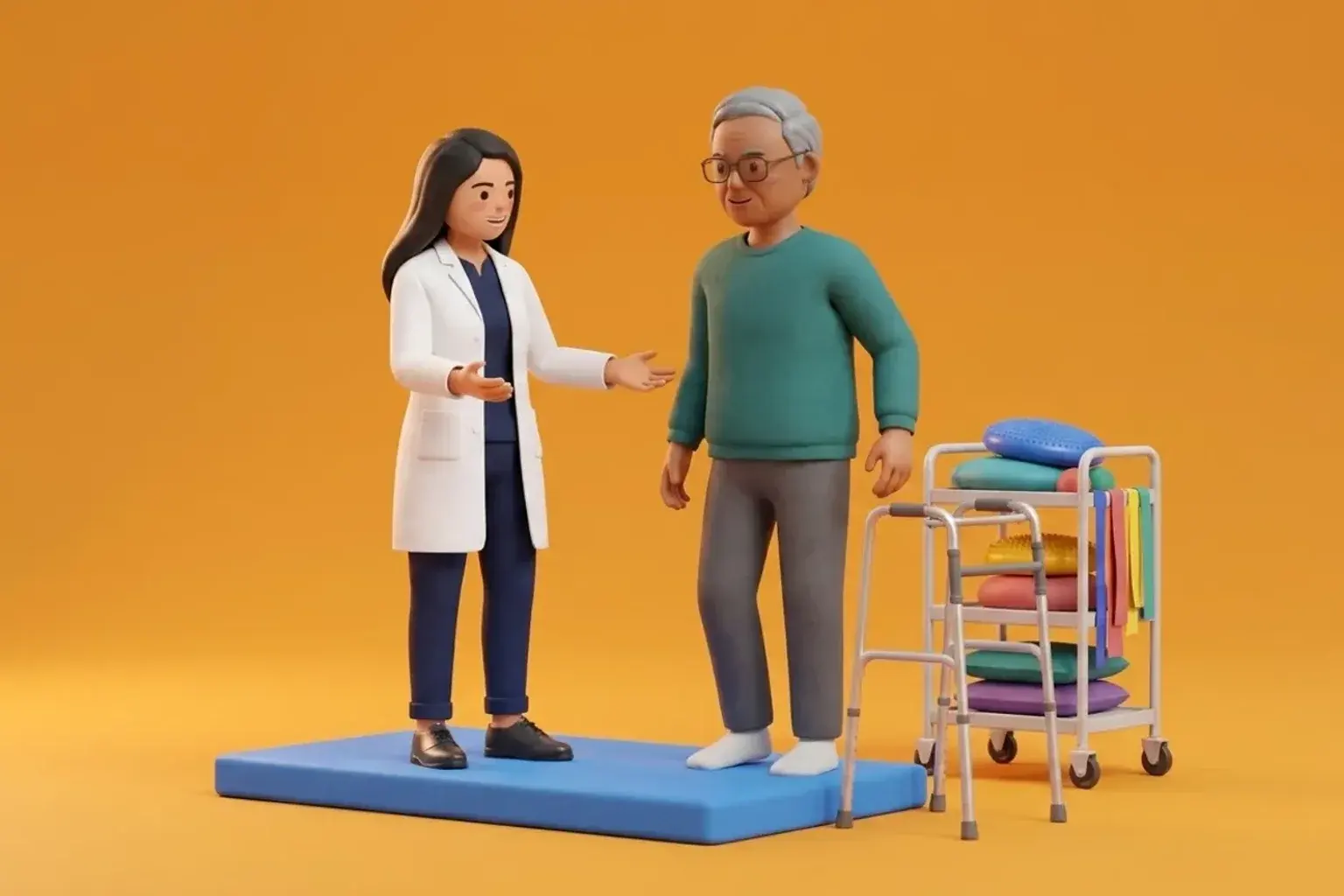
- 2Stand tall between two sturdy parallel surfaces, such as kitchen countertops or a stable walker, placing your hands firmly for support.
- 3Shift thirty to forty percent of your body weight onto the injured limb, ensuring your entire foot is placed flat on the floor.
- 4Under upper-body guidance, take four slow, deliberate steps forward, focusing on rolling smoothly from heel strike to toe push-off.
- 5Turn carefully and walk four steps back, pausing to assess for any sharp bony pain or severe joint instability.
| Anatomical Assessment Zone | Specific Palpation Landmark | Biomechanical Fracture Mechanism | Radiographic Indication Threshold |
|---|---|---|---|
| Lateral Malleolar Zone | Posterior edge or distal tip of the lateral malleolus (distal 6 cm) | Tensile avulsion by calcaneofibular ligament or oblique shear by talus | Tenderness on palpation mandates a standard ankle X-ray series |
| Medial Malleolar Zone | Posterior edge or distal tip of the medial malleolus (distal 6 cm) | Avulsion by deltoid ligament or shearing impaction by the talar dome | Tenderness on palpation mandates a standard ankle X-ray series |
| Fifth Metatarsal Base | Tuberosity at the base of the fifth metatarsal (styloid process) | Avulsion by the lateral band of plantar fascia or peroneus brevis | Tenderness on palpation mandates a dedicated foot X-ray series |
| Navicular Bone Zone | Medial midfoot prominence over the navicular tuberosity | Impaction during forced midfoot pronation or tibialis posterior avulsion | Tenderness on palpation mandates a dedicated foot X-ray series |
The inability to take four weight-bearing steps (two steps on each foot, even with an antalgic limp) immediately after the injury and in the examination room is an independent criterion for radiographs, regardless of whether malleolar tenderness is present. If severe pain prevents weight-bearing, radiographs must be ordered to exclude occult syndesmotic disruption or non-displaced fractures.
Frequently Asked Questions
Can the Ottawa Ankle Rules miss a hairline fracture in the ankle?
Multiple extensive clinical validation trials involving tens of thousands of patients have proven that the Ottawa Ankle Rules possess a sensitivity between ninety-eight and one hundred percent for detecting clinically significant fractures. A negative test virtually guarantees that no fracture requiring surgical fixation or prolonged cast immobilization is present, making it exceptionally safe for clinical decision-making.
Do I need a doctor referral to see an ankle sprain physiotherapist on BookPhysio.in?
BookPhysio.in does not require a doctor referral. Under the National Commission for Allied and Healthcare Professions (NCAHP) Act 2021, patients across India enjoy direct access to autonomous registered physiotherapists. Through BookPhysio.in, you connect directly with verified clinicians and pay per session with transparent fees, completely free from advance package commitments, commission markups, or platform subscription charges.
Related condition guides



Related recovery guides & articles
BookPhysio.in Editorial Team
The BookPhysio.in editorial team writes and maintains this content, checking it against reliable clinical sources. Content follows our medical review policy: general information only, and no page claims a clinical review until a named registered physiotherapist has signed it off.
Read our medical review policy