
Overhead Athletic Mechanics: Cricket Bowling and Badminton Smashes in TOS
In short
Examine how the explosive overhead mechanics of cricket fast bowling and badminton smashes strain the thoracic outlet, and master sports-specific rehab.
In this guide (4 sections)
Competitive and recreational sports across India heavily feature dynamic overhead disciplines that impose extreme kinematic demands upon the shoulder girdle. Cricket fast bowling and competitive badminton are two prime examples where athletes execute explosive, high-velocity arm movements that repeatedly test the physiological limits of the thoracic outlet. During the delivery stride of a fast bowler, the bowling arm transitions from full hyperabduction and external rotation through rapid circumduction and violent deceleration, generating massive tensile distraction forces across the brachial plexus. Similarly, executing a powerful jump smash in badminton requires explosive overhead extension, lateral trunk flexion, and rapid internal rotation that forcefully compresses the neurovascular bundle within the subpectoral and costoclavicular tunnels. When these repetitive sports mechanics are superimposed on underlying scapular dyskinesis or muscular tightness, athletes frequently develop neurogenic or vascular thoracic outlet syndrome.
Weekend Cricket Matches, Indoor Badminton Leagues, and Inadequate Warm-Ups
Recreational athletics in Indian cities have expanded dramatically with the rise of floodlit turf cricket grounds and indoor badminton clubs in cities like Bengaluru, Hyderabad, and Mumbai. Working professionals frequently transition directly from eight hours of slouched desk work to high-intensity evening badminton matches or weekend club cricket matches with little or no dynamic warm-up. Fast bowlers attempting to bowl eight to ten overs at high speeds experience profound shoulder fatigue, causing the scapular stabilizers to fail and allowing the arm to drop into excessive traction during the follow-through. Badminton players executing dozens of jump smashes in hot, humid indoor courts repeatedly subject their dominant arm to extreme retroversion and hyperabduction. Players frequently describe acute arm heaviness, loss of smash power, and tingling radiating down into the little finger that lingers for hours after the match concludes. Weekend athletes frequently attempt to play through the discomfort, believing that warming up will banish the numbness, only to experience severe multi-day neurological flare-ups afterwards.
High-Velocity Shear, Distraction Traction, and Vascular Micro-Trauma
The sports-specific pathomechanics of overhead athletics involve distinct kinetic phases that threaten thoracic outlet integrity. In cricket fast bowling, the delivery phase concludes with violent deceleration, where the posterior shoulder musculature must exert tensile forces exceeding one-half body weight to slow the rapidly extending arm. If the scapula lacks upward rotation endurance, this deceleration force acts directly as a longitudinal distraction force on the lower trunk of the brachial plexus across the first rib. In badminton, the late cocking phase of the overhead smash brings the arm into extreme horizontal abduction and external rotation, wrapping the brachial plexus cords and axillary vessels tightly around the coracoid process and pectoralis minor tendon. Over repetitive games, this mechanical shear causes micro-trauma to the vascular endothelium of the subclavian vessels and induces chronic traction neuropraxia within the lower nerve trunks. Over months of repetitive athletic overload, the constant friction between the lower trunk and the first rib provokes epineurial thickening, chronic fibrosis, and permanent reduction in longitudinal neural compliance.
Kinetic Chain Conditioning, Pitch Counts, and Deceleration Retraining
Rehabilitating overhead athletes with thoracic outlet syndrome requires a comprehensive kinetic chain approach that looks far beyond the shoulder itself. Physiotherapists evaluate and correct deficits in lumbopelvic stability, hip internal rotation, and thoracic spine extension, ensuring the athlete generates throwing or hitting velocity from the ground up rather than overloading the shoulder girdle. Eccentric strengthening of the posterior rotator cuff and scapular retractors prepares the upper extremity to dissipate high deceleration forces smoothly. Clinicians implement strict workload monitoring, using pitch counts in cricket and tracking smash volume in badminton during the recovery phase. Technique modifications, such as encouraging a more upright bowling trunk angle or modifying the badminton follow-through, reduce mechanical traction across the thoracic outlet, facilitating a safe return to competitive play. Progressive sports-specific conditioning rebuilds dynamic scapular control, ensuring that the kinetic forces generated during competitive play are absorbed by strong muscles rather than delicate neurovascular structures, supporting long-term performance.
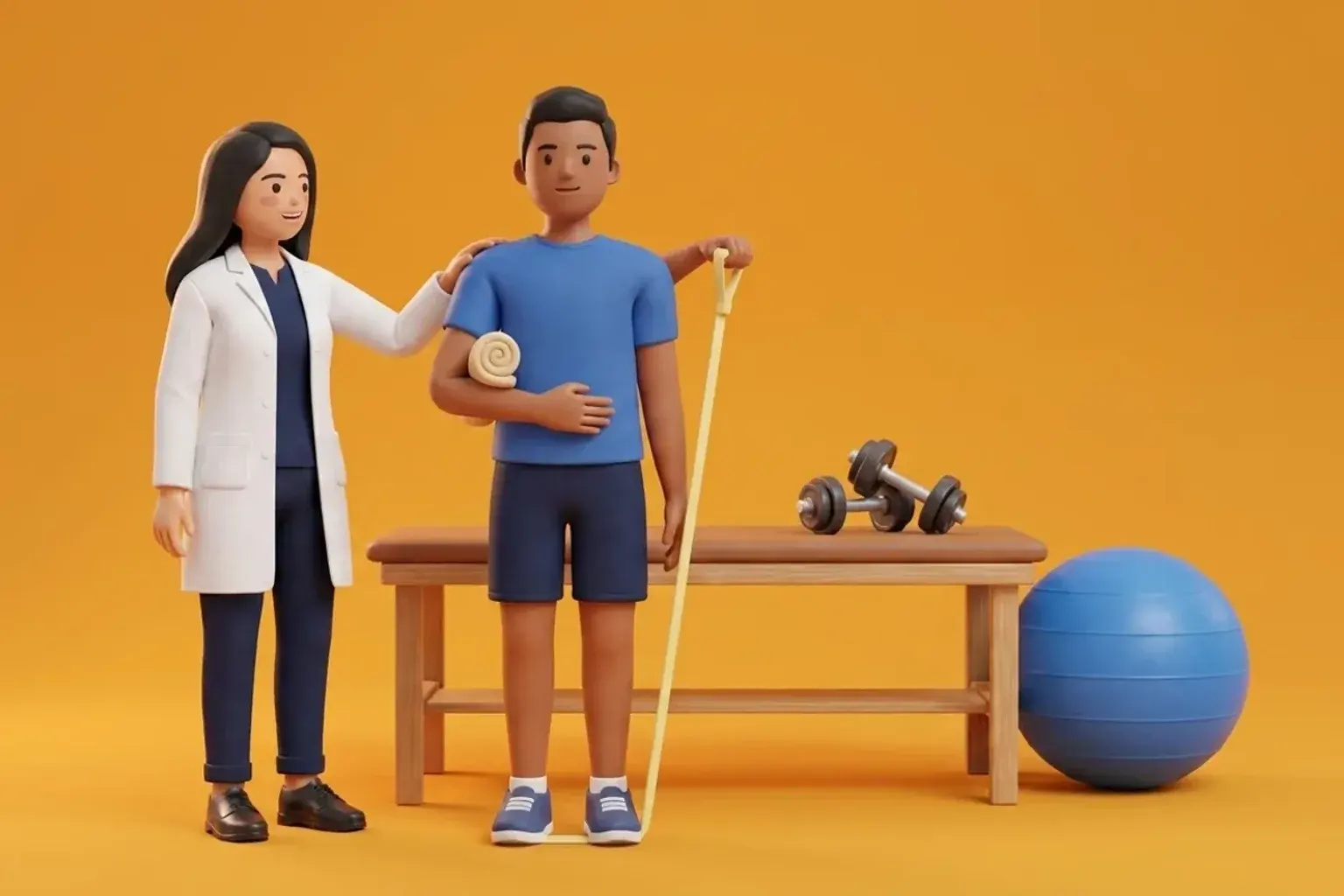
Deceleration Catch and Scapular Brake with Resistance Band
Objective: Build eccentric deceleration strength in the posterior scapular muscles to protect the brachial plexus during follow-through
- 1Anchor a medium resistance band securely at head height in front of you.
- 2Grasp the band handle with your dominant athletic hand and step back to create light tension.
- 3Start with your arm elevated in the late-cocking position (elbow bent at 90 degrees at shoulder height).
- 4Explosively bring your arm downward and across your opposite hip, mimicking the follow-through of a throw or smash.
- 5Over the final third of the movement, actively engage your shoulder blade muscles to decelerate the band smoothly over 2 seconds, avoiding abrupt jarring.
| Athletic Phase | Cricket Fast Bowling Delivery | Badminton Overhead Jump Smash | Thoracic Outlet Vulnerability |
|---|---|---|---|
| Late Cocking / Wind-Up | Maximal thoracic hyperextension, front foot plant, arm abduction | Jump landing, full hyperabduction, maximal external rotation | Severe retropectoral compression and axillary vessel stretching |
| Acceleration / Impact | Rapid circumduction, high internal rotational velocity (>7000 deg/sec) | Explosive wrist snap, forearm pronation, rapid shoulder flexion | High shear force across costoclavicular space and subclavian vein |
| Deceleration / Follow-Through | Violent distraction force as arm reaches terminal extension | High eccentric deceleration load across posterior shoulder girdle | Longitudinal tensile traction on C8-T1 lower trunk over first rib |
Young, muscular overhead athletes are at the highest risk for acute subclavian vein effort thrombosis (Paget-Schroetter syndrome). If a cricket bowler or badminton player presents with sudden, dramatic arm swelling, purplish skin discoloration, a sensation of bursting pressure, and prominent superficial veins across the pectoral region following a vigorous match, treat as a vascular emergency. Immediately refer for emergency Doppler ultrasound and vascular consultation.
Frequently Asked Questions
Can I continue playing cricket or badminton if I have thoracic outlet syndrome?
You should temporarily pause competitive, high-velocity overhead bowling or aggressive jumping smashes while your nerves and blood vessels are inflamed. Continuing to forcefully whip your arm overhead while your outlet is narrowed risks causing severe nerve inflammation or blood clot formation in your veins. Under the guidance of a sports physiotherapist, you can correct your posture, strengthen your stabilizing muscles, and gradually reintroduce bowling or smashing with modified mechanics once your symptoms have settled. Working closely with a registered sports physiotherapist ensures your return to sport is guided by objective healing milestones rather than guesswork.
Do I need a doctor referral to treat thoracic outlet syndrome on BookPhysio.in?
BookPhysio.in does not require a doctor referral. Under the National Commission for Allied and Healthcare Professions (NCAHP) Act 2021, patients across India enjoy direct access to autonomous registered physiotherapists. Through BookPhysio.in, you connect directly with verified clinicians and pay per session with transparent fees, completely free from advance package commitments, commission markups, or platform subscription charges.
Related condition guides



Related recovery guides & articles
BookPhysio.in Editorial Team
The BookPhysio.in editorial team writes and maintains this content, checking it against reliable clinical sources. Content follows our medical review policy: general information only, and no page claims a clinical review until a named registered physiotherapist has signed it off.
Read our medical review policy