
Pediatric Burn Contractures: Growth Plates and Developmental Milestones
In short
Managing pediatric burn injuries and growth-related contracture recurrence. Epiphyseal plate monitoring, developmental play therapy, and pediatric splinting.
In this guide (6 sections)
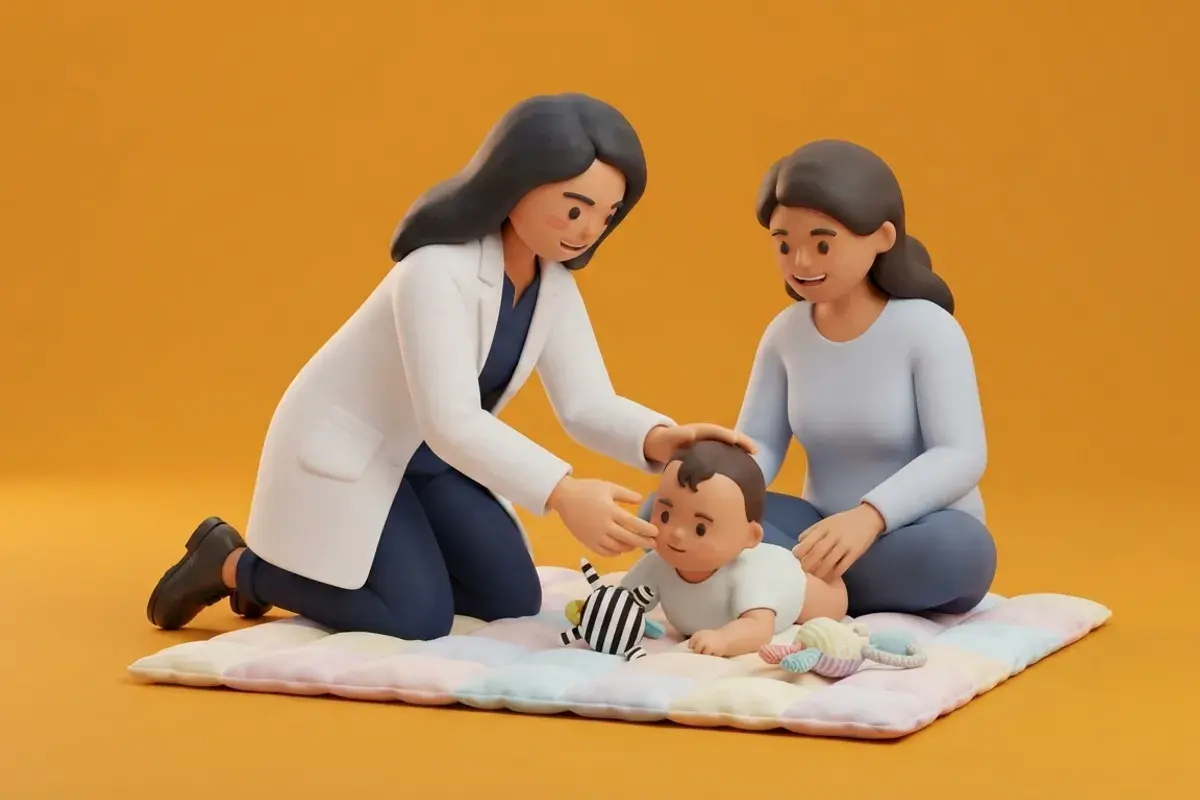
Thermal injuries in pediatric patients present unique clinical complexities that extend far beyond adult burn care. Children possess thinner skin, smaller anatomical dimensions, and actively growing musculoskeletal frameworks. As long bones rapidly elongate during developmental growth spurts, rigid inelastic burn scar bands fail to grow proportionally, producing recurrent contractures, limb length discrepancies, and joint subluxations. Specialized pediatric physiotherapy integrates growth monitoring with playful developmental rehabilitation.
Pathophysiology and Tissue Biomechanics
The epiphyseal growth plates of pediatric long bones are highly sensitive to asymmetric mechanical tension. A thick, unyielding hypertrophic scar band traversing a joint exerts continuous compressive and tethering forces across adjacent growth plates. Over months, this sustained asymmetrical loading suppresses chondrocyte proliferation on one side of the physis, leading to progressive angular bony deformities (such as genu valgum or recurvatum) and permanent skeletal remodeling.
| Age Category | Primary Developmental Goal | Burn Rehabilitation Threat | Therapeutic Play Strategy | |
|---|---|---|---|---|
| Infant (0-12 Months) | Rolling, crawling, palmar grasp | Web space contractures, palmar cupping | Textured sensory toys, crawling ramps, colorful splints | |
| Toddler (1-3 Years) | Upright bipedal walking, climbing | Equinus contractures, knee flexion | Bubble popping reaching games, soft ball kicking | |
| School-Age (4-12 Years) | Fine motor dexterity, handwriting, sports | Axillary and digital joint stiffness | Playdough modeling, obstacle courses, bicycle riding |
Pediatric Splinting Design and Non-Traumatic Fastening
Thermoplastic splints for children must feature rounded, soft edges and be fastened with colorful, wide Velcro straps to encourage emotional acceptance. Because children can easily unfasten splints, therapists frequently employ soft tubular stockinette covers or gentle self-adherent wraps over splint straps. Splints require inspection and remolding every two to three weeks to accommodate rapid skeletal growth.
Functional Developmental Reaching and Play Exercise
Objective: Facilitate maximum overhead shoulder abduction and elbow extension through purposeful play activities.
- 1Seat the child on a colorful therapy mat facing a magnetic wall board or soft wall target.
- 2Place colorful target stickers or magnetic toys at height, eighty percent of maximum reach.
- 3Encourage the child to reach overhead with both arms to grasp the toy, praising every effort.
- 4Prompt the child to hold the toy overhead for five seconds before placing it into a basket.
- 5Gradually raise the target height over the session as the child tissues warm up and lengthen.
Objective Clinical Assessment and Monitoring Milestones
Rigorous objective surveillance forms the foundation of burn physical rehabilitation. Serial universal goniometric measurements document joint range of motion weekly, recording active versus passive deficits to differentiate myostatic contracture from capsular adhesion. Cutaneous vascularity and pliability are monitored systematically alongside digital photography to quantify scar thickening. Edema volumetric water displacement or circumferential tape measurements ensure compression garments maintain therapeutic hemodynamic pressure without inducing neurovascular compromise.
Regularly examine pediatric burn scars during growth spurts. A previously well-managed scar can rapidly develop severe contracture within a few months as skeletal bone outpaces scar tissue elasticity. Schedule clinical follow-ups every three months until skeletal maturity.
Navigating Family Guilt and Supportive Parenting in India
In Indian households, pediatric burn injuries often evoke profound parental guilt and emotional distress, leading to overprotective behaviors that inadvertently reinforce joint immobility. Physiotherapists provide compassionate, non-judgmental counseling, guiding parents to become active co-therapists through daily developmental play at home.
Long-Term Rehabilitation Trajectory and Tissue Remodeling
Burn scar remodeling and tissue reorganization continue for twelve to twenty-four months following initial wound re-epithelialization. During this prolonged proliferative and maturation window, myofibroblast activity requires sustained counter-tension and consistent mechanical loading. Collagen bundles gradually realign from random whorls into organized linear arrays parallel to physiological stress lines. Regular outpatient clinical reassessment ensures that positioning splints, pressure garments, and active functional exercises adapt dynamically to evolving joint range and dermal pliability.
Frequently Asked Questions
Why do pediatric burn contractures recur even after successful skin grafting?
Contractures recur because grafted and scarred skin lacks normal elastic fibers and cannot expand at the same rate as the child rapidly growing skeleton, requiring ongoing splinting, exercise, and occasional surgical releases until growth ceases.
Do I need a doctor referral to consult a home physiotherapist in India?
Under the National Commission for Allied and Healthcare Professions (NCAHP) Act 2021, patients in India possess direct access rights to consult a registered physiotherapist without a mandatory physician referral. At BookPhysio.in, every verified practitioner operates on a transparent pay-per-session model without advance package commitments, hidden charges, or platform commissions.
Related condition guides


Related recovery guides & articles
BookPhysio.in Editorial Team
The BookPhysio.in editorial team writes and maintains this content, checking it against reliable clinical sources. Content follows our medical review policy: general information only, and no page claims a clinical review until a named registered physiotherapist has signed it off.
Read our medical review policy