
Pediatric TMD: Juvenile Idiopathic Arthritis and Mandibular Micrognathia
In short
TMJ arthritis in children can quietly impair facial growth. Learn how pediatric physiotherapy preserves jaw mobility and manages condylar growth changes.
In this guide (4 sections)
Temporomandibular joint involvement in pediatric populations presents unique diagnostic and therapeutic challenges, particularly in children diagnosed with Juvenile Idiopathic Arthritis (JIA). The mandibular condyle houses a critical secondary cartilaginous growth center that remains active until late adolescence, driving the forward and downward growth of the entire lower face. Unlike adult osteoarthritis which presents with sharp pain, pediatric TMJ arthritis is notoriously asymptomatic in its early stages: up to 70 percent of affected children exhibit zero joint pain despite active synovial inflammation. Without early detection, chronic synovitis destroys the condylar growth cartilage, resulting in severe micrognathia (an underdeveloped, receding lower jaw frequently termed "bird-face deformity"), mandibular asymmetry, retrognathia, and progressive anterior open bite.
Domestic Realities and Daily Functional Loading in India
In Indian multi-generational households, subtle changes in a child jaw alignment or a mildly receding chin are frequently dismissed as normal inherited family traits rather than inflammatory joint disease. Parents often do not seek clinical evaluation until the child struggles to chew regular family meals like rotis, carrots, or apples, or until a school dentist notes that the front teeth no longer touch during biting. Furthermore, children with JIA in tier-2 and tier-3 Indian cities frequently lack access to pediatric rheumatology specialists, with joint complaints initially treated as calcium deficiencies or growing pains. Physiotherapists collaborate closely with pediatricians and orthodontists, designing playful, gentle, stress-free jaw exercises that children can practice easily at home without feeling frightened or overwhelmed.
Condylar Cartilage Growth Plates, Pannus Formation, and Asymmetry
The biological mechanism of mandibular growth impairment in JIA centers on the fibrocartilaginous condylar head. Unlike long bones that possess a discrete epiphyseal growth plate separated by bone, the condylar growth cartilage lies immediately beneath the articular surface. Active synovial inflammation (synovitis) releases destructive matrix metalloproteinases and inflammatory cytokines directly into the synovial fluid, while proliferative synovial pannus invades and erodes the superficial pre-chondroblastic proliferative layer. Destruction of these stem cells halts normal endochondral ossification. If involvement is unilateral, the healthy contralateral condyle continues to grow normally, causing severe facial asymmetry with the chin deviating toward the affected, stunted side.
Pediatric Physiotherapy Protocols and Gentle Motion Preservation
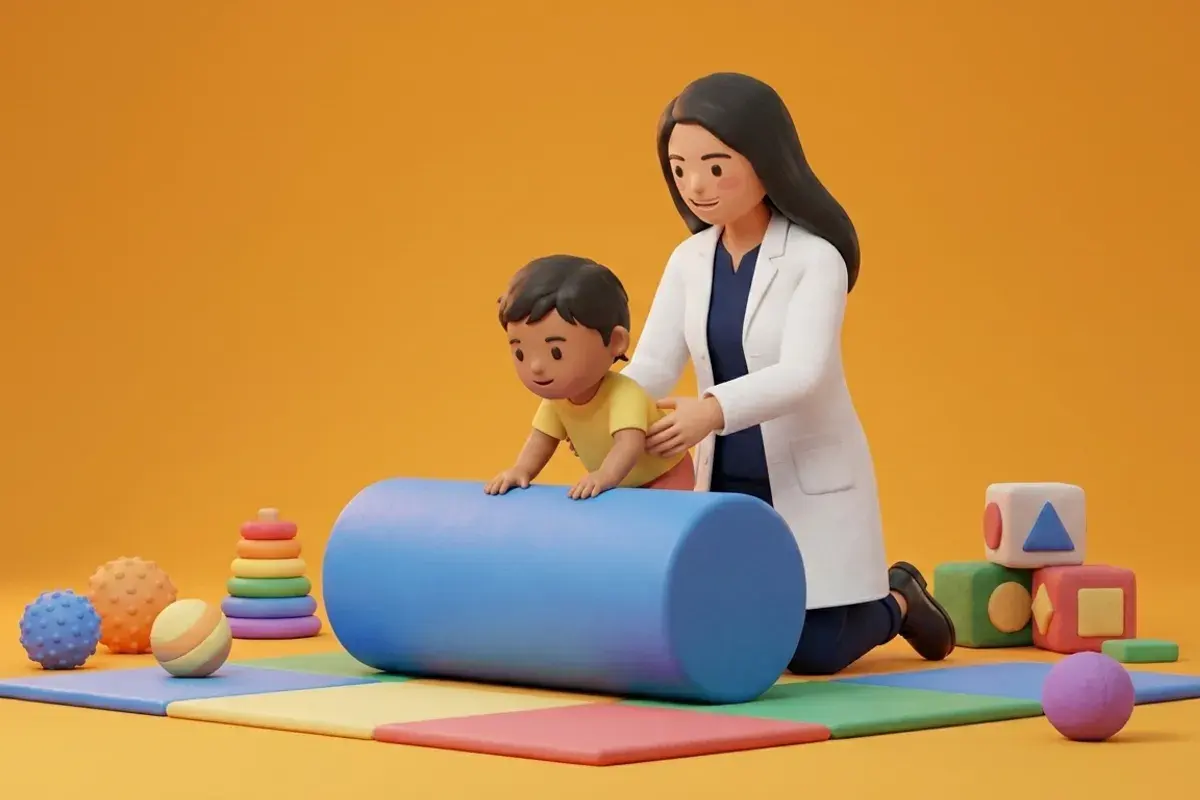
Rehabilitation in pediatric TMD must be gentle, non-aggressive, and strictly adapted to the child developmental stage. Aggressive manual manipulation or forceful mechanical stretching is strictly contraindicated, as it can traumatize fragile, inflamed growth cartilage. Treatment focuses on active-assisted range of motion within the pain-free zone, playful mirror visual feedback drills, and isometric stabilization. The primary clinical objective is preserving joint mobility, stimulating synovial fluid nutrition, and preventing fibrous ankylosis while medical systemic therapies (such as disease-modifying anti-rheumatic drugs or biologics prescribed by the pediatric rheumatologist) halt inflammatory disease progression.
Pediatric Gentle Tongue-Guided Mandibular Tracking Drill
Objective: Maintain smooth condylar mobility and symmetrical jaw opening without joint irritation in children
- 1Have the child sit comfortably in front of a mirror with a parent or caregiver sitting beside them for encouragement.
- 2Ask the child to make a clicking sound with their tongue and "glue" the tongue tip to the roof of their mouth.
- 3Instruct the child to slowly open their mouth like a baby bird, keeping their tongue stuck to the roof of their mouth.
- 4Watch the mirror together to ensure the jaw drops down in a straight line without wiggling to either side.
- 5Gently close the mouth back to the resting position where teeth do not touch, rewarding the child with a positive smile.
| Diagnostic Feature | Pediatric JIA TMJ Arthritis | Adult TMJ Osteoarthritis | Clinical Significance |
|---|---|---|---|
| Subjective Pain Sensation | Frequently silent / completely painless (up to 70% of cases) | Prominent, sharp joint pain, ear aching, masticatory soreness | Absence of pain in children does not rule out destructive arthritis |
| Impact on Skeletal Growth | Severe: micrognathia, facial asymmetry, anterior open bite | Zero growth impact (skeletal maturity already attained) | Pediatric disease threatens lifelong craniofacial symmetry |
| Primary Rehabilitation Goal | Gentle mobility preservation, growth monitoring, zero trauma | Joint offloading, pain relief, capsular remodeling, function | Pediatric therapy strictly avoids forceful stretching or high loads |
If a child with or without known joint arthritis develops progressive receding of the chin (micrognathia), a newly developing gap between the upper and lower front teeth (anterior open bite), or asymmetric facial growth with chin deviation, immediate referral to a pediatric rheumatologist and maxillofacial specialist for contrast-enhanced magnetic resonance imaging (MRI) is essential to detect silent active condylar destruction.
Frequently Asked Questions
Can jaw exercises help my child jaw grow normally if they have arthritis?
Jaw exercises preserve joint mobility, prevent stiffness, and stimulate healthy joint fluid circulation. However, exercises must be combined with medical treatments prescribed by a pediatric rheumatologist to control the underlying inflammation and protect your child natural facial growth.
Do I need an ENT or dental referral before consulting a TMJ physiotherapist on BookPhysio.in?
BookPhysio.in does not ask for a doctor referral. Under the National Commission for Allied and Healthcare Professions (NCAHP) Act 2021, Indian patients hold direct first-contact access to registered physiotherapists. On BookPhysio.in, you schedule directly and pay your clinician per session, with zero advance package traps, mandatory block bookings, or platform commission fees.
Related condition guides


Related recovery guides & articles
BookPhysio.in Editorial Team
The BookPhysio.in editorial team writes and maintains this content, checking it against reliable clinical sources. Content follows our medical review policy: general information only, and no page claims a clinical review until a named registered physiotherapist has signed it off.
Read our medical review policy