
Managing Post-Traumatic Stress and Panic During ICU Mobilization
In short
Manage PTSD, panic, and anxiety during early ICU mobilization. Trauma-informed physiotherapy, grounding techniques, and emotional safety in India.
In this guide (2 sections)
Post-Traumatic Stress Disorder (PTSD) and acute procedural anxiety afflict up to 35 percent of critical care survivors. Terrifying ICU experiences (including hallucinations, feelings of suffocation during mechanical ventilation, painful line insertions, and profound physical paralysis) leave lasting psychological scars. When physiotherapists attempt early mobilization, physical triggers (such as feeling breathless or seeing medical lines) can induce acute panic attacks.
Neurobiology of Fear Conditioning, Amygdala Hyperarousal, and Panic
In survivors of critical illness, severe systemic stress, hypoxia, and deliriant hallucinations condition the amygdala into a state of hyper-reactive vigilance. When a recovering patient is moved upright or experiences exertional tachypnea, somatic sensory inputs (tachycardia, breathlessness, thoracic tightness) mirror previous trauma memories of drowning or dying on the ventilator. The hyperaroused amygdala bypasses prefrontal cortical logic, triggering an acute sympathetic panic cascade: diaphoresis, hyperventilation, terror, and refusal to move.
| Trauma-Informed Principle | Clinical Meaning | Therapeutic Action During Mobility | Patient Psychological Benefit | |
|---|---|---|---|---|
| Safety & Predictability | Establishing complete physical and environmental transparency | Explain every planned movement step before touching the patient | Dampens amygdala alarm, reduces autonomic fear surges | |
| Patient Agency & Choice | Restoring personal control over physical boundaries | Establish an unambiguous stop signal (such as raising the left hand) | Restores feelings of bodily autonomy and dignity | |
| Somatic Grounding | Anchoring conscious awareness in safe physical sensations | Pressing bare feet firmly against the floor, tactile hand holding | Interrupts panic dissociation, grounds patient in present reality | |
| Pacing & Micro-Steps | Deconstructing intimidating movements into small manageable components | Sit edge of bed for 2 minutes before attempting standing | Builds mastery without triggering catastrophic panic |
Trauma-Informed Mobilization and De-Escalation Protocols
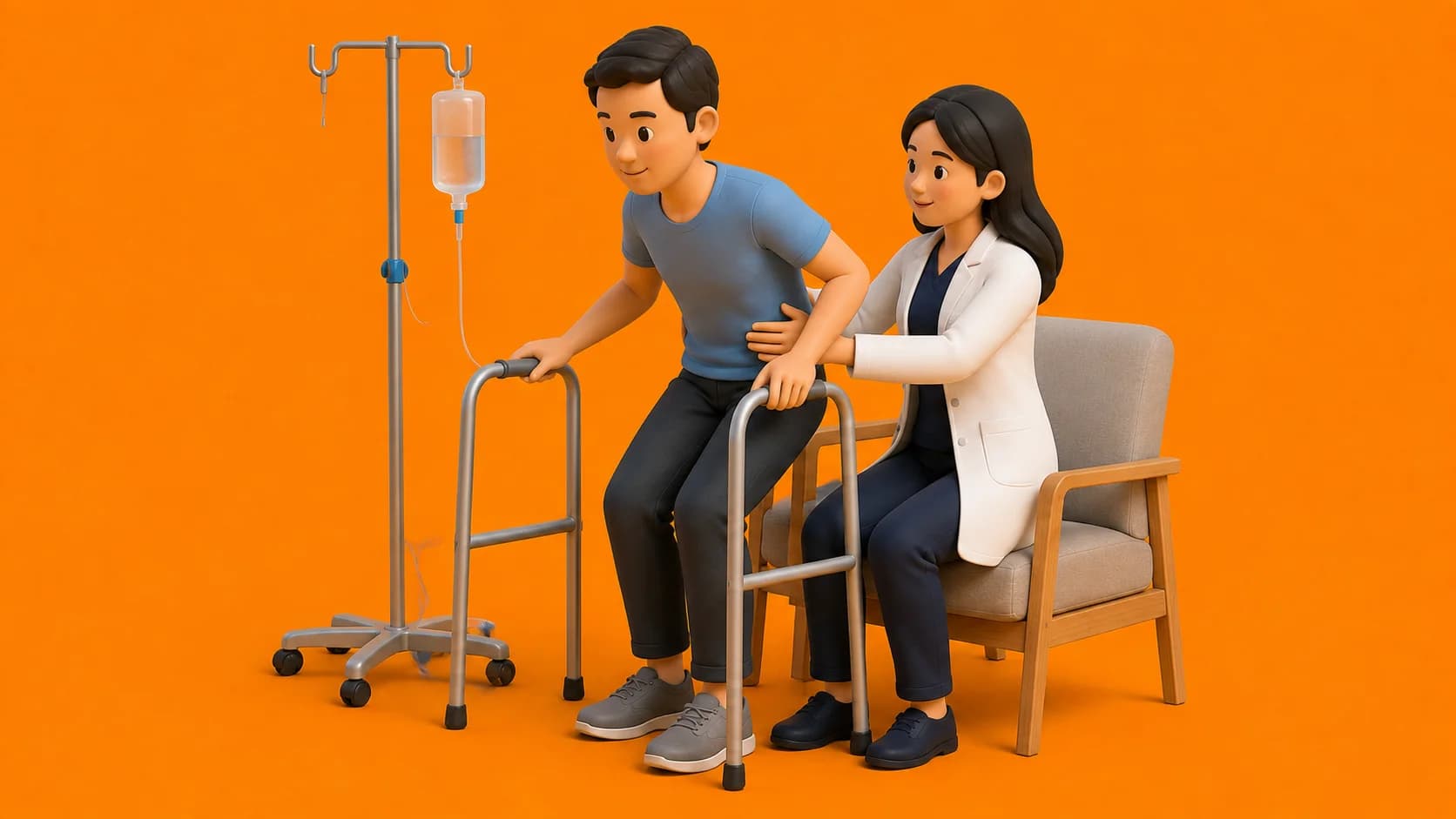
Before initiating mobility, the therapist conducts a brief emotional check-in. The session begins by negotiating an explicit, non-verbal stop signal (such as lifting one finger or raising the left hand), guaranteeing the patient that movement will freeze immediately upon request. The clinician maintains calm, unhurried body language, uses low soothing vocal tones, and continuously validates patient feelings rather than dismissing fears.
Somatic Sensory Grounding and 5-4-3-2-1 Orienting Drill
Objective: Abort acute panic surges and re-establish prefrontal cortical control during upright sitting.
- 1Assist the patient to sit securely on the bed edge, placing both of your hands firmly over their shoulders.
- 2Instruct the patient to press both feet firmly into the floor, feeling the solid surface beneath.
- 3Guide the patient to take a slow nasal breath and name five objects they can see in the room.
- 4Prompt the patient to identify four things they can physically feel (e.g., bed sheet, therapist hands, slippers).
- 5Continue guiding through hearing three sounds, identifying two scents, and noting one positive feeling of safety.
Domestic Recovery in India and Multigenerational Support
In Indian households, family members often misinterpret PTSD symptoms as stubbornness or lack of willpower, urging the patient to 'stay strong.' Visiting physiotherapists educate the multi-generational family on trauma psychology, explaining that panic reactions are involuntary neurochemical responses. Families are taught to create a peaceful, supportive domestic atmosphere, avoiding harsh shouting or sudden startling noises.
Long-Term Trajectory and Psychological Recovery
With trauma-informed physical rehabilitation, acute panic and PTSD symptoms progressively decline over the first three to six months. Patients regain trust in their bodies and medical environments, transitioning toward confident, autonomous physical independence.
Never restrain a panicking patient or force physical movement against resistance. Forcible movement reinforces traumatic conditioning and escalates panic into severe cardiovascular distress.
What should a physiotherapist do if a patient has an acute panic attack while standing?
Immediately pause all movement, ensure physical stability by contact guarding or sitting the patient back on the bed edge, speak in a low calm voice, establish direct eye contact, and guide slow rhythmic exhalations until heart rate normalizes.
Do I need a doctor referral to consult a home physiotherapist in India?
Under the National Commission for Allied and Healthcare Professions (NCAHP) Act 2021, patients in India enjoy direct access to registered physiotherapists without requiring a mandatory doctor referral. At BookPhysio.in, you consult verified physiotherapists and pay directly per session without hidden fees or platform commissions.
Related condition guides



Related recovery guides & articles
BookPhysio.in Editorial Team
The BookPhysio.in editorial team writes and maintains this content, checking it against reliable clinical sources. Content follows our medical review policy: general information only, and no page claims a clinical review until a named registered physiotherapist has signed it off.
Read our medical review policy