
Posterior Approach Hip Replacement: Dislocation Risks and Movement Precautions
In short
Understand movement restrictions and dislocation prevention following posterior approach hip replacement, including the ninety-degree flexion rule and safe transfers.
In this guide (4 sections)
The posterior surgical approach, historically referred to as the Moore or Southern approach, remains the most widely performed technique for total hip arthroplasty globally and across Indian orthopedic hospitals. This approach provides direct visualization of the acetabulum and proximal femur by splitting the fibers of the gluteus maximus and temporarily releasing the short external rotators, including the piriformis, superior gemellus, obturator internus, and inferior gemellus. At the conclusion of surgery, the surgeon performs an anatomical repair of the posterior joint capsule and reattaches the conjoined tendon to drill holes in the greater trochanter. Because this posterior soft tissue barrier undergoes active healing during the initial eight to twelve weeks, patients must adhere to strict movement precautions to prevent posterior subluxation or prosthetic dislocation.
Navigating Indian Commodes, Low Sofas, and Footwear Challenges
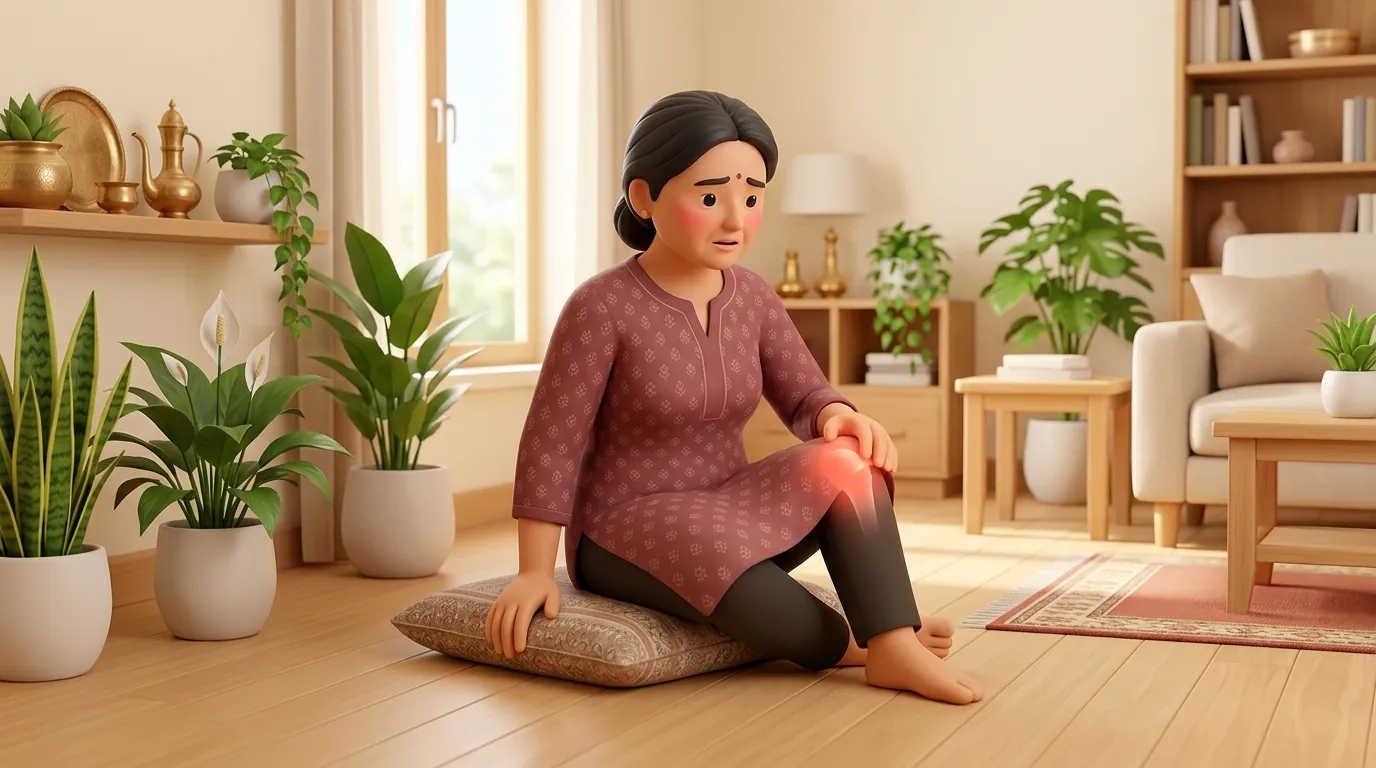
Indian domestic environments contain multiple physical hazards for patients following a posterior hip replacement. Using a traditional squatting toilet is strictly contraindicated during early recovery because deep squatting forces hip flexion well beyond one hundred and twenty degrees. Even standard western commodes often measure only fourteen to fifteen inches from the floor, causing the hips to drop below knee level. Installing a raised toilet seat extension with side support rails maintains the hip joint above ninety degrees of flexion. Low plush sofas, common in family living rooms, allow the pelvis to sink deeply, predisposing the hip to dangerous flexion and internal rotation. Fitting patients with slip-on shoes or using long-handled shoehorns eliminates the dangerous tendency to bend forward from the waist while putting on footwear or tying laces.
Capsular Repair Biomechanics, Impingement Angles, and Dislocation Vectors
Posterior prosthetic dislocation occurs through a distinct biomechanical mechanism involving component impingement and soft tissue tension failure. When the operative hip is placed in combined flexion greater than ninety degrees, adduction across the midline, and internal rotation, the anterior femoral neck levers against the anterior rim of the acetabular cup. This mechanical fulcrum forces the femoral prosthetic head backward against the healing posterior capsulotomy and reattached external rotator tendons. If rotational forces overcome the tensile strength of the healing fibrous scar, the head escapes the acetabular liner. Tendon-to-bone healing of the short external rotators progresses slowly, reaching approximately fifty percent of baseline tensile strength by week six and substantial maturation by week twelve. Maintaining strict positional boundaries during this vulnerable period prevents mechanical failure of the posterior repair construct.
Phased Mobility Retraining, Safe Transfers, and Abductor Conditioning
Rehabilitation begins with thorough education regarding the classic posterior hip triad: avoid bending the hip past ninety degrees, avoid crossing the legs past midline, and avoid pointing the toes inward. Clinicians guide patients through log-roll transfers and seated scooting techniques that maintain the operative leg in slight abduction. Walking commences on post-operative day one using a front-wheeled walker, ensuring the patient turns by taking small shuffling steps rather than pivoting sharply on the operative leg. Bedside exercise regimes incorporate isometric gluteal contractions, active quadriceps setting, and gentle supine abduction slides within a safe twenty-degree arc. As healing progresses beyond six weeks, closed kinetic chain exercises, standing terminal knee extensions, and supported step-ups are introduced to restore functional lower limb strength without compromising joint stability.
Supine Active Hip Abduction Slide with Towel Assist
Objective: Strengthen lateral hip stabilizers while maintaining the operative hip in neutral rotation within safe excursion limits
- 1Lie flat on your back on a firm bed with your legs straight and a folded hand towel placed under the heel of your surgical leg.
- 2Ensure your toes and kneecap point directly toward the ceiling throughout the entire exercise.
- 3Gently slide your surgical leg outward away from your body along the bed surface, moving fifteen to twenty degrees.
- 4Pause for two seconds at the outer edge of movement, feeling your lateral buttock muscles contract.
- 5Slowly slide your leg back toward the starting position, stopping before your legs touch to avoid crossing the midline.
| Restricted Movement | Biomechanical Risk Factor | Prescribed Clinical Adaptation |
|---|---|---|
| Hip Flexion Past 90 Degrees | Levers femoral head posteriorly against repaired capsulotomy site | Use raised commodes, firm high chairs, and long-handled reachers for picking up dropped items |
| Adduction Past Midline | Narrows head-to-cup clearance and drives femoral head outward | Place an abduction pillow between knees while sleeping and avoid crossing legs when seated |
| Internal Rotation | Directs vector force backward into the surgical incision pathway | Keep toes pointed forward or slightly outward during walking and turning maneuvers |
| Pivoting on Operative Leg | Generates high torsional shear across the acetabular cup interface | Turn by taking multiple small steps using a walker, lifting the feet completely off the floor |
An acute posterior hip dislocation presents with sudden severe hip pain, an immediate inability to bear weight, and a visible leg deformity where the operative leg appears noticeably shortened and rotated inward toward the opposite limb. This is an orthopedic emergency requiring immediate transport to the hospital casualty department for closed reduction under sedation. Do not attempt to move or straighten the limb manually.
Frequently Asked Questions
How long must I maintain posterior hip precautions after surgery?
Most orthopedic surgeons and physiotherapists advise maintaining strict posterior precautions for at least six to twelve weeks post-surgery. This duration allows the repaired posterior capsule and reattached external rotator tendons to develop adequate scar tissue tensile strength, substantially lowering long-term dislocation risks.
Do I need a doctor referral for post-hip replacement physiotherapy on BookPhysio.in?
BookPhysio.in does not require a doctor referral. Under the National Commission for Allied and Healthcare Professions (NCAHP) Act 2021, patients across India enjoy direct access to autonomous registered physiotherapists. Through BookPhysio.in, you connect directly with verified clinicians and pay per session with transparent fees, completely free from advance package commitments, commission markups, or platform subscription charges.
Related condition guides



Related recovery guides & articles
BookPhysio.in Editorial Team
The BookPhysio.in editorial team writes and maintains this content, checking it against reliable clinical sources. Content follows our medical review policy: general information only, and no page claims a clinical review until a named registered physiotherapist has signed it off.
Read our medical review policy