
Preventing Thoracic Stiffness and Chronic Restrictive Pulmonary Defect
In short
Prevent permanent thoracic stiffness and long-term restrictive pulmonary defect following severe blunt chest trauma. Comprehensive mobility drills.
In this guide (2 sections)
While acute clinical management of blunt chest trauma prioritizes immediate survival and fracture stabilization, long-term functional morbidity remains a significant concern. Long-term follow-up studies reveal that up to fifty percent of severe chest trauma survivors exhibit chronic chest wall stiffness, persistent musculoskeletal pain, and objective restrictive ventilatory defects on pulmonary function tests at one year post-injury. This long-term disability is driven by fibrotic remodeling of intercostal musculature, costovertebral joint hypomobility, and pleural thickening. Implementing a structured, long-term thoracic mobility program prevents chronic restrictive impairment, ensuring full respiratory recovery.
Pathobiology of Fibrotic Chest Wall Remodeling and Restrictive Defect
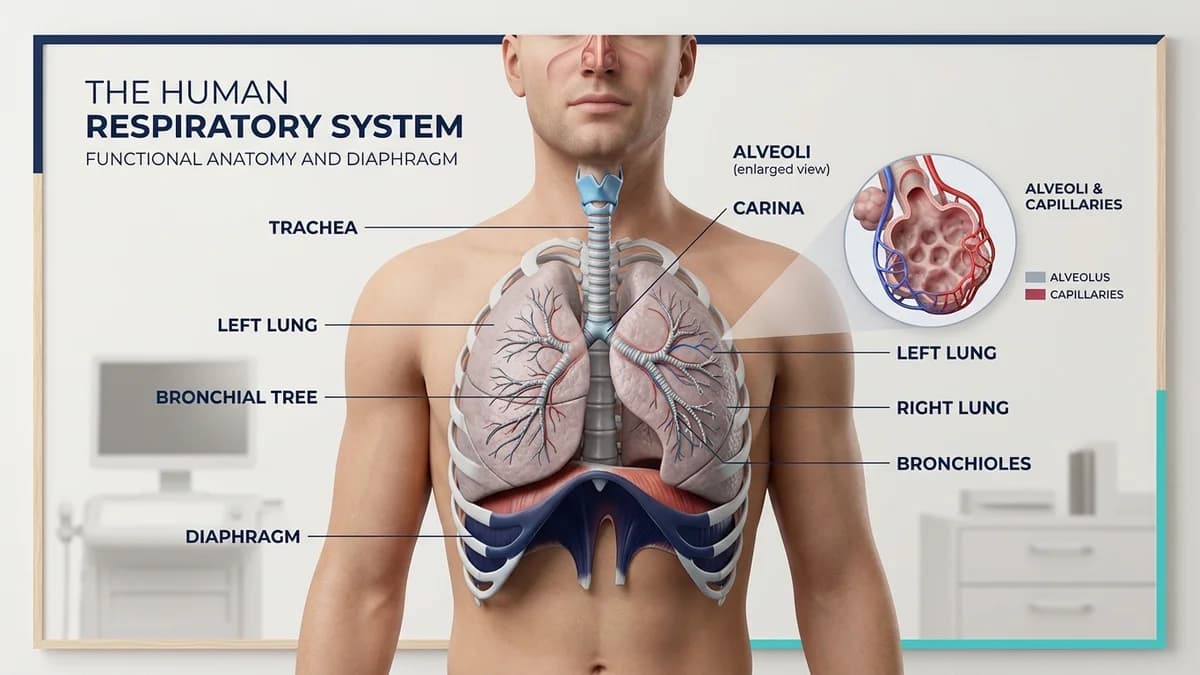
The combination of bony fractures, intercostal muscle tearing, and underlying pleural inflammation triggers robust myofibroblast activation. In the absence of sustained, full-range movement, healing collagen fibers cross-link randomly into dense, inelastic scar sheets that contract over time. This fibrotic contracture binds adjacent ribs together, obliterating normal intercostal spacing. Simultaneously, costovertebral and costotransverse synovial joints undergo capsular contracture and micro-ankylosis from prolonged disuse. The resulting rigid thoracic cage cannot expand fully, reducing Forced Vital Capacity (FVC) and Total Lung Capacity (TLC) to produce a permanent restrictive pulmonary defect.
| Anatomical Component | Unrehabilitated Pathological State | Restorative Mobility State | Long-Term Pulmonary Impact | |
|---|---|---|---|---|
| Intercostal Fascia | Dense, random cross-linked fibrotic scar | Elongated, compliant, parallel collagen fibers | Restores normal intercostal widening during deep inspiration | |
| Costovertebral Joints | Capsular contracture, severe hypomobility | Preserved synovial gliding and rotation | Maintains physiological bucket-handle rib excursion | |
| Pulmonary Function | Chronic restrictive defect (FVC < 75%) | Normal ventilatory capacity (FVC > 85%) | Eliminates chronic exertional dyspnea and fatigue |
Multi-Planar Thoracic Mobility Routine Protocol
Preventing permanent thoracic stiffness requires active multi-planar mobility exercises initiated as early as week four and maintained through month six. The program incorporates three-dimensional movement: thoracic extension (opening anterior ribs), lateral flexion (stretching lateral intercostal spaces), and gentle axial rotation (gliding costovertebral joints). Exercises are performed in smooth, unhurried arcs, actively paired with deep inspiration at end-range to utilize intra-alveolar pressure as an internal mobilizing force.
5-Step Multi-Planar Thoracic Expansion Routine
Objective: Restore multi-directional rib cage compliance and prevent chronic fibrotic restrictive defects.
- 1Sit tall in an armless chair, interlacing your fingers behind your neck with elbows wide.
- 2Inhale deeply while gently arching your upper back over the chair back, looking up toward the ceiling.
- 3Return to center and exhale, then inhale as you gently bend your torso sideways to the right.
- 4Return to center and exhale, then inhale as you smoothly rotate your upper torso to the right.
- 5Repeat the sequence smoothly to the opposite side, completing 5 symmetrical cycles without bouncing.
Integrating Chest Stretches into Indian Daily Routines
In Indian households, patients can weave thoracic stretches into familiar daily habits. Performing gentle upper-body stretches after morning prayers (puja), while sitting on the veranda, or during evening family gatherings ensures continuous compliance without requiring specialized gym equipment. Family members should support the patient's daily routine, reminding them that maintaining flexible ribs is just as important as the initial bone healing.
Long-Term Rehabilitation Trajectory and Clinical Follow-Up
At six and twelve months post-injury, repeat pulmonary function testing (spirometry and plethysmography) and 6-minute walk tests confirm normal functional lung capacity. Patients who consistently perform thoracic mobility drills successfully prevent permanent restrictive defects, enjoying active, unrestricted lives.
Perform thoracic mobility exercises within a comfortable stretch range. Avoid ballistic, jerky bouncing movements, which can cause micro-tearing in healing intercostal muscle tissues and trigger inflammatory flare-ups.
Can my chest feel tight and stiff months after my broken ribs have healed?
Yes. Scar tissue in your chest wall muscles and stiff joints between your ribs and spine can make your chest feel tight for months. Daily gentle stretching and deep breathing exercises loosen that scar tissue, keeping your rib cage flexible so you can breathe freely.
Do I need a doctor referral to consult a home physiotherapist in India?
Under the National Commission for Allied and Healthcare Professions (NCAHP) Act 2021, patients in India have direct access to registered physiotherapists without requiring a physician referral. At BookPhysio.in, you connect with verified physiotherapists and pay directly per session, with zero advance fees, zero package lock-ins, and no platform commissions.
Related condition guides



Related recovery guides & articles
BookPhysio.in Editorial Team
The BookPhysio.in editorial team writes and maintains this content, checking it against reliable clinical sources. Content follows our medical review policy: general information only, and no page claims a clinical review until a named registered physiotherapist has signed it off.
Read our medical review policy