
Public Transit and Stair Climbing: Managing Footboard Risks Post-Achilles Rupture
In short
Safely navigate crowded public transit, local trains, bus footboards, and foot-over-bridge stairs following an Achilles tendon rupture in India.
In this guide (4 sections)
Returning to daily work and social mobility in India inevitably requires confronting the intense physical challenges of public transportation. Suburban railway networks, metro systems, and municipal state transport buses transport tens of millions of commuters daily under crowded, high-velocity conditions. For an individual recovering from an Achilles tendon rupture, the public transit environment is fraught with peril. Navigating crowded railway station platforms, ascending massive concrete foot-over-bridges (FOBs) with forty to sixty steep steps, and boarding buses that decelerate without coming to a complete stop place extraordinary mechanical demands on the lower extremities. Navigating these obstacles safely requires understanding transit kinetics, adopting strict step-to gait mechanics, utilizing mobility aids unapologetically, and modifying commute timing.
Mumbai Local Trains, Delhi Metro Crowds, and Bus Footboard Dangers
In major Indian metropolises, commuting conditions present severe physical tests. The legendary crush of Mumbai suburban local trains, crowded Delhi Metro interchange stations like Rajiv Chowk or Kashmere Gate, and crowded DTC or BEST buses present environments where personal space is non-existent. A commuter on crutches or in a walking boot is highly vulnerable to being bumped, jostled, or shoved by hurried crowds. Most dangerous of all is the common habit of boarding or alighting from moving buses or trains via high, narrow footboards suspended eighteen inches above uneven asphalt. Stepping down from a moving vehicle imposes instantaneous deceleration forces that can reach twelve times body weight, guaranteeing immediate rupture of a healing Achilles tendon.
Stair Descent Kinematics, High Eccentric Forces, and Forward Momentum
Ascending and descending stairs represent fundamentally different biomechanical challenges for the triceps surae complex. During stair ascent, concentric contraction of the quadriceps and calf lifts body weight vertically, requiring moderate tensile force with minimal elongation risk. In contrast, stair descent requires high-magnitude eccentric lengthening of the calf to lower the contralateral foot smoothly to the step below. As the trailing ankle dorsiflexes under full body weight to control descent, peak tensile load across the Achilles tendon spikes dramatically. If the stairs are crowded and the commuter is jostled from behind, the sudden acceleration overwhelms the eccentric braking capacity of the soleus, violently tearing the regenerating collagen bridge.
The Golden Rules of Transit Commuting and Stair Navigation
To navigate public transit safely between months two and six, patients must adhere to strict behavioral rules. When negotiating stairs, always use the step-to pattern: up with the good leg first, down with the injured leg first (the traditional clinical rule: up with the good, down with the bad), keeping both feet on each step while firmly gripping a continuous handrail. Avoid peak rush hours by negotiating flexible working hours with employers (traveling between 11 AM and 4 PM). In metro stations, bypass staircases and demand station staff activate accessible elevators. Under no circumstances should a patient attempt to board or exit any vehicle until it has achieved a complete, stationary stop.
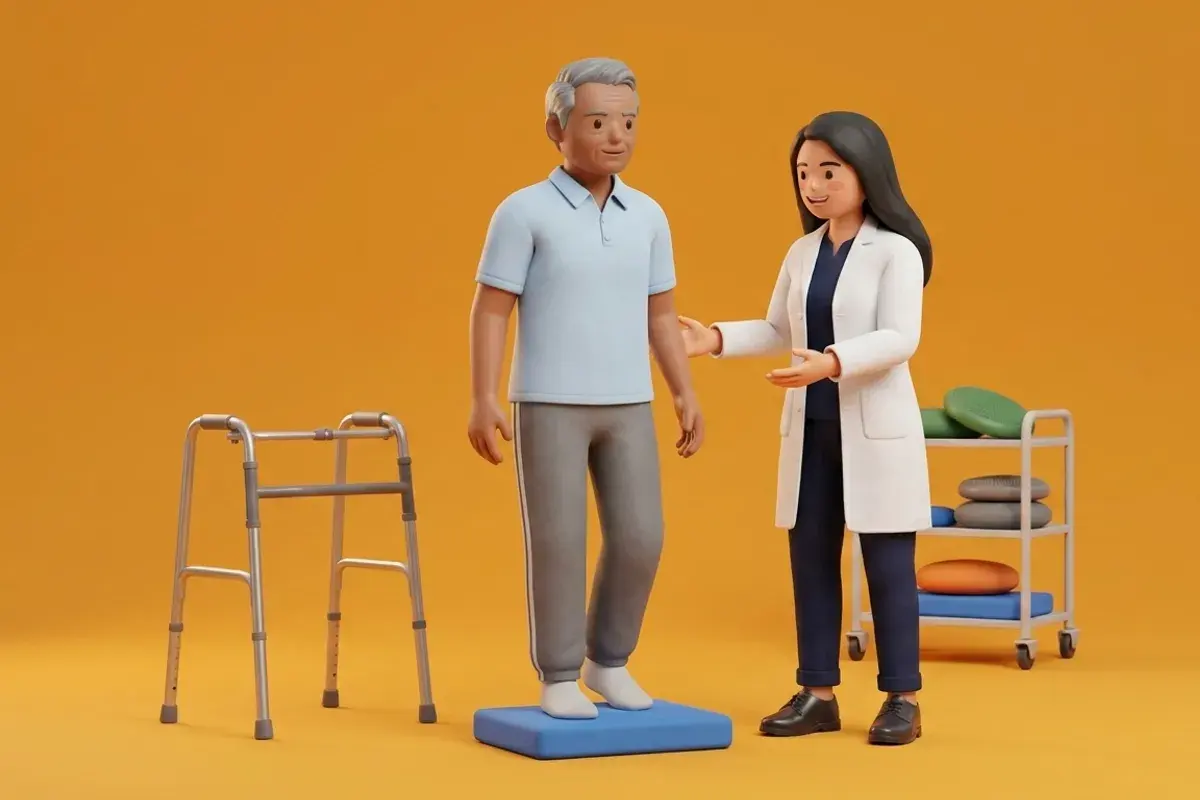
Step-Up and Controlled Step-Down Drill with Railing Support
Objective: Build eccentric quadriceps and calf deceleration control on a standardized ten-centimeter aerobic step before facing transit stairs
- 1Stand tall facing a sturdy, low aerobic step or wooden platform (10 cm high) next to a secure wall or railing.
- 2Step up onto the platform leading with your uninjured leg, pressing through the midfoot to lift your body up.
- 3Bring your injured leg up to join the uninjured leg so both feet stand level on top of the step.
- 4To descend, step backward leading with the injured leg, lowering the ball of the foot softly to the floor.
- 5Bring the uninjured foot down to the floor, maintaining complete handrail support and smooth postural control throughout.
| Transit Environment | Critical Hazard Exposure | Mandatory Safety Rule | Protective Commuting Strategy |
|---|---|---|---|
| Bus Footboard Boarding | Moving vehicle deceleration; 18-inch jump to irregular road surface | Absolute zero-tolerance for moving boarding; wait for full stop at curb | Commute via ride-share auto or taxi during initial 4 months post-injury |
| Station Foot-Over-Bridges (FOB) | 40+ steep concrete steps; crowded commuters pushing from behind | Always use step-to descent technique; maintain two-handed rail grip | Utilize station accessibility elevators or ramps; avoid central stairwells |
| Suburban Train Compartment | Sudden carriage jerking; crushing crowd pressure against injured limb | Travel strictly during off-peak hours (11:00 to 16:00); secure corner seat | Display visible medical walking stick to signal commuters to maintain distance |
Never attempt normal foot-over-foot stair descent until your treating physiotherapist formally verifies full eccentric calf capacity. Always ascend leading with your healthy leg, and descend leading with your injured leg while holding the handrail. If a misstep occurs, arrange prompt orthopaedic consultation immediately.
Frequently Asked Questions
When is it safe for me to resume my normal daily commute by local train or bus?
Most patients can safely resume off-peak public transit commuting between months three and four, provided they can walk smoothly in supportive shoes with heel lifts and comfortably ascend stairs using handrails. Resuming peak-hour rush commuting or navigating crowded trains without mobility aids typically requires five to six months of rehabilitation and verified single-leg heel-raise endurance.
Do I need a doctor referral for Achilles rupture rehabilitation on BookPhysio.in?
BookPhysio.in does not require a doctor referral. Under the National Commission for Allied and Healthcare Professions (NCAHP) Act 2021, patients across India enjoy direct access to autonomous registered physiotherapists. Through BookPhysio.in, you connect directly with verified clinicians and pay per session with transparent fees, completely free from advance package commitments, commission markups, or platform subscription charges.
Related condition guides



Related recovery guides & articles
BookPhysio.in Editorial Team
The BookPhysio.in editorial team writes and maintains this content, checking it against reliable clinical sources. Content follows our medical review policy: general information only, and no page claims a clinical review until a named registered physiotherapist has signed it off.
Read our medical review policy