
Resisted Tubing Upper Limb Drills with Neutral Spine Stabilization
In short
Learn how resisted tubing upper body exercises build arm and back strength while conditioning your deep core to protect your lumbar fusion.
In this guide (4 sections)
Following lumbar spinal surgery, many patients avoid all upper body strengthening exercises, fearing that pulling or pushing with the arms will strain their lower back. This avoidance leads to progressive disuse atrophy of the latissimus dorsi, rhomboids, trapezius, and shoulder girdle musculature, making everyday domestic tasks feel increasingly exhausting. However, upper extremity rehabilitation does not require heavy free weights or complex gym machinery that place compressive loads across the spine. Elastic resistance tubing drills provide a highly adaptable, safe therapeutic modality. Because elastic bands generate accommodating resistance that increases smoothly through the range of motion without momentum or impact, they allow patients to strengthen the upper kinetic chain while simultaneously challenging the deep core stabilizers to maintain an unmoving, hardware-protected neutral spine.
Domestic Application: Washing Clothes, Reaching High Shelves, and Door Pulls
Upper body functional strength is indispensable for independent Indian domestic living. Pulling heavy wooden entry doors, opening tight sliding windows, scrubbing brass pots, reaching into high overhead kitchen cabinets, or lifting wet clothes from a top-loading washing machine requires coordinated arm pulling and pushing strength. If an individual lacks upper back and arm endurance, they instinctively arch their lower back or jerk their torso backward to generate momentum, transferring mechanical strain directly into their instrumented lumbar vertebrae. By training with resisted elastic tubing, physiotherapists teach patients to stabilize their pelvis and lumbar spine as a solid foundation while their arms perform the work, eliminating compensatory spinal movement during domestic routines.
The Kinetic Chain Linkage, Latissimus Dorsi Tension, and Core Pre-Activation
The biomechanical link between upper limb movement and the lumbar spine is mediated through the expansive thoracolumbar fascia and the latissimus dorsi muscle. Originating from the spinous processes of T7-L12, the thoracolumbar fascia, and the iliac crest, the latissimus dorsi inserts into the intertubercular groove of the humerus. When an individual pulls with the arms without core stabilization, the latissimus dorsi exerts a powerful extension and rotational pull on the lumbar vertebrae and thoracolumbar fascia. In an instrumented spine, this uncontrolled tension can stress healing pedicle screws and adjacent facet joints. Resisted tubing drills train feed-forward core stabilization: before the arms begin pulling the elastic band, the patient pre-activates the transversus abdominis and pelvic floor. This muscular pre-activation stabilizes the thoracolumbar anchor points, allowing the upper back muscles to contract effectively without producing micro-motion at the surgical lumbar segments.
Clinical Tubing Protocols: Bilateral Rows, Chest Presses, and Stance Setup
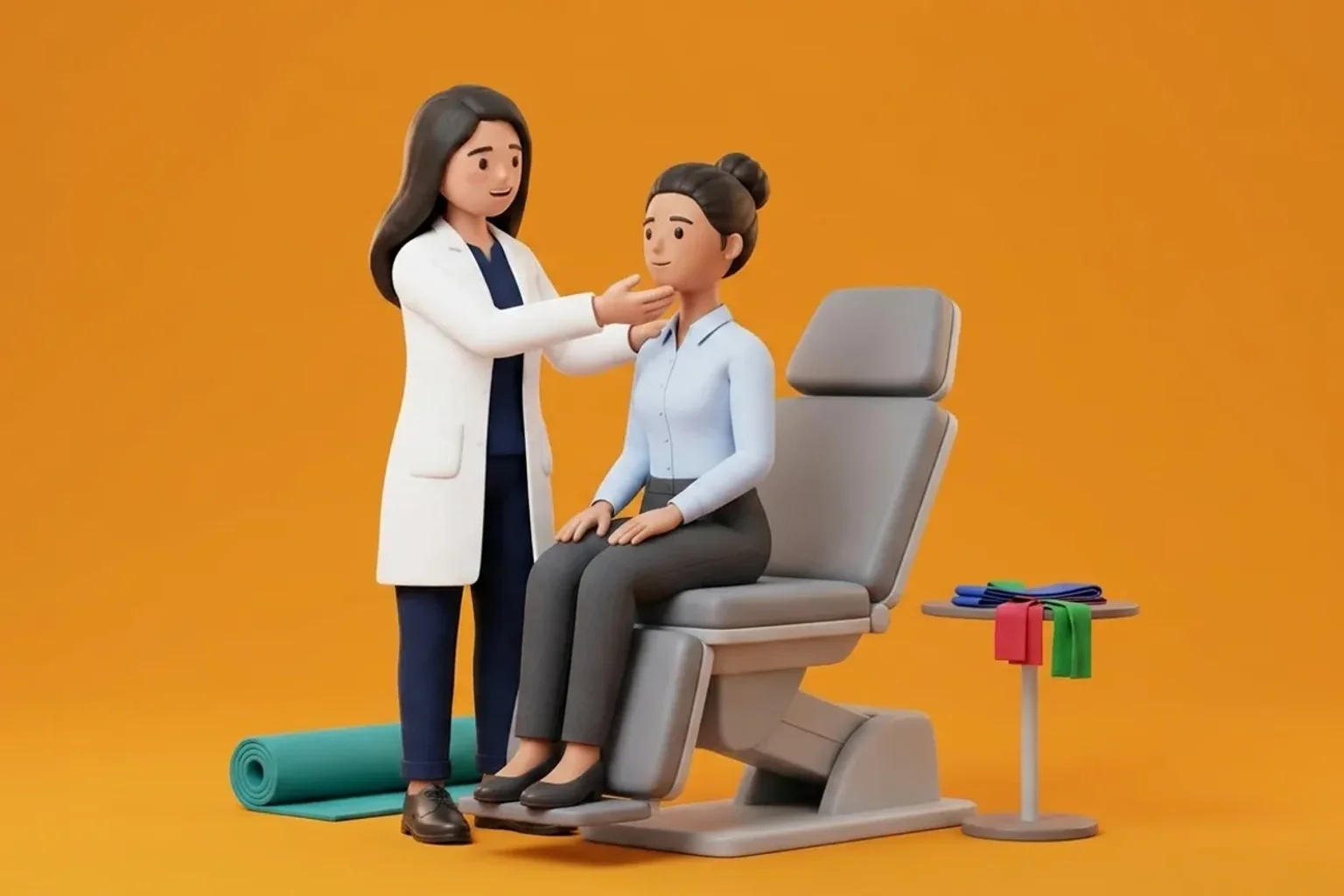
Rehabilitation begins with bilateral symmetrical pulling drills in supported standing or tall-kneeling postures. Clinicians anchor the elastic band at chest height to a sturdy door anchor or secure post. The patient stands in an athletic, balanced stance with feet shoulder-width apart, knees soft, and pelvis in neutral. The fundamental clinical drill is the bilateral neutral-spine row: the patient pulls the band handles smoothly toward their ribs, squeezing the shoulder blades together while ensuring that the lower back does not arch, sway, or lean backward. As upper body strength and core endurance develop, clinicians introduce bilateral standing chest presses, diagonal pull-aparts, and single-arm resisted punches, constantly reinforcing that the spine must remain a completely stable, quiet anchor throughout every repetition.
Standing Bilateral Resistance Tubing Row with Neutral Lumbar Anchor
Objective: Strengthen the rhomboids, latissimus dorsi, and posterior shoulder girdle while training the core to lock the lumbar spine in neutral
- 1Secure an elastic resistance band firmly at chest height to a sturdy door anchor or secure bedpost.
- 2Grasp the handles with both hands and step backward until there is gentle tension in the band, keeping your feet shoulder-width apart.
- 3Soften your knees slightly, engage your lower abdominal wall by 10%, and ensure your lower back rests in its natural, comfortable arch.
- 4Slowly pull both handles backward toward your lower ribs, drawing your elbows past your torso and squeezing your shoulder blades together.
- 5Hold for 2 seconds at the peak contraction, ensuring your spine does not arch backward, then return your arms slowly and smoothly to the starting position.
| Biomechanical Factor | Free Weight Training (Dumbbells/Barbells) | Elastic Resistance Tubing Drills |
|---|---|---|
| Axial Gravitational Load | Gravity pulls weight vertically downward, increasing axial compression across lumbar discs and screws | Zero added axial gravitational load; resistance is horizontal, accommodating, and joint-friendly |
| Momentum & Joint Impact | Inertia and momentum can jerk tissues at end-ranges, risking hardware strain or muscle tears | Smooth, continuous resistance curve with zero momentum; resistance matches muscle strength curve |
| Core Stabilization Training | Often encourages compensatory spinal arching or swinging to lift heavier loads | Forces continuous, low-threshold isometric core stabilization to resist the horizontal pull |
| Home Exercise Safety | High risk of dropping weights or straining back during setup and storage at home | Extremely safe, lightweight, portable, and easily integrated into daily domestic routines |
Always inspect your elastic resistance tubing for small tears, nicks, or punctures before every exercise session, as damaged tubing can snap suddenly and cause facial or ocular injury. Ensure the door anchor is placed on the side of the door that closes toward you, or lock the door securely to prevent someone from opening it during your workout.
Frequently Asked Questions
Can I use resistance bands if I had surgery only two months ago?
Yes, gentle resistance band exercises are often introduced around six to eight weeks post-surgery, once your surgical incision has fully healed. Your physiotherapist will start you with very light resistance bands, focusing on posture and smooth movement rather than heavy effort, ensuring your surgical fusion remains completely protected.
Do I need a doctor referral to see a post-spinal surgery physiotherapist on BookPhysio.in?
BookPhysio.in does not require a doctor referral. Under the National Commission for Allied and Healthcare Professions (NCAHP) Act 2021, patients across India enjoy direct access to autonomous registered physiotherapists. Through BookPhysio.in, you connect directly with verified clinicians and pay per session with transparent fees, completely free from advance package commitments, commission markups, or platform subscription charges.
Related condition guides



Related recovery guides & articles
BookPhysio.in Editorial Team
The BookPhysio.in editorial team writes and maintains this content, checking it against reliable clinical sources. Content follows our medical review policy: general information only, and no page claims a clinical review until a named registered physiotherapist has signed it off.
Read our medical review policy