
Restoring Hand Dexterity and Independent Walking Post-Cervical Surgery: The Dual Functional Imperative
In short
Master the synchronized clinical protocols to simultaneously restore fine motor hand dexterity and independent ataxic-free walking post-cervical surgery.
In this guide (4 sections)
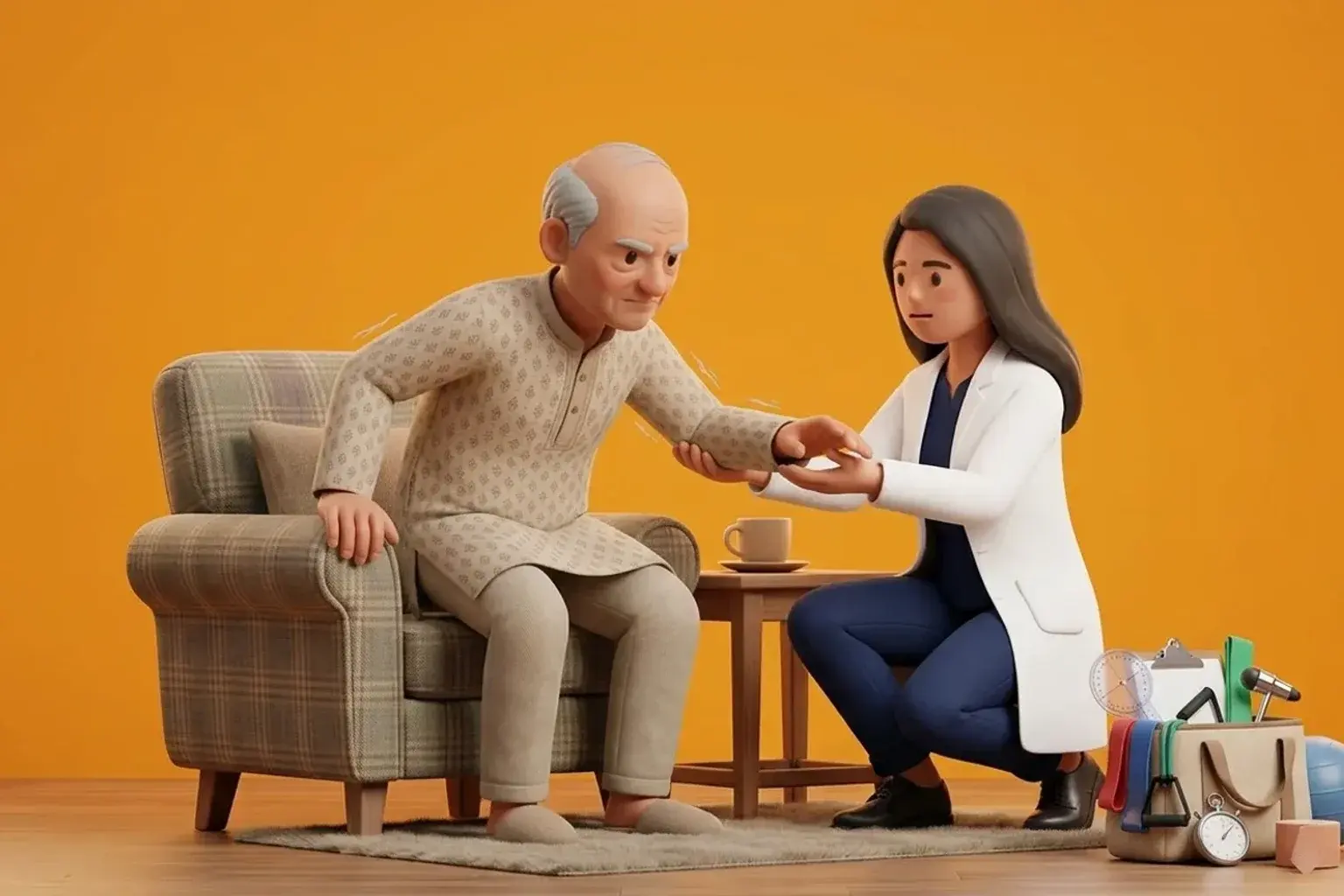
Human functional independence rests upon two foundational motor capabilities: the ability to manipulate objects with refined manual dexterity, and the capacity to navigate physical environments through stable, independent ambulation. In cervical spondylotic myelopathy, compressive injury to the cervical spinal cord strikes directly at both pillars. Patients simultaneously experience the "myelopathic hand" (loss of fine finger fractionation, clumsy grip release, and intrinsic muscle wasting) and "myelopathic ataxia" (wide-based gait, foot scuffing, and loss of proprioceptive equilibrium). Following surgical decompression, rehabilitation must address both deficits concurrently through synchronized, task-specific neuroplastic training. Treating manual dexterity and gait stability as interconnected components of a unified motor system restores the comprehensive autonomy required for independent daily living.
Synchronizing Manual and Ambulatory Demands in Indian Household Life
In the daily rhythm of an Indian home, manual dexterity and walking balance are rarely performed in isolation; they are continuously connected. Consider the simple task of serving afternoon tea to family members: the individual must walk across polished marble floors while carrying a tray of hot cups, requiring exquisite lower limb balance, stable trunk control, and graded hand grip force simultaneously. Similarly, shopping at a local neighborhood market requires walking on cracked, uneven pavements while carrying vegetable bags and manipulating currency coins to pay vendors. If rehabilitation focuses only on walking while neglecting hand coordination, or trains hand grip while ignoring standing balance, the patient remains functionally dependent. Designing dual-task domestic simulations prepares patients to handle real-world multi-task demands safely without falling.
Corticospinal Conduction Dissociation, Dual-Task Interference, and Neuroplastic Plasticity
The neurobiological rationale for integrated dual-task rehabilitation centers on central motor channeling and cognitive resource allocation. Under healthy conditions, walking is largely automated by subcortical central pattern generators in the spinal cord and brainstem, leaving cerebral cortical resources free for manual manipulation and environmental awareness. In cervical myelopathy, however, corticospinal conduction deficits disrupt this automaticity; walking requires continuous, conscious cortical oversight. When an unconditioned patient attempts to perform a manual task while walking (such as buttoning a shirt or carrying an object), "dual-task interference" occurs: the prefrontal cortex becomes overwhelmed, leading to immediate gait slowing, balance stumble, or object dropping. Structured dual-task rehabilitation trains surviving neural circuits to automate postural stabilization, freeing cortical bandwidth for fine motor execution.
Integrated Dual-Task Protocols, Metronome Pacing, and Gait Independence
Physiotherapy rehabilitation progresses from isolated motor training to synchronized dual-task integration. Stage 1 develops foundational competence in isolation: seated nine-hole pegboard drills for hand fractionation, and supported parallel bar drills for foot clearance. Stage 2 combines static standing balance with manual manipulation: practicing coin sorting, ball throwing, or simulated rice-ball kneading while maintaining tandem or single-leg stance. Stage 3 advances to dynamic dual-task locomotion: walking along a straight line while manipulating objects with the hands, carrying a cup of water, or counting backward by threes under metronome pacing. The clinician monitors the 10-Second Grip and Release Test, Timed Up and Go (TUG) Dual-Task score, and Berg Balance Scale. If sudden motor deterioration occurs, prompt orthopaedic consultation is required.
Supported Standing Tandem Balance with Precision Fingertip Tapping Drill
Objective: Challenge dual-task central motor channeling by combining narrow-base balance stabilization with fine digital motor opposition
- 1Stand tall directly beside a sturdy kitchen counter or heavy dining table, resting one hand lightly on the surface for balance.
- 2Place your right foot directly in front of your left foot in a straight tandem stance, heel touching toes.
- 3Once balanced, raise your free hand to chest height with your palm facing you.
- 4While maintaining completely steady balance through your legs, rapidly touch your thumb tip to each fingertip in sequence (index, middle, ring, pinky).
- 5Perform five complete opposition cycles without wobbling your legs or looking down at your feet.
- 6Step out, switch foot positions so the left foot is in front, and repeat the dual-task balance and tapping drill.
| Functional Domain | Underlying Neurological Deficit | Targeted Clinical Physiotherapy Drill | Functional Domestic Benchmark |
|---|---|---|---|
| Manual Hand Dexterity | C8-T1 anterior horn cell and corticospinal digital fractionation loss | Nine-hole pegboard, marble sorting, therapeutic putty finger abduction | Buttoning kurta/shirt, tying dhoti drawstrings, shaping rice morsels |
| Independent Ambulation | Lateral corticospinal spasticity, dorsal column proprioceptive sensory loss | Tandem stance balance, rocker board training, heel-to-toe gait sequencing | Walking unassisted on tile floors, navigating temple steps and street paving |
| Synchronized Dual-Task | Prefrontal cognitive overload and dual-task sensorimotor interference | Walking while carrying weighted tray, metronome-paced stepping and counting | Serving tea to family, shopping at local market, carrying bags safely |
If a patient recovering well suddenly experiences a dramatic, asymmetric drop in grip strength on one side, accompanied by dragging of the foot on the same side, this indicates acute lateralized spinal cord compression or construct shift. Seek immediate orthopaedic evaluation and emergency MRI imaging.
Frequently Asked Questions
Why does my walking get much more unsteady when I try to talk or carry something?
Because the balance pathways in your neck are still recovering from compression, your brain must focus intense, conscious concentration on every single step you take. When you try to talk, carry a glass, or check your phone while walking, your brain attention is divided between the two tasks. This "dual-task interference" temporarily robs your legs of the concentration they need, making you stumble. Practicing dual-task exercises under your physiotherapist guidance safely rebuilds this automatic coordination.
Do I need a doctor referral for cervical myelopathy physiotherapy on BookPhysio.in?
BookPhysio.in does not require a doctor referral. Under the National Commission for Allied and Healthcare Professions (NCAHP) Act 2021, patients across India enjoy direct access to autonomous registered physiotherapists. Through BookPhysio.in, you connect directly with verified clinicians and pay per session with transparent fees, completely free from advance package commitments, commission markups, or platform subscription charges.
Related condition guides



Related recovery guides & articles
BookPhysio.in Editorial Team
The BookPhysio.in editorial team writes and maintains this content, checking it against reliable clinical sources. Content follows our medical review policy: general information only, and no page claims a clinical review until a named registered physiotherapist has signed it off.
Read our medical review policy