
Running Cadence Manipulation and Impact Moderation: Biomechanics of Gait Retraining for Heel Pain
In short
Learn how increasing running cadence by 7 to 10 percent reduces vertical impact peaks, eliminates overstriding, and protects the plantar fascia from running injuries.
In this guide (4 sections)
Plantar fasciopathy represents one of the most common and frustrating overuse running injuries, accounting for up to ten percent of all running-related conditions treated in sports medicine clinics. Running generates vertical ground reaction force impact peaks of two to three times total body weight with every single foot strike, repeating approximately one thousand times per kilometer. When running volume, intensity, or surface stiffness increases faster than the biological remodeling capacity of the plantar fascia, repetitive tensile micro-trauma triggers progressive enthesopathy. Traditional management often instructed runners to cease all running indefinitely, an approach that leads to cardiovascular deconditioning, psychological frustration, and profound calf muscle atrophy. Modern sports physiotherapy emphasizes active gait retraining, particularly subtle running cadence manipulation. Extensive biomechanical research confirms that increasing a runner's preferred step rate by just five to ten percent substantially shortens stride length, eliminates overstriding, shifts foot strike closer to the center of mass, and significantly reduces vertical impact transients and fascial tensile strain.
Barefoot Marble Floor Living, Prolonged Kitchen Standing, and Thin Flat Slippers
In urban India, running has experienced an unprecedented explosion in popularity, with thousands of amateur runners participating in marathons, 10K events, and daily running clubs across Mumbai, Delhi, Bengaluru, and Pune. However, Indian running environments present formidable biomechanical hurdles. Runners train predominantly on unforgiving concrete footpaths, asphalt roads, or uneven municipal park tracks. Following strenuous morning runs, these individuals return home to unyielding marble and granite floor slabs, where cultural habits dictate walking barefoot or in flat, unsupportive chappals. This abrupt transition from high-impact running on asphalt to unbuffered barefoot walking on stone tiles deprives the fatigued plantar fascia of any recovery opportunity. Combining running gait retraining with strict indoor footwear protection is vital for Indian recreational runners striving to remain active while recovering from heel pain.
Windlass Mechanism Strain, Calcaneal Enthesopathy, and Plantar Thickness
The pathomechanics of running-induced plantar fasciopathy are closely linked to overstriding and foot strike mechanics. When a runner takes long, low-cadence strides (typically below one hundred and sixty steps per minute), the foot lands well anterior to the body's center of mass with the knee near full extension. This geometry generates a sharp, high-amplitude vertical impact transient that travels directly through the calcaneus. Furthermore, prolonged ground contact time increases the duration during which the Windlass mechanism and the Achilles-fascia continuum must resist high tensile bending moments. By increasing cadence to one hundred and seventy to one hundred and eighty steps per minute at the same running speed, the foot lands slightly flexed and directly beneath the pelvis. Ground contact time diminishes by fifteen to twenty percent, and peak tensile strain at the medial calcaneal enthesis declines by up to twenty-five percent.
Rathleff High-Load Towel Training, Low-Dye Taping, and Intrinsic Foot Doming
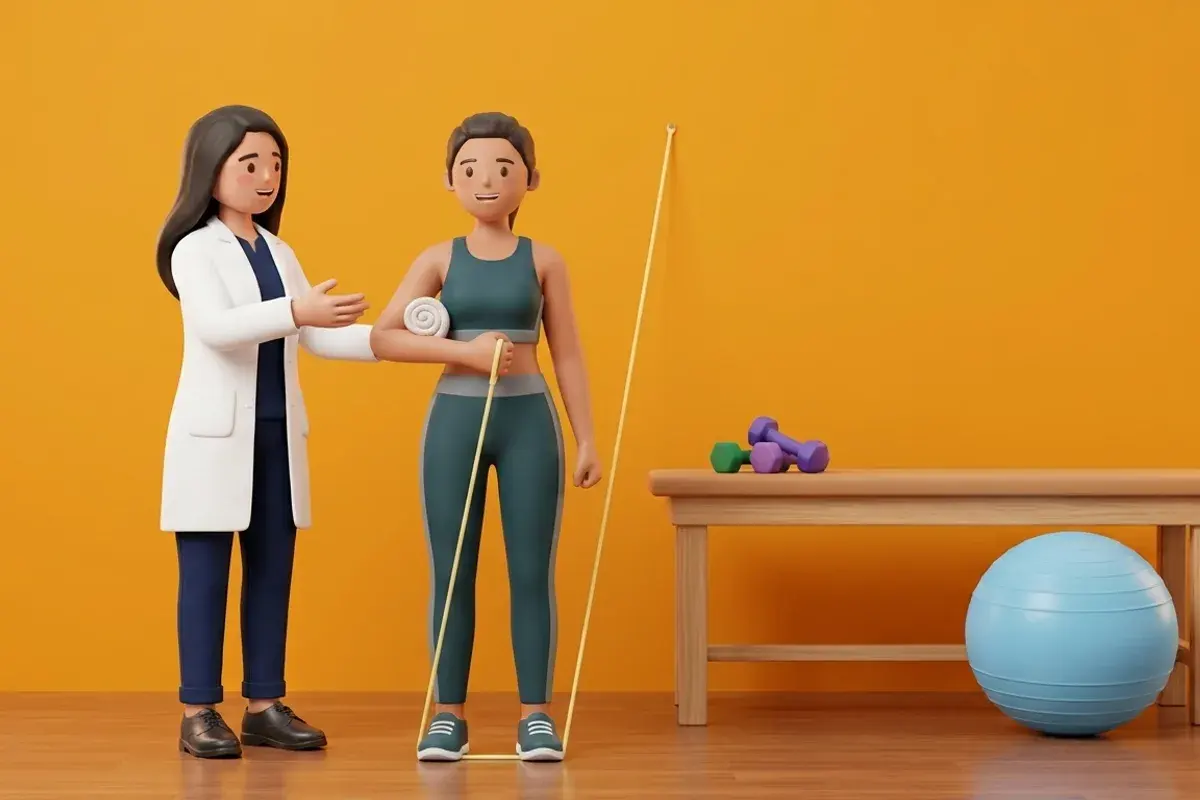
Running gait retraining is implemented through structured metronome pacing and real-time auditory biofeedback on a treadmill. Physiotherapists determine the runner's baseline cadence at their typical training speed and prescribe a seven to ten percent increase, programmed into a smartphone metronome app or GPS sports watch. Concurrently, runners maintain tissue load capacity through the Rathleff high-load strength protocol, performing slow heel raises with a rolled towel under the toes on alternate non-running days. Intrinsic foot doming drills strengthen dynamic arch support, while temporary low-Dye taping or semi-rigid orthotic inserts provide mechanical stabilization during early walk-run intervals. Running volume is managed using a strict twenty-four-hour pain response rule: pain must not exceed 3 on a 10-point scale during running and must return to baseline the following morning.
Metronome-Guided Step Cadence Treadmill Drill
Objective: Retrain running step rate to eliminate overstriding and attenuate impact forces on the plantar fascia
- 1Warm up with 5 minutes of brisk walking followed by gentle calf and great toe Windlass stretches.
- 2Set an electronic metronome or smartphone running app to a beat 7 to 10 percent higher than your baseline cadence (typically 170 to 175 beats per minute).
- 3Begin jogging at a light, easy conversational pace, synchronizing your foot strikes strictly to the audible beat of the metronome.
- 4Focus on taking shorter, quicker, lighter steps, landing your feet smoothly beneath your hips rather than reaching forward with your heels.
- 5Maintain this rhythmic tempo for 3-minute intervals alternated with 1 minute of walking, ensuring your running feels quiet and springy.
| Running Biomechanical Parameter | Low Cadence / Overstriding (<160 spm) | Optimized Cadence (170 to 180 spm) | Clinical Benefit for Plantar Fascia |
|---|---|---|---|
| Landing Position Relative to COM | Foot strikes significantly anterior to the body center of mass (overstriding) | Foot lands directly beneath the pelvis with knee slightly flexed | Eliminates excessive braking forces and vertical impact spikes at heel strike |
| Ground Contact Time | Prolonged ground contact duration (250 to 290 milliseconds per step) | Shortened ground contact duration (200 to 230 milliseconds per step) | Significantly reduces cumulative tensile loading time on the calcaneal enthesis |
| Vertical Loading Rate | High vertical instantaneous loading rate; jarring shock transmitted to heel | Substantially attenuated loading rate; 15 to 25% reduction in impact peak | Protects subcalcaneal bone and degenerative collagen from mechanical overload |
Runners must remain highly vigilant for bone stress injuries. If heel pain escalates steadily with every kilometer, causes a visible limp, or produces deep, throbbing bone pain that persists long after finishing a run, immediately suspect a calcaneal stress fracture. Squeezing the calcaneus from both sides will reproduce exquisite bone tenderness. Immediately cease all running and obtain prompt orthopaedic consultation and urgent MRI.
Frequently Asked Questions
Do I have to stop running completely while my plantar fasciitis is healing?
In most mild to moderate cases, you do not need to stop running completely. Provided your pain remains mild (no more than 3 out of 10) during running, does not alter your natural gait, and returns to your baseline within twenty-four hours without worsening your morning steps, you can safely continue modified running. By shortening your stride and increasing your step cadence by seven to ten percent, you can significantly reduce the impact forces on your heel while keeping your cardiovascular fitness intact.
Do I need a doctor referral to treat plantar fasciitis on BookPhysio.in?
BookPhysio.in does not require a doctor referral. Under the National Commission for Allied and Healthcare Professions (NCAHP) Act 2021, patients across India enjoy direct access to autonomous registered physiotherapists. Through BookPhysio.in, you connect directly with verified clinicians and pay per session with transparent fees, completely free from advance package commitments, commission markups, or platform subscription charges.
Related condition guides



Related recovery guides & articles
BookPhysio.in Editorial Team
The BookPhysio.in editorial team writes and maintains this content, checking it against reliable clinical sources. Content follows our medical review policy: general information only, and no page claims a clinical review until a named registered physiotherapist has signed it off.
Read our medical review policy