
Hand Scar Management: Silicone Sheeting and Deep Friction
In short
Hypertrophic and tethered hand scars limit digital mobility. Silicone sheeting, micropore taping, and deep friction promote supple, flexible collagen remodelling.
In this guide (5 sections)
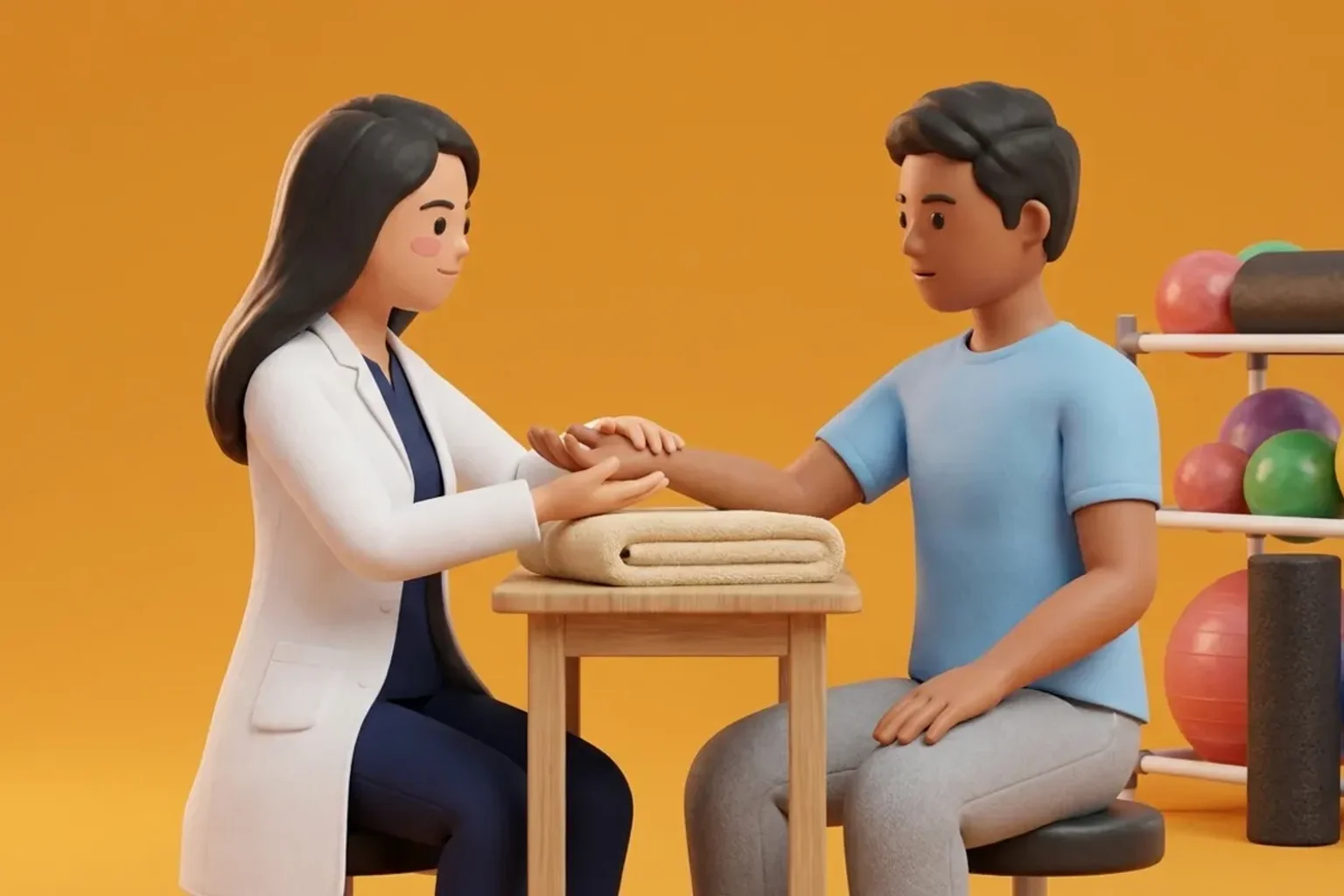
The palm and digits possess durable glabrous skin tightly tethered to underlying palmar aponeuroses and deep fascial septa. Following surgical incisions (such as Bruner zigzag lines) or crush lacerations, disorganized wound healing can produce hypertrophic, tender, and tethered scar tissue. Because tendons glide only millimetres beneath the palmar surface, dense cicatrix formation readily glues tendon sheaths to the skin, causing severe joint contractures. Evidence-based scar management incorporates silicone gel sheeting, paper taping, and deep transverse friction.
Domestic and Cultural Indian Realities
In Indian households, patients recovering from hand surgery are often subjected to traditional home remedies, such as rubbing harsh mustard oil, turmeric pastes, or hot concoctions into fresh surgical wounds. These practices can irritate healing incisions, trigger contact dermatitis, and exacerbate hypertrophic scarring. Physiotherapists guide families on modern, sterile scar hydration methods, emphasizing that gentle, systematic mechanical friction is far superior to abrasive traditional rubs.
Surgical Pathoanatomy and Biomechanical Principles
During the proliferative and early remodelling phases of wound healing (weeks 3 to 12), fibroblasts deposit irregular, whorled bundles of immature Type III collagen. Silicone gel sheeting acts primarily through stratum corneum occlusion and deep hydration, reducing trans-epidermal water loss (TEWL) and signaling dermal capillaries to downregulate cytokine release (TGF-beta), thereby normalizing collagen synthesis. Deep transverse friction massage (Cyriax technique) applies perpendicular shear forces that mechanically disrupt cross-links and align collagen fibrils parallel to physiological tension lines.
Postoperative Rehabilitation Phases and Splinting Protocols
Scar therapy begins immediately once surgical sutures are removed and the skin is fully epithelialize (usually post-op day 12 to 14). Micropore paper tape is applied directly across the scar with light tension for the first 4 weeks to offload incision tension. Silicone gel sheeting is worn 12 to 24 hours daily beneath compression garments or splints. Deep circular and transverse friction massage is performed 3 times daily using fragrance-free emollients, followed by active tendon gliding.
Cyriax Deep Transverse Scar Mobilization
Objective: Mechanically loosen dermal-tendon adhesions and realign immature scar collagen fibers
- 1Wash your hands thoroughly with mild soap and warm water, patting the scar dry.
- 2Place the pad of your thumb or index finger directly over the firmest portion of the scar.
- 3Press downward with firm, comfortable pressure so your skin moves with the underlying tissue.
- 4Without sliding across the skin, rub firmly back and forth across the scar line at a 90-degree right angle.
- 5Work systematically along the entire length of the incision line for 3 to 5 minutes.
| Scar Modality | Mechanism of Action | Clinical Application Dosing |
|---|---|---|
| Silicone Gel Sheeting | Hydrates stratum corneum, normalizes cytokine signaling | Applied 12 to 20 hours daily; wash and dry sheet daily |
| Micropore Paper Taping | Shields wound from mechanical tension, reduces hypertrophy | Applied along scar lines; change every 3 to 5 days |
| Deep Transverse Friction | Breaks pathological cross-links, mobilizes tethered tendons | 5 minutes per session, 3 times daily with emollient |
| Silicone Elastomer Putty Inserts | Custom contoured pressure molds inside orthoses | Worn inside splints to maintain flat compression in web spaces |
Red Flags and Specialist Escalation
Severe scar hypertrophy expanding beyond the original surgical boundaries (true keloid formation), scar ulceration, or dense webbing creating severe digital contractures requires referral to a plastic surgeon for intralesional corticosteroid injections, surgical Z-plasty revision, or laser therapy.
Frequently Asked Questions
How does silicone sheeting help flatten a raised surgical scar on my hand?
Silicone sheets trap moisture against the scar skin, keeping it deeply hydrated. This hydration signals the healing cells to slow down excess collagen production, helping the scar soften, flatten, and fade over several months.
Do I need a doctor referral for professional hand scar therapy on BookPhysio.in?
BookPhysio.in does not ask for a doctor referral. Direct access is protected under the NCAHP Act 2021. You book qualified hand physiotherapists directly and pay per session with complete transparency.
Related condition guides



Related recovery guides & articles
BookPhysio.in Editorial Team
The BookPhysio.in editorial team writes and maintains this content, checking it against reliable clinical sources. Content follows our medical review policy: general information only, and no page claims a clinical review until a named registered physiotherapist has signed it off.
Read our medical review policy