
Coordinating Mobility with Sedation Vacations and Breathing Trials
In short
Synchronize physiotherapy with daily sedation interruptions and spontaneous breathing trials (SBT) in the ICU. Protocols and safety in India.
In this guide (2 sections)
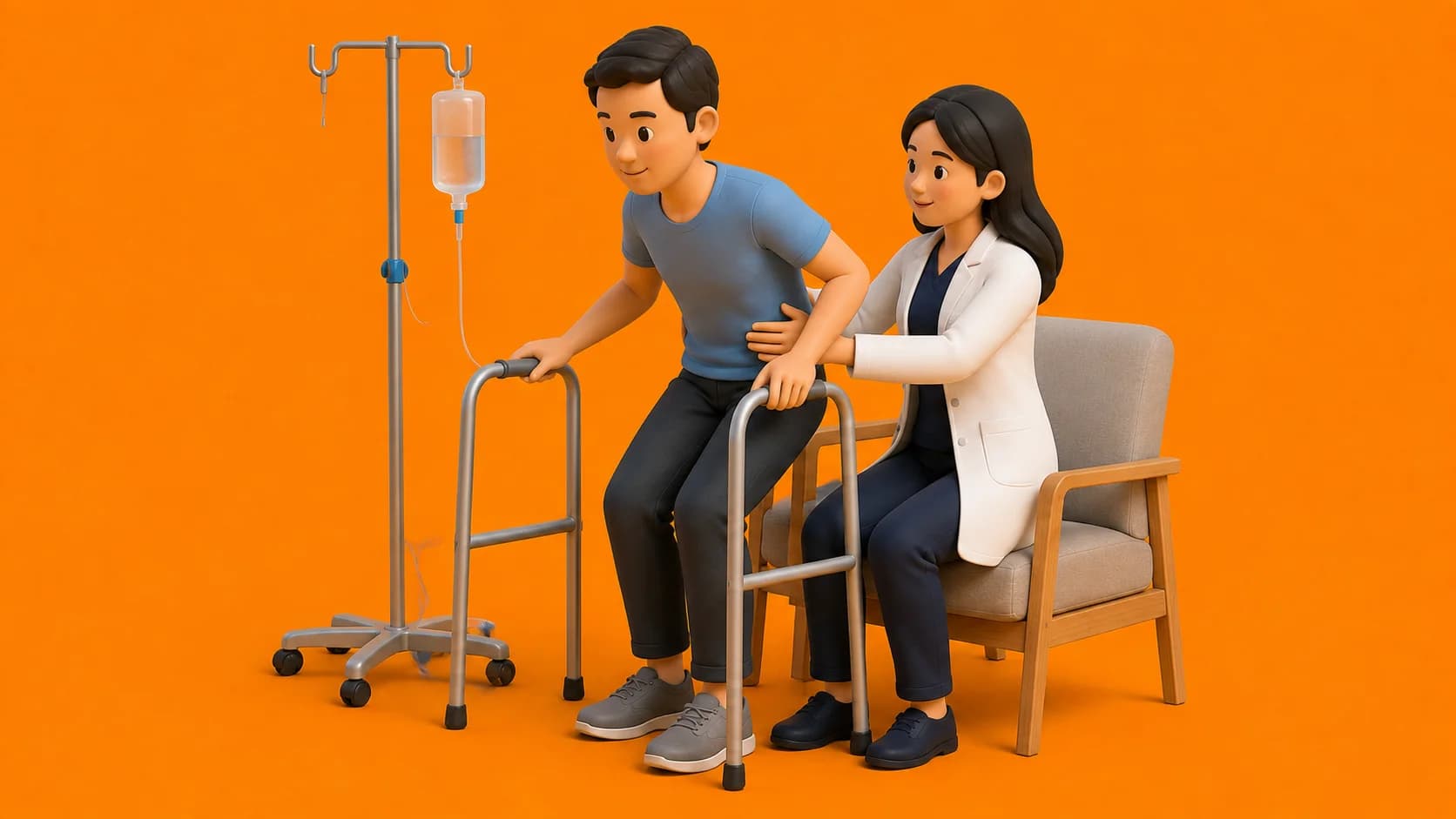
The ABCDEF bundle (Assess, Both SAT and SBT, Choice of sedation, Delirium monitoring, Early mobility, Family engagement) represents the foundation of modern critical care rehabilitation. Synchronizing physiotherapy directly with spontaneous awakening trials (SAT or sedation vacations) and spontaneous breathing trials (SBT) optimizes neurological alertness and respiratory drive, maximizing the therapeutic efficacy of early mobilization.
Neuro-Cognitive Alignment and Respiratory Mechanics During Awakening
Continuous intravenous sedative infusions (particularly gamma-aminobutyric acid (GABA) agonists such as midazolam and propofol) blunt cortical motor planning, suppress native phrenic nerve discharge, and induce physical immobility. Daily interruption of continuous sedatives allows clearance of lipophilic drug metabolites, re-establishing cortical arousal. Pairing this awakening window with physical mobilization leverages endogenous catecholamine surges to increase functional tidal volumes, recruit atelectatic lung zones, and accelerate physical reconditioning.
| Bundle Phase | Clinical Interventions | Target Patient State | Mobility Action | |
|---|---|---|---|---|
| Phase 1: SAT Initiation | Discontinue sedative infusions (propofol, dexmedetomidine) | RASS transitions from -4 to -1 or 0 within 30 to 60 minutes | Passive limb stretches, position bed into 45-degree semi-fowler | |
| Phase 2: SBT Trial | Switch ventilator to CPAP / Pressure Support (<= 5 cmH2O) | Rapid Shallow Breathing Index (RSBI) < 105, stable blood gases | Active-assisted edge-of-bed sitting, trunk stability exercises | |
| Phase 3: Active Mobilization | Alert, cooperative patient following verbal commands | RASS 0 to +1, blood pressure and heart rate within safety margins | Standing weight-shifts, transfer to chair, assisted corridor walking | |
| Phase 4: Post-Mobility Rest | Re-evaluate comfort and sedation requirements | Patient comfortably resting, physiological vital signs stable | Padded resting splints applied, safe bed positioning |
Interdisciplinary Coordination and Safety Screening
Executing coordinated mobility requires tight interdisciplinary synchronization between the intensivist, bedside nurse, respiratory therapist, and physiotherapist. The nurse confirms that sedation has been paused and evaluates wakefulness. The respiratory therapist assesses ventilator synchrony and readiness for a low-pressure SBT. Once the patient demonstrates cognitive responsiveness, the physiotherapist initiates active mobility tasks, continuously monitoring airway circuit stability and hemodynamic telemetry.
Synchronized Edge-of-Bed Inspiratory Expansion with Arm Elevation
Objective: Expand thoracic volume and enhance tidal volume during spontaneous breathing trials.
- 1Assist the alert patient to an upright seated position on the bed edge with feet firmly planted on a step stool.
- 2Wait for two minutes to confirm hemodynamic stability and steady baseline breathing pattern.
- 3Instruct the patient to take a deep breath through the mouth while raising both arms forward and upward to shoulder height.
- 4Encourage the patient to feel the lower chest expanding laterally and anteriorly as the lungs inflate.
- 5Guide the patient to lower the arms slowly while exhaling smoothly through the mouth.
Domestic Recovery in India and Multigenerational Support
Following hospital discharge to an Indian domestic environment, establishing daily structured activity routines remains vital. In Indian households, family members can mirror the hospital routine by scheduling physical exercise and assisted walking sessions during mid-morning hours when the recovering elder is most alert, avoiding late evening hours when cognitive fatigue and sundowning confusion tend to peak.
Long-Term Trajectory and Ventilator Liberation Outcomes
Coordinating physiotherapy with daily sedation interruptions and breathing trials significantly reduces total mechanical ventilation duration by an average of three days and shortens ICU length of stay by four days. These acute functional gains translate into improved long-term exercise capacity and higher rates of independent living at one year.
Immediately pause physical activity and notify the clinical team if the patient exhibits signs of SBT failure during mobility: respiratory rate greater than 35 breaths per minute, diaphoresis, intercostal retractions, or acute anxiety.
What should clinicians do if a patient becomes combative during a sedation vacation?
If severe agitation or combativeness develops during sedation interruption, clinicians perform a rapid CAM-ICU screen to evaluate for delirium, verify adequate analgesia, and employ non-pharmacological calming measures such as family presence and reassuring verbal orientation before considering low-dose non-GABAergic agents.
Do I need a doctor referral to consult a home physiotherapist in India?
Under the National Commission for Allied and Healthcare Professions (NCAHP) Act 2021, patients in India enjoy direct access to registered physiotherapists without requiring a mandatory doctor referral. At BookPhysio.in, you consult verified physiotherapists and pay directly per session without hidden fees or platform commissions.
Related condition guides



Related recovery guides & articles
BookPhysio.in Editorial Team
The BookPhysio.in editorial team writes and maintains this content, checking it against reliable clinical sources. Content follows our medical review policy: general information only, and no page claims a clinical review until a named registered physiotherapist has signed it off.
Read our medical review policy