
Septic Arthritis of the Hip in Infants: Developmental Dislocation Prevention
In short
Infantile septic arthritis of the hip threatens femoral head stability. Learn essential orthotic positioning, handling protocols, and dislocation prevention.
In this guide (5 sections)
Septic arthritis of the hip in infants is an orthopaedic emergency with severe long-term developmental implications. In neonates and infants under eighteen months of age, transphyseal blood vessels bridge the growth plate, allowing bacterial infection from the metaphyseal marrow to enter directly into the hip joint cavity. The infantile proximal femur and acetabular rim are largely cartilaginous, rendering them vulnerable to rapid enzymatic digestion by bacterial collagenases. Furthermore, high intracapsular fluid pressure distends the compliant infantile joint capsule, frequently displacing the femoral head out of the shallow acetabulum and resulting in pathological developmental dislocation.
Domestic and Cultural Indian Realities
In Indian cultural and domestic childcare, customary practices can be hazardous for an infant recovering from septic hip drainage. Traditional newborn massage (maalish) often involves vigorous pulling, stretching, and forceful straightening of the infant’s lower limbs by domestic masseuses (dais). This forceful manipulation can avulse a fragile cartilaginous femoral head or lever it out of the socket. Furthermore, traditional tight swaddling with the hips forced into adduction and extension destabilizes the joint. Physiotherapists educate mothers and grandmothers to cease all aggressive massages, maintain the hips in loose flexion and abduction, and handle the infant with exceptional gentleness during bathing and diaper changes.
Cartilaginous Chondrolysis and Capsular Laxity Dynamics
The infant hip relies heavily on capsular and ligamentous tension to maintain concentric reduction of the cartilaginous femoral head within the acetabulum. Bacterial enzymes from Staphylococcus aureus or Group B Streptococcus can liquefy the cartilaginous epiphysis within 48 to 72 hours (Tom Smith arthritis). If the femoral head is destroyed, or if capsular laxity allows the proximal femur to ride upward into the iliac fossa, the acetabular roof fails to develop, resulting in permanent acetabular dysplasia, limb shortening, and a lifelong Trendelenburg gait.
Orthotic Stabilization and Caregiver Handling Protocols
Following surgical arthrotomy and joint washout, maintaining stable, concentric reduction of the femoral head is the primary therapeutic priority. The infant is placed in an abduction orthosis, such as a Pavlik harness, an Ilfeld splint, or a custom hip spica cast, positioning the hips in 90 to 100 degrees of flexion and 45 to 60 degrees of abduction (the human position). Physiotherapy focuses on training parents in safe handling, skin inspection under harness straps, and gentle passive-assisted kicking movements permitted only within stable orthotic boundaries.
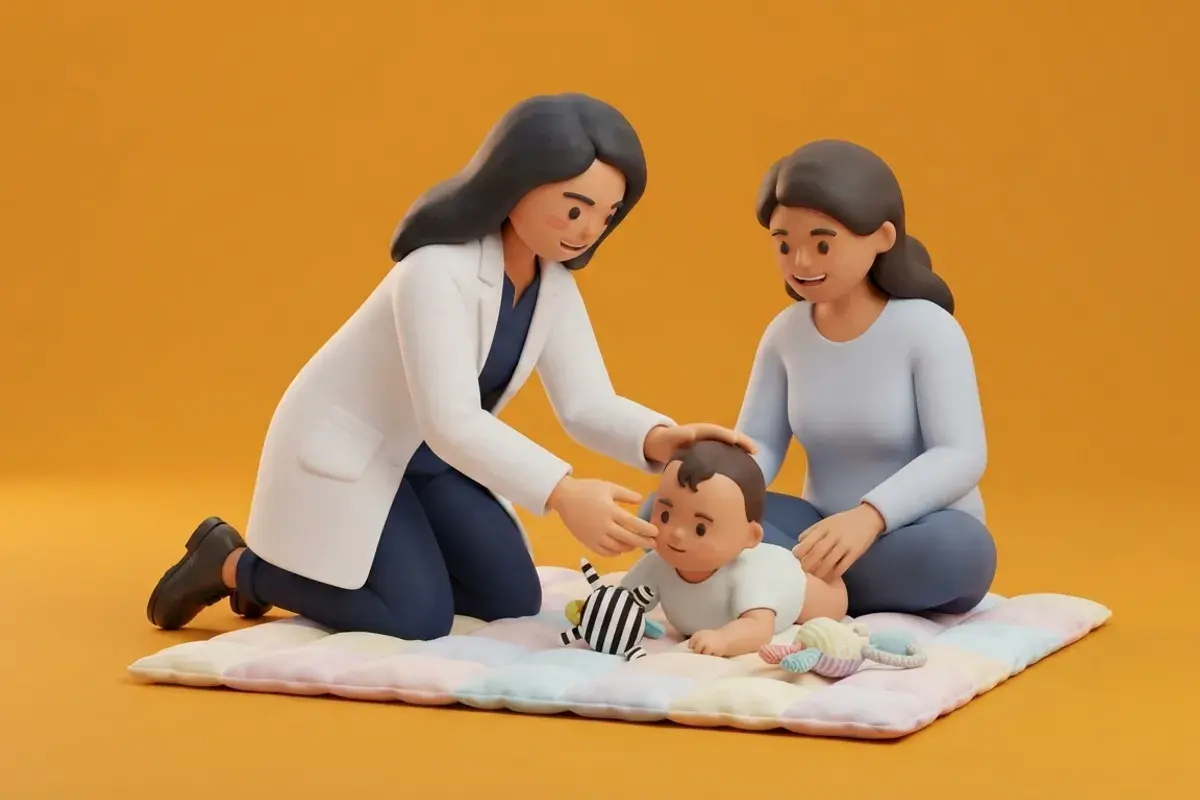
Gentle Caregiver Guided Infant Hip Flexion-Abduction Play
Objective: Encourage physiological sensory-motor development while maintaining concentric femoral head reduction
- 1Place the infant supine on a firm, padded mat while wearing the prescribed abduction harness or splint.
- 2Cup your warm hands gently beneath the infant’s calves and thighs, supporting the limbs in natural abduction.
- 3Allow the infant to initiate natural, spontaneous kicking movements without forcing or restricting movement.
- 4Gently guide both knees upward toward the chest into 90 degrees of flexion, avoiding any inward adduction.
- 5Maintain a soothing voice and calm eye contact, keeping the play session peaceful and under 5 minutes.
| Clinical Risk Factor | Pathological Consequence | Mandatory Physiotherapy Prevention Strategy |
|---|---|---|
| Traditional Leg Pulling (Maalish) | Mechanical avulsion of cartilaginous epiphysis; immediate dislocation of femoral head | Absolute contraindication to traditional leg pulling or forceful stretching; educate family members |
| Tight Linear Swaddling | Adduction and extension forces push the femoral head posterosuperiorly out of acetabulum | Enforce loose, hip-healthy swaddling allowing free flexion and abduction (frog-leg posture) |
| Capsular Distension & Laxity | Spontaneous subluxation during diaper changes or clothing transfers | Maintain continuous Pavlik harness or abduction splint; roll baby gently without pulling legs |
| Physeal Blood Supply Disruption | Premature growth plate arrest; progressive leg length discrepancy; proximal femoral shortening | Serial paediatric orthopaedic ultrasound surveillance every 4-6 weeks to verify concentric reduction |
Red Flags and Specialist Escalation
Seek emergency paediatric orthopaedic consultation immediately if you observe asymmetric thigh or groin skin creases, the infant resting with one leg completely straight and rolled outward, refusal to move the leg during diaper changes (pseudoparalysis), or sudden crying when the hip is gently touched. These signs indicate acute joint subluxation, recurrent infection, or pathological dislocation requiring immediate reduction.
Frequently Asked Questions
Why is traditional oil massage strictly forbidden after an infant hip infection?
Traditional baby massage often involves forcefully pulling the baby’s legs straight to shape them. In an infant who had a hip infection, the hip socket and joint capsule are stretched and delicate. Pulling or straightening the legs can pull the soft, healing ball of the hip joint right out of its socket, causing permanent hip dislocation and lifelong walking disability.
Do I need a doctor referral to consult an orthopaedic physiotherapist on BookPhysio.in?
BookPhysio.in does not require a doctor referral. Under the National Commission for Allied and Healthcare Professions (NCAHP) Act 2021, patients in India have direct access to registered physiotherapists. You pay your clinician directly per session with transparent fees and zero booking commissions or platform subscriptions.
Related condition guides


Related recovery guides & articles
BookPhysio.in Editorial Team
The BookPhysio.in editorial team writes and maintains this content, checking it against reliable clinical sources. Content follows our medical review policy: general information only, and no page claims a clinical review until a named registered physiotherapist has signed it off.
Read our medical review policy