
SMA Post-Nusinersen and Gene Therapy: Neuro-Rehabilitation Protocols
In short
Disease-modifying therapies reshape SMA from a fatal condition into a treatable disorder, demanding proactive physical rehabilitation to build motor milestones.
In this guide (6 sections)
Spinal Muscular Atrophy (SMA) is an autosomal recessive neuromuscular disease caused by homozygous deletions or mutations in the Survival Motor Neuron 1 (SMN1) gene, leading to progressive degeneration of alpha motor neurons in the spinal cord anterior horn and severe proximal muscle wasting. Historically, infants with severe SMA (Type 1) experienced rapid respiratory failure and rarely survived past two years of age. The advent of pioneering disease-modifying therapies, including antisense oligonucleotides (nusinersen/Spinraza), SMN2 splicing modifiers (risdiplam/Evrysdi), and adeno-associated viral vector gene replacement therapy (onasemnogene abeparvovec/Zolgensma), has transformed the natural history of SMA. Children who once faced inevitable fatal decline are now surviving and acquiring unprecedented motor milestones like sitting, standing, and walking. However, pharmacotherapy alone cannot strengthen denervated muscle fibres or teach coordinated movement: intensive, specialised paediatric physiotherapy is essential to translate genetic survival into functional physical independence.
Domestic and Cultural Indian Realities
In India, obtaining disease-modifying therapies for SMA represents an extraordinary journey for families, often requiring nationwide crowdfunding campaigns, compassionate access lotteries, or heavy debt to secure medicines costing crores of rupees. Once the drug is administered, families frequently experience an overwhelming emotional plateau, expecting spontaneous miraculous motor recovery without further medical intervention. Parents often protect the fragile child by keeping them resting in bed, terrified that physical exertion will damage newly preserved motor neurons. Paediatric physiotherapists must provide empathetic, evidence-based guidance, explaining that physical rehabilitation is the engine that converts genetic therapy into real-world functional movement, while coaching parents in safe home handling and contracture prevention.
Clinical Biomechanics and Neurological Development
Gene therapy and splicing modifiers arrest ongoing motor neuron apoptosis by restoring functional SMN protein production throughout the spinal cord. Surviving motor units sprout collateral axons to re-innervate orphaned muscle fibres, forming enlarged motor units that exhibit abnormal fatiguability. Biomechanically, muscle weakness in SMA is predominantly proximal, axial, and symmetrical, with hip flexors, gluteals, and shoulder girdle muscles far weaker than distal wrists and ankles. Because these children have spent months hypotonic, secondary contractures of the Achilles tendons, hamstrings, and hip flexors develop rapidly. Physical rehabilitation must balance progressive active exercise with strict pacing to avoid eccentric overwork muscle damage.
Clinical Assessment and Developmental Staging
Standardized motor outcome tracking is mandatory to document therapeutic response. The Children Hospital of Philadelphia Infant Test of Neuromuscular Disorders (CHOP INTEND) is the standard scale for non-sitters, scoring 14 items out of 64. For sitters and ambulatory children, the Hammersmith Functional Motor Scale Expanded (HFMSE) and the Revised Upper Limb Module (RULM) evaluate functional transitions and arm dexterity. Regular spirometry, nocturnal pulse oximetry, and orthopaedic spine monitoring (screening for early neuromuscular scoliosis) are vital components of detailed surveillance.
Targeted Rehabilitation and Mobility Exercises
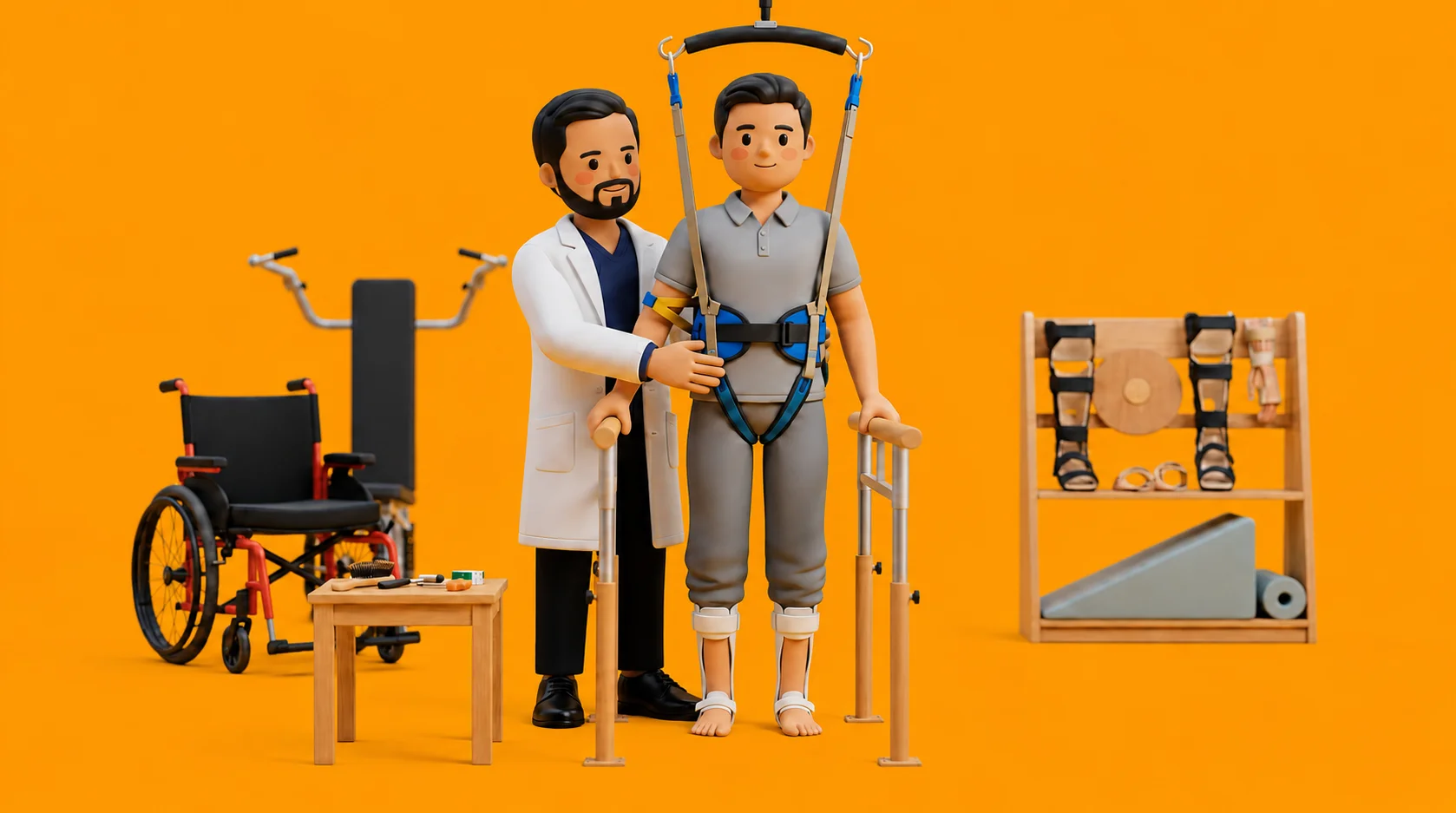
Physiotherapy for SMA post-gene therapy combines low-load active motor training, gravity-eliminated play (aquatic therapy or suspension slings), contracture prevention through daily passive stretching and night splinting, and supported standing protocols using standing frames for 60 minutes daily to promote bone mineral density.
Gravity-Eliminated Supine Reaching in Arm Suspension Slings
Objective: Facilitate active shoulder flexion and reaching without heavy gravitational downforce
- 1Place the child supine on a firm therapy mat, head aligned in midline with a low contoured pillow.
- 2Suspend the child forearms in lightweight elastic overhead slings or support their arms manually under the elbows.
- 3Present a colourful hanging sensory toy at chest height within arm reach.
- 4Encourage the child to reach their hands forward to grasp and shake the toy in the horizontal plane.
- 5Gradually reduce the elastic sling support as the child deltoids and biceps demonstrate improved active recruitment.
| Functional Status | Assessment Tools Used | Primary Physiotherapy Priorities |
|---|---|---|
| Non-Sitters (CHOP INTEND) | CHOP INTEND, TIMP, passive joint goniometry | Respiratory chest physiotherapy; head and trunk alignment; gravity-eliminated reaching; passive stretching |
| Sitters (HFMSE & RULM) | HFMSE, RULM, spinal scoliosis screening | Supported standing frames (60 min/day); dynamic sitting balance; adaptive trikes; contracture night splints |
| Emerging Walkers | HFMSE, 6-Minute Walk Test (6MWT) | Lightweight dynamic orthoses (SMOs/AFOs); reverse rollator gait training; endurance conditioning |
Red Flags and Immediate Specialist Escalation
Immediate emergency hospital escalation is mandatory if the child exhibits signs of acute respiratory decompensation: tachypnoea, intercostal retractions, weak feeble cough, paradoxical abdominal breathing, or pulse oximetry falling below 95 percent. In SMA, mild viral upper respiratory infections can rapidly progress to respiratory failure due to underlying intercostal muscle weakness, requiring urgent non-invasive positive pressure ventilation (BiPAP) and cough-assist therapy.
Frequently Asked Questions
Can an infant with SMA Type 1 learn to sit after receiving gene therapy?
Yes. Clinical trials and real-world registries demonstrate that when gene therapy is administered early, many infants with SMA Type 1 achieve independent sitting, standing, and even walking when supported by intensive paediatric physiotherapy.
Why should intense heavy weight-lifting be avoided in children with SMA?
Motor units in SMA are fragile and prone to eccentric overwork muscle damage. Exercise must focus on low-load, high-repetition functional activities, gravity-eliminated play, and hydrotherapy rather than exhausting resistance training.
Related condition guides


Related recovery guides & articles
BookPhysio.in Editorial Team
The BookPhysio.in editorial team writes and maintains this content, checking it against reliable clinical sources. Content follows our medical review policy: general information only, and no page claims a clinical review until a named registered physiotherapist has signed it off.
Read our medical review policy