
Stress-Induced Teeth Grinding: Diaphragmatic Breathing for Jaw Release
In short
Stress drives subconscious teeth clenching. Learn how diaphragmatic breathing down-regulates sympathetic nervous tone and permanently relaxes jaw muscles.
In this guide (4 sections)
Psychological stress and emotional tension are among the most potent systemic drivers of awake and sleep bruxism, masticatory muscle hypertonicity, and temporomandibular joint pain. The human masticatory apparatus is neurobiologically wired to the limbic system and the autonomic nervous system via dense projections between the amygdala, hypothalamus, and the motor trigeminal nucleus. Under perceived threat, chronic work stress, or anxiety, the sympathetic nervous system initiates a fight-or-flight response, eliciting widespread systemic vasoconstriction and involuntary motor bracing. The jaw elevator muscles (masseter, temporalis, medial pterygoid) are primary target organs of this bracing response, clenching down with immense force to prepare the individual for physical conflict.
Domestic Realities and Daily Functional Loading in India
In urban India, the pressures of modern life create sustained, chronic sympathetic nervous system activation. Fast-paced corporate cultures, tight deadlines in technology hubs, long traffic commutes, and high academic expectations create unrelenting daily tension. Many individuals cope by shallow, apical chest breathing (breathing rapidly into the upper chest rather than the abdomen), which perpetuates a state of mild physiological hyperventilation and hypocapnia. Low carbon dioxide levels increase systemic neuromuscular irritability, predisposing the jaw muscles to persistent cramp and clenching. Furthermore, many consume multiple cups of strong masala chai or coffee throughout the day, stimulating adrenaline release. Physiotherapists integrate diaphragmatic breathing training into TMJ rehabilitation to restore autonomic balance.
Sympathetic Hyperarousal, Hypocapnia, and Trigeminal Motor Firing
The physiological link between shallow chest breathing and jaw tension is mediated by blood gas chemistry and autonomic reflex arcs. Chronic apical breathing blows off excessive carbon dioxide, inducing mild respiratory alkalosis. This pH shift reduces the concentration of free ionized calcium in the extracellular fluid, lowering the action potential threshold of peripheral nerves and making motor endplates hyper-excitable. Concurrently, sympathetic outflow stimulates muscle spindles within the masseter and temporalis, increasing muscle resting tone even when the individual believes they are relaxed. Diaphragmatic breathing, characterized by slow, deep, diaphragmatic excursion at 5 to 6 breaths per minute, stimulates pulmonary stretch receptors that trigger the Hering-Breuer reflex and activate the vagus nerve, immediately shifting autonomic balance toward parasympathetic dominance and silencing trigeminal motor hyperarousal.
Four-Square Breathing, Vagal Stimulation, and Muscular Release
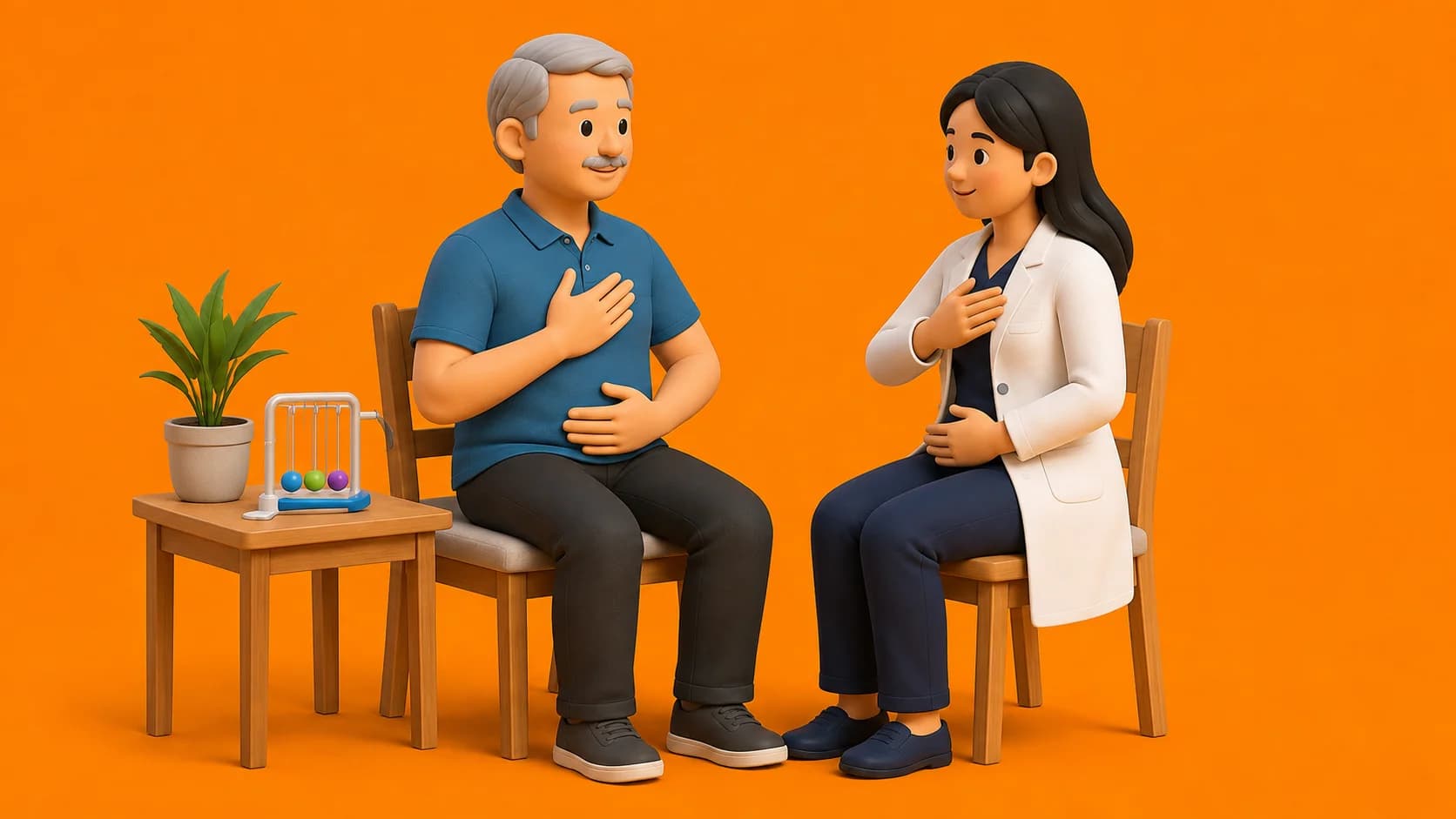
Physiotherapy protocol incorporates structured diaphragmatic breathing routines, such as box breathing (four-square breathing) or 4-7-8 breathing, practiced in combination with conscious jaw de-weighting. The patient sits or lies supine, placing one hand on the chest and the other on the abdomen. The patient is taught to expand the abdomen during inhalation while the upper chest remains completely quiet. As the patient exhales slowly and completely, they visualize the lower jaw dropping heavy and slack, maintaining a clear 3 to 4 millimetre freeway space between upper and lower teeth. Practiced consistently, this exercise recalibrates the autonomic nervous system, breaking the cycle of stress-induced clenching.
Four-Square Diaphragmatic Breathing with Mandibular Release
Objective: Activate parasympathetic vagal tone and eliminate stress-induced masticatory muscle clamping
- 1Sit comfortably in a supportive chair with your back straight, feet flat on the floor, and shoulders relaxed.
- 2Place the broad tip of your tongue gently on the roof of your mouth, keeping your lips closed and teeth completely apart.
- 3Inhale slowly and deeply through your nose for a count of 4, feeling your abdomen expand softly while your chest stays still.
- 4Hold your breath comfortably for a count of 4, keeping your facial muscles, jaw, and throat completely relaxed.
- 5Exhale smoothly through your nose for a count of 4, imagining all tension melting out of your jaw and temples, then pause for 4.
| Physiological Parameter | Apical Chest Breathing (Stress Pattern) | Diaphragmatic Breathing (Relaxation Pattern) | TMJ Clinical Implication |
|---|---|---|---|
| Autonomic Nervous Balance | Sympathetic dominance, adrenaline and cortisol elevation | Parasympathetic vagal dominance, acetylcholine release | Vagal stimulation directly suppresses trigeminal motor hyperactivity |
| Blood Gas & Neuromuscular Tone | Hypocapnia (low CO2), ionized calcium drops, hyper-reflexia | Eucapnia (optimal CO2), normal neuromuscular threshold | Optimal breathing eliminates spontaneous muscle fasciculations |
| Accessory Muscle Recruitment | Scalenes and SCM overwork to lift rib cage; jaw tenses | Diaphragm handles 80% of work; neck and jaw muscles quiet | Relieves anterior neck tension and secondary hyoid pull on jaw |
Severe, unremitting anxiety accompanied by sudden panic attacks, chest tightness, rapid heart palpitations, dizziness, or tingling in both hands and feet (carpopedal spasms) requires comprehensive medical and psychiatric evaluation to rule out cardiac arrhythmias or primary panic disorders before concluding symptoms are purely stress-induced.
Frequently Asked Questions
How does breathing through my belly help my jaw stop clenching?
When you take deep, slow breaths using your diaphragm, your body activates the vagus nerve, which tells your entire nervous system to switch off its stress response. This immediately lowers the electrical signal going to your jaw muscles, allowing them to release their clenched grip.
Do I need an ENT or dental referral before consulting a TMJ physiotherapist on BookPhysio.in?
BookPhysio.in does not ask for a doctor referral. Under the National Commission for Allied and Healthcare Professions (NCAHP) Act 2021, Indian patients hold direct first-contact access to registered physiotherapists. On BookPhysio.in, you schedule directly and pay your clinician per session, with zero advance package traps, mandatory block bookings, or platform commission fees.
Related condition guides


Related recovery guides & articles
BookPhysio.in Editorial Team
The BookPhysio.in editorial team writes and maintains this content, checking it against reliable clinical sources. Content follows our medical review policy: general information only, and no page claims a clinical review until a named registered physiotherapist has signed it off.
Read our medical review policy