
Subacromial Decompression and Acromioplasty: Post-Operative Progression and Scapular Care
In short
Arthroscopic decompression relieves subacromial spurring without cutting tendons. Learn early passive-to-active motion milestones, subdeltoid gliding, and periscapular strengthening.

In this guide (4 sections)
Understanding Arthroscopic Subacromial Decompression (ASD)
Subacromial Impingement Syndrome unresponsive to 3 to 6 months of conservative physiotherapy can be treated with Arthroscopic Subacromial Decompression (ASD) and anterior acromioplasty (Neer procedure).
The procedure involves arthroscopic bursectomy (excising the inflamed, hypertrophic subacromial bursa), release of the coracoacromial ligament, and shaving of the anteroinferior acromial spur (converting a curved Type II or hooked Type III acromion into a flat Type I acromion).
Because the underlying rotator cuff tendons are structurally intact and not surgically detached or sutured, rehabilitation is significantly faster than after rotator cuff repair: there are zero prolonged sling restrictions or biological tendon healing delays.
Early Post-Operative Milestones (Day 1 to Week 6)
Rehabilitation begins on Day 1 post-operatively, emphasizing early pain-free range of motion to prevent subdeltoid adhesions.
| Post-Operative Phase | Target Range of Motion | Sling Wearing Status | Primary Rehabilitation Focus | |
|---|---|---|---|---|
| Phase 1 (Days 1 to 14) | Passive forward flexion to 120 deg; ER to 45 deg | Sling for comfort ONLY; discard by Day 7-10 | Codman pendular swings, active wrist/elbow ROM, cryotherapy. | |
| Phase 2 (Weeks 2 to 4) | Full active-assisted forward flexion and abduction | Completely out of sling | Cane-assisted elevation, wall walks, submaximal rotator cuff isometrics. | |
| Phase 3 (Weeks 5 to 8) | Full active pain-free range of motion | Unrestricted daily activities | Resistance band internal/external rotation, prone scapular Ts and Ys. | |
| Phase 4 (Weeks 9 to 12) | Full strength and functional endurance | Return to overhead sports and heavy lifting | Plyometric medicine ball passes, swimming, overhead throwing progression. |
Preventing Post-Surgical Adhesive Capsulitis
A critical complication following subacromial decompression is secondary adhesive capsulitis (frozen shoulder), which develops if the patient guards the arm rigidly in a sling due to post-operative pain.
Physiotherapists enforce discarding the sling within 7 to 10 days, ensuring daily passive forward flexion and external rotation exercises are practiced at home.
- Codman Pendular Swings on Day 1: Bend at the waist, let the arm hang loose under gravity, and gently sway the torso in small circles for 60 seconds to mobilize the glenohumeral joint without active muscle recruitment.
- Pulleys and Cane-Assisted Elevation: Use an overhead door pulley or cane to guide the operated arm into forward elevation using the power of the healthy sound arm.
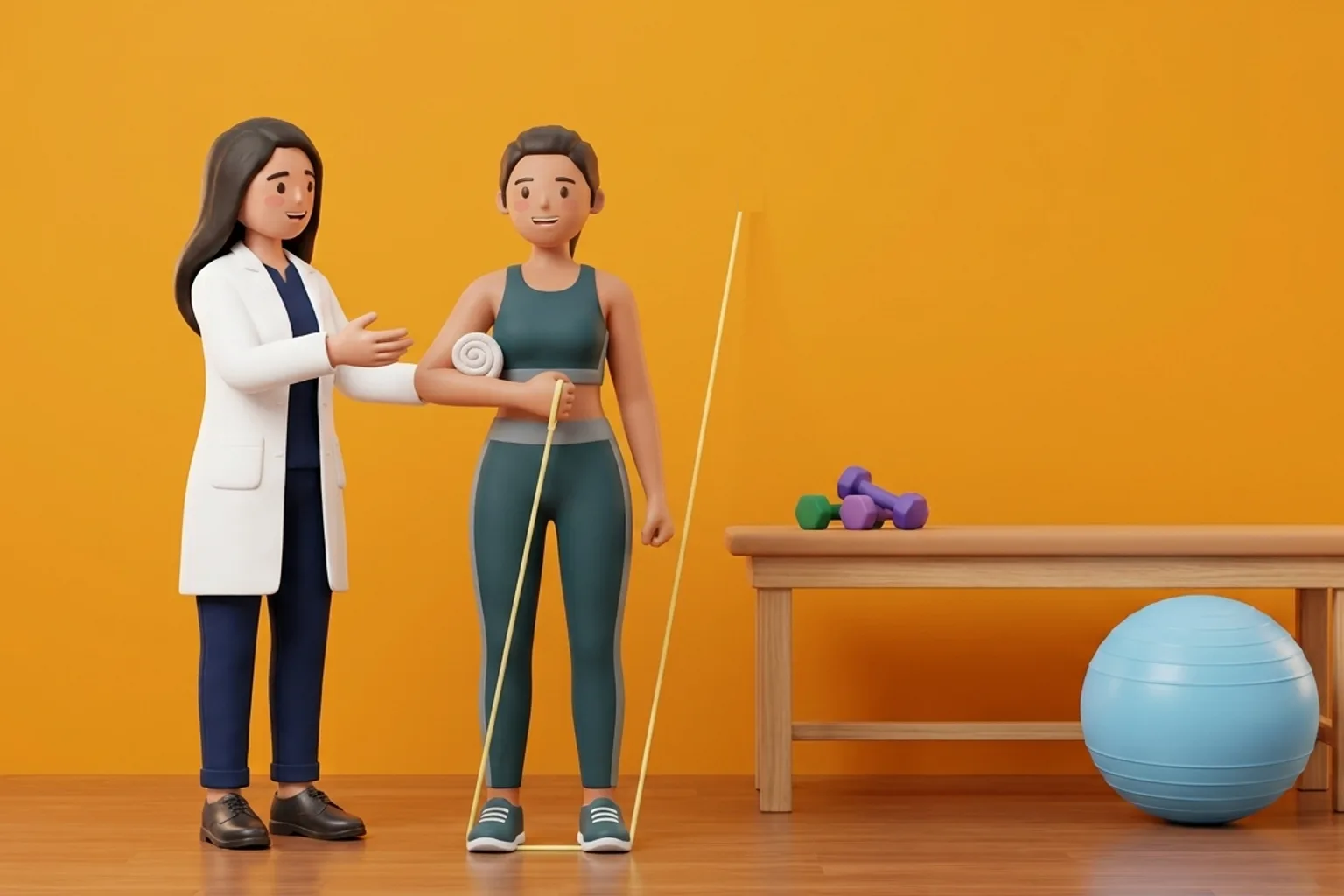
- Subscapularis and Infraspinatus Isometrics: Perform gentle isometric internal and external rotation pressing against a wall with a towel roll under the elbow (5 sets of 10 seconds).
- Serratus Anterior Wall Slides: Slide forearms up a wall while keeping shoulder blades protracted to ensure proper acromial clearance during arm lifting.
Frequently Asked Questions
How soon can I sleep on my operated side after decompression?
Most patients can comfortably sleep on the operated shoulder by 4 to 6 weeks once deep subdeltoid bone bruising has resolved.
Why is acromioplasty surgery performed less frequently today than 20 years ago?
Extensive randomized clinical trials (such as the CSAW trial) showed that subacromial decompression provided no significant clinical benefit over specialized structured exercise therapy alone for uncomplicated impingement, focusing surgical care on true structural bony spurs.
When can a patient drive a car after subacromial decompression?
Driving is typically permitted within 1 to 2 weeks once the sling is discarded, the patient has full two-handed steering wheel control, and narcotic pain medications are discontinued.
Related condition guides

Related recovery guides & articles
BookPhysio.in Editorial Team
The BookPhysio.in editorial team writes and maintains this content, checking it against reliable clinical sources. Content follows our medical review policy: general information only, and no page claims a clinical review until a named registered physiotherapist has signed it off.
Read our medical review policy