
Sulcus Sign, Anterior Apprehension, and Jobe Relocation Test Accuracy in Shoulder Laxity
In short
Special physical examination tests confirm shoulder instability and labral tears. Discover sensitivity, specificity, and techniques for clinical accuracy.
In this guide (4 sections)
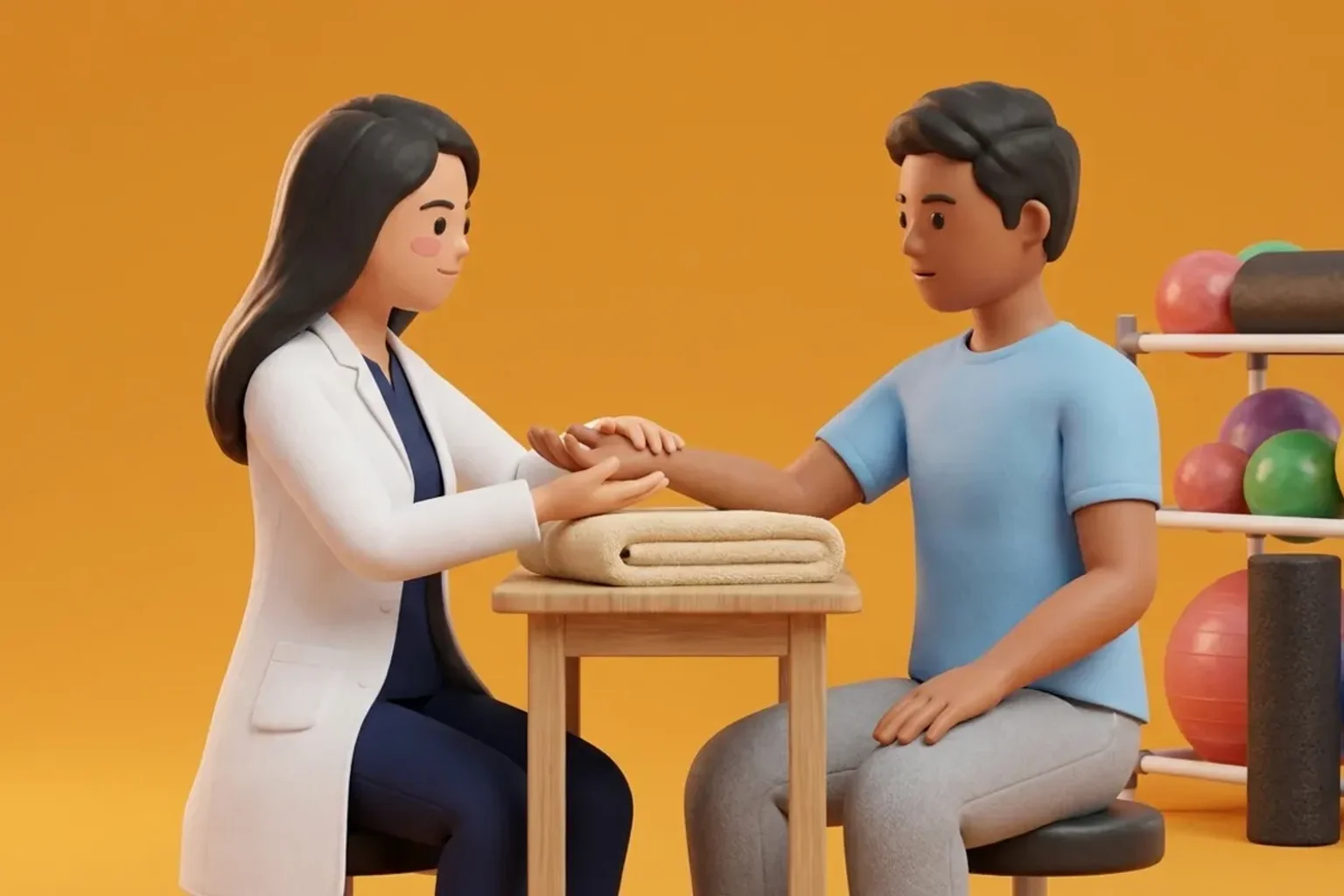
Physical examination remains the clinical essential for identifying glenohumeral joint laxity and pathological shoulder instability. Because magnetic resonance imaging (MRI) frequently identifies asymptomatic labral variations or anatomical capsular redundancy, clinicians must correlate diagnostic imaging with standardized, validated provocative maneuvers. Among the clinical tests used in shoulder assessment, three procedures form the core instability evaluation battery: the Sulcus Sign for inferior laxity and multidirectional instability, the Anterior Apprehension Test for anterior capsulolabral incompetence, and the Jobe Relocation Test for confirming anterior instability while differentiating it from internal subacromial impingement.
Clinical Consultations in Indian Towns: Screening Without Instant MRI Access
In many tier-2 and tier-3 Indian towns, specialized 3-Tesla MRI machines and musculoskeletal radiologists are not immediately accessible within community health clinics. Patients complaining of vague shoulder pain after gym workouts, manual labor, or scooter falls often travel hours for advanced diagnostics. Under these clinical conditions, a physiotherapist mastery of physical examination accuracy is indispensable. Skillfully executing the Sulcus sign, Apprehension test, and Jobe relocation test enables accurate diagnosis of labral tears and capsular laxity, guiding conservative rehabilitation without subjecting patients to expensive, delayed diagnostic imaging.
Capsular Vector Biomechanics, Apprehension Versus Pain, and Relocation Dynamics
The Anterior Apprehension test places the glenohumeral joint into 90 degrees of abduction and maximum external rotation, driving the humeral head forward against the anterior-inferior labrum and inferior glenohumeral ligament (AIGHL). A positive test is defined by the patient showing genuine apprehension, facial grimacing, or guarding fear that the shoulder is about to dislocate, rather than localized muscular pain. The Jobe Relocation test follows immediately: the clinician applies a gentle, firm posteriorly directed force over the anterior humeral head. If this posterior pressure completely abolishes the apprehension and allows greater external rotation, the test confirms anterior instability. If posterior pressure relieves pain but not apprehension, the patient likely suffers from internal impingement or rotator cuff irritation.
Grading the Sulcus Sign and Structuring Neuromuscular Stabilization
The Sulcus sign evaluates inferior capsular laxity and the integrity of the superior glenohumeral ligament (SGHL) and coracohumeral ligament. With the patient seated and the arm hanging relaxed at the side, the clinician applies steady downward traction at the elbow. Inferior translation is measured by the depth of the sulcus depression forming beneath the lateral acromion: Grade 1 corresponds to less than 1 centimeter of translation, Grade 2 represents 1 to 2 centimeters, and Grade 3 indicates greater than 2 centimeters of inferior displacement. A positive Sulcus sign that persists when the arm is tested in 30 degrees of external rotation confirms significant rotator interval deficiency and generalized multidirectional instability.
Prone Scapular Retraction and External Rotation (W-Position)
Objective: Strengthen the infraspinatus, teres minor, and rhomboids to enhance dynamic posterior restraint and prevent anterior creep
- 1Lie face down on a treatment plinth with your forehead resting comfortably on a folded towel roll.
- 2Position both arms in a W formation with elbows bent at 90 degrees and upper arms abducted 60 degrees from your sides.
- 3Gently draw your shoulder blades toward your spine and downward toward your waist without shrugging your neck.
- 4Lift both hands and forearms 5 centimeters off the surface, rotating the thumbs upward toward the ceiling.
- 5Hold this muscular contraction steadily for 5 seconds, breathing rhythmically, then lower under full control.
| Physical Examination Test | Clinical Execution and Positive Criteria | Sensitivity, Specificity, and Diagnostic Value |
|---|---|---|
| Anterior Apprehension Test | Arm placed in 90 degrees abduction and slowly externally rotated; positive when patient demonstrates genuine apprehension or fear of dislocation | Sensitivity: 68-72 percent; Specificity: 96-99 percent; highly specific for anterior capsulolabral incompetence when apprehension is the endpoint |
| Jobe Relocation Test | Posteriorly directed manual pressure applied over anterior humeral head during positive apprehension test; positive when apprehension disappears | Sensitivity: 85 percent; Specificity: 90 percent; differentiates true anterior instability from primary subacromial or internal impingement |
| Release / Surprise Test | Sudden removal of the posterior relocation force while maintaining abduction/ER; positive when acute apprehension or pain immediately returns | Sensitivity: 92 percent; Specificity: 89 percent; highly sensitive for occult anterior microinstability in overhead athletes |
| Inferior Sulcus Sign | Downward traction applied at the elbow with arm at side; positive when visible dip forms below acromion (Grade 1: <1cm, Grade 2: 1-2cm, Grade 3: >2cm) | Sensitivity: 72 percent; Specificity: 85 percent; identifies inferior capsular redundancy and multidirectional shoulder instability |
While the Release or Surprise test has high diagnostic sensitivity, abruptly removing posterior relocation pressure at end-range abduction and external rotation can cause a violent anterior subluxation or acute labral re-tear. Clinicians must release pressure gradually to prevent iatrogenic joint trauma.
Frequently Asked Questions
Why does my shoulder feel unstable during the test even though the MRI scan reported no labral tear?
MRI scans capture static structural images, but they do not evaluate dynamic joint behavior or subtle capsular stretching. An individual with multidirectional laxity or congenital capsular redundancy can experience marked physical instability and a positive apprehension test despite having a completely intact, un-torn glenoid labrum.
Do I need a doctor referral to see a shoulder instability physiotherapist on BookPhysio.in?
BookPhysio.in does not require a physician prescription. Under the National Commission for Allied and Healthcare Professions (NCAHP) Act 2021, patients across India enjoy direct access to autonomous registered physiotherapists. Through BookPhysio.in, you connect directly with verified clinicians and pay per session with transparent fees, completely free from advance package commitments, commission markups, or platform subscription charges.
Related condition guides



Related recovery guides & articles
BookPhysio.in Editorial Team
The BookPhysio.in editorial team writes and maintains this content, checking it against reliable clinical sources. Content follows our medical review policy: general information only, and no page claims a clinical review until a named registered physiotherapist has signed it off.
Read our medical review policy