
Telephysiotherapy for Lateral Epicondylalgia: Validated Virtual Assessment and Remote Grip Screening
In short
Telephysiotherapy provides accurate, convenient care for tennis elbow. Learn how clinicians validate diagnosis and guide progressive loading via remote video consultations.
In this guide (4 sections)
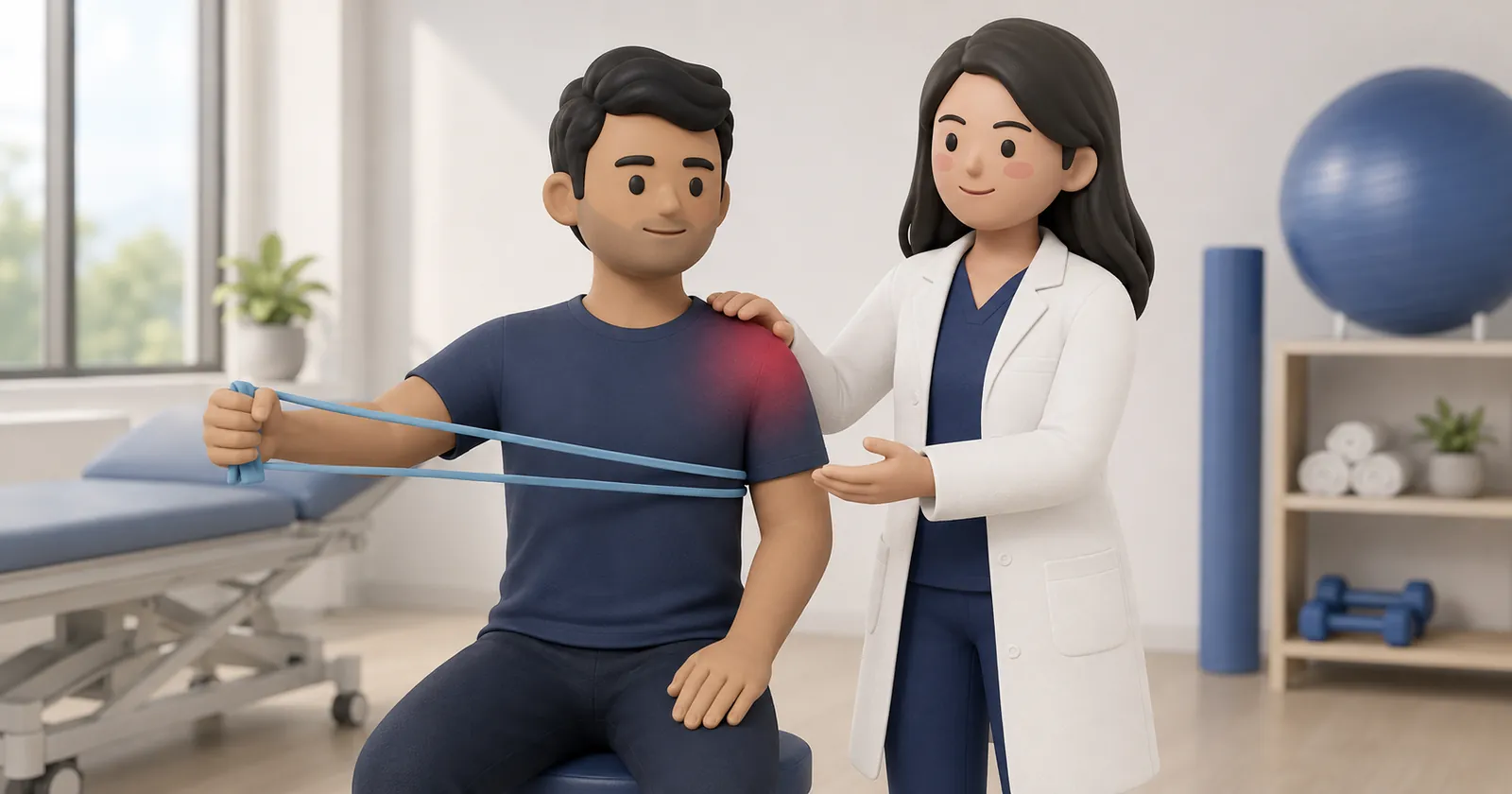
The rapid expansion of digital healthcare in India has established telephysiotherapy as a clinically validated, highly effective delivery model for musculoskeletal conditions. For lateral and medial epicondylalgia, conditions whose diagnosis relies primarily upon history, visual observation, and structured movement testing rather than complex hospital imaging, remote video consultations offer exceptional diagnostic accuracy. Utilizing validated virtual self-palpation protocols, guided orthopedic tests, and household functional load screenings, registered physiotherapists can accurately diagnose epicondylalgia, rule out sinister red flags, and guide progressive rehabilitation directly to patients in their homes.
Bridging Geographic and Time Barriers Across Indian Regions
In India, access to specialized musculoskeletal physiotherapy is often concentrated in tier-one metropolitan hubs. For working professionals navigating severe traffic in cities like Bengaluru, or residents living in tier-two and tier-three towns across states like Uttar Pradesh, Bihar, or Kerala, traveling to a clinic two to three times weekly is practically impossible. Telephysiotherapy eliminates travel costs, reduces missed work hours, and allows clinicians to evaluate the patient's actual home environment, assessing their real kitchen setup, desk ergonomics, and domestic tools in real time.
Diagnostic Validity, Visual Clinical Observation, and Guided Self-Palpation
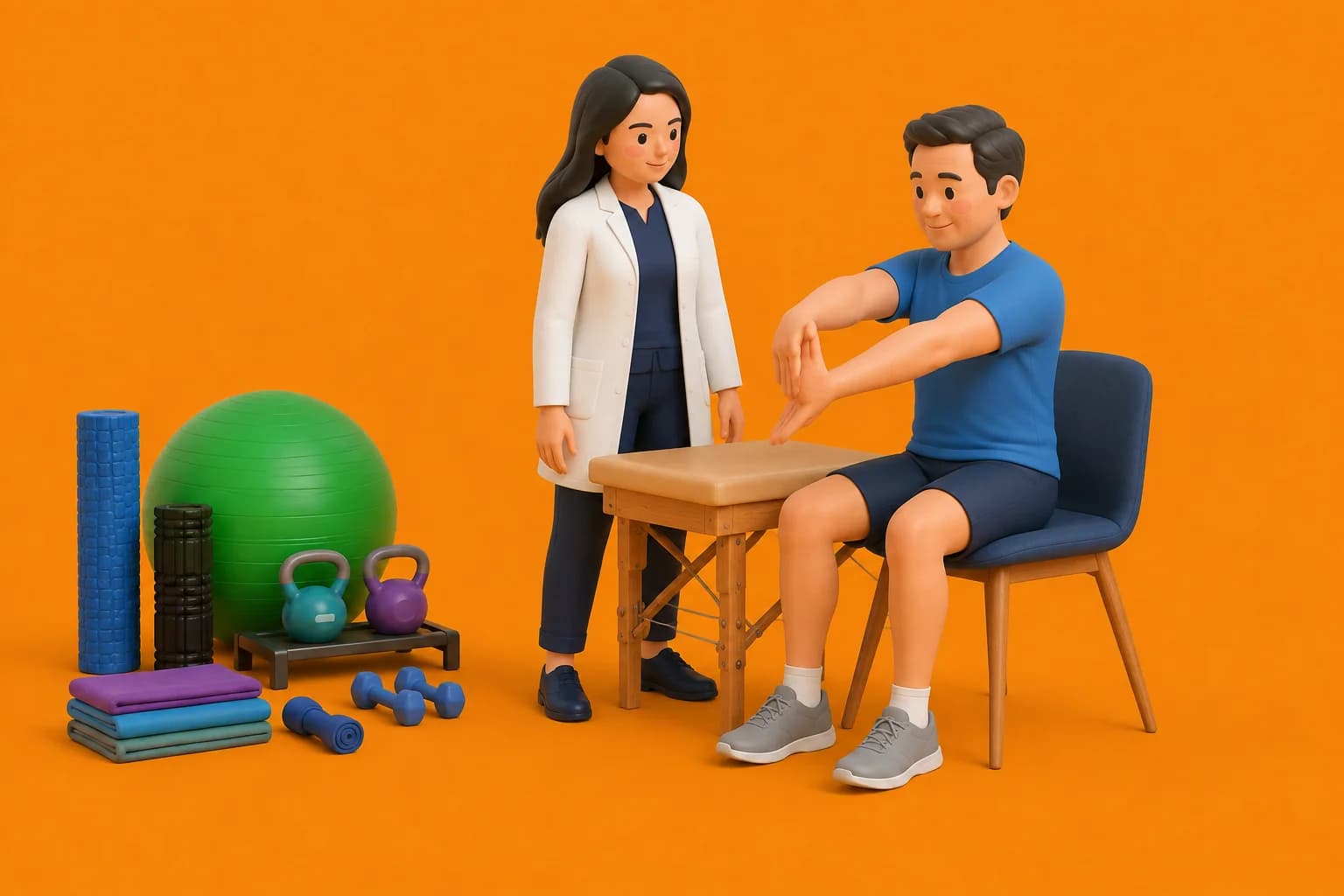
International clinical validation studies demonstrate high diagnostic concordance (exceeding eighty-five percent) between in-person and video-based assessments of lateral epicondylalgia. The remote clinical consultation begins with high-definition visual inspection for localized swelling, muscle wasting, erythema, or olecranon bursal enlargement. The clinician then guides the patient through standardized self-palpation: locating the lateral epicondyle bony landmark and pressing with their opposite thumb pad. This is followed by guided self-administered provocative tests: Cozen's test executed against desk undersides and Mills' test performed in full view of the camera.
Household Grip Quantification, Exercise Coaching, and Digital Continuity
In the absence of a clinic dynamometer, telephysiotherapists utilize standardized household objects to quantify functional grip tolerance objectively. Patients use sealed water bottles of known volume (500 ml, 1 liter, 1.5 liters) or calibrated digital kitchen food scales to measure pain-free isometric lifting capacity. The clinician observes exercise execution via video, ensuring flawless tempo and joint alignment during isometric holds and eccentric lowering drills. Digital tracking allows weekly progression updates, delivering continuous clinical supervision with high patient satisfaction.
Virtual Kitchen Scale Isometric Grip Force Quantification Drill
Objective: Objectively quantify pain-free downward wrist extensor force using a digital kitchen scale at home
- 1Place a standard flat digital kitchen food scale on a sturdy table, zeroing the display reading in kilograms.
- 2Sit comfortably with your affected forearm resting flat on the table, wrist in slight extension just above the scale platform.
- 3Place the palm of your hand on the scale platform.
- 4Slowly press downward into the scale, observing the numbers increase steadily on the digital display.
- 5Stop pressing the exact instant any discomfort is felt in your outer elbow; record the peak weight reading in kilograms.
| Clinical Examination Domain | In-Person Clinical Assessment | Telephysiotherapy Virtual Assessment Protocol |
|---|---|---|
| Anatomical Palpation | Clinician directly palpates common extensor origin, radial tunnel, and radiocapitellar joint | Clinician guides patient self-palpation using camera magnification and anatomical bony landmarks |
| Provocative Orthopedic Tests | Clinician manually resists wrist extension (Cozen's) and middle finger extension (Maudsley's) | Patient resists active wrist extension against unyielding furniture (table lip, doorframe) under video review |
| Grip Strength Quantification | Jamar hydraulic handheld dynamometer recording force in kilograms | Digital kitchen scale depression test or filled water bottle progressive lift capacity tracking |
| Ergonomic Evaluation | Patient verbally describes workstation and household tasks to clinician | Live video audit of patient's actual home desk, chair, mouse, and kitchen cooking environment |
If a virtual consultation reveals sudden unexplained motor weakness (inability to extend fingers), signs of infection (visible spreading redness, severe warmth), or history of violent trauma, the telephysiotherapist must immediately redirect the patient for urgent in-person medical evaluation.
Frequently Asked Questions
Is an online physiotherapy consultation as effective as visiting a clinic in person?
Yes, large-scale clinical trials confirm that for conditions like tennis elbow, telephysiotherapy produces equivalent clinical outcomes to in-person care. Because successful recovery depends on guided exercise loading and ergonomic habit changes rather than passive machines, expert remote guidance works exceptionally well.
Do I need a doctor referral to see a tennis elbow physiotherapist on BookPhysio.in?
BookPhysio.in does not require a physician prescription. Under the National Commission for Allied and Healthcare Professions (NCAHP) Act 2021, patients across India enjoy direct access to autonomous registered physiotherapists. Through BookPhysio.in, you connect directly with verified clinicians and pay per session with transparent fees, completely free from advance package commitments, commission markups, or platform subscription charges.
Related condition guides
Related recovery guides & articles
BookPhysio.in Editorial Team
The BookPhysio.in editorial team writes and maintains this content, checking it against reliable clinical sources. Content follows our medical review policy: general information only, and no page claims a clinical review until a named registered physiotherapist has signed it off.
Read our medical review policy