
Temple Visits and Pradakshina Circumambulation: Pacing Strategies for Degenerative Hip Joints
In short
Discover practical, joint-sparing pacing strategies for temple visits and pradakshina circumambulation, protecting your hip joints during devotional activities.
In this guide (4 sections)
Religious devotion and temple visits represent fundamental cultural traditions across India, providing profound emotional, spiritual, and social fulfillment. A central ritual practice in Hindu, Jain, and Buddhist traditions is pradakshina, or circumambulation: walking clockwise around a sacred inner sanctum or temple compound, typically performed three, seven, or even twenty-one times. For individuals managing hip osteoarthritis or femoroacetabular impingement, however, temple visits frequently culminate in severe, incapacitating joint flare-ups. This distress is rarely caused by the spiritual activity itself; rather, it stems from the demanding physical environment. Walking barefoot across unyielding stone or granite slabs transmits unattenuated impact shocks into the acetabulum, while continuous circular walking imposes asymmetrical rotational and adduction shear across the inner hip. Implementing structured interval pacing, shock-dampening foot awareness, and resting strategies preserves devotional life without compromising joint health.
Barefoot Stone Courtyards, Long Darshan Queues, and Temple Realities
Navigating traditional Indian temple complexes exposes compromised hip joints to a convergence of mechanical hazards. Strict religious customs mandate the complete removal of footwear at temple entry gates, forcing devotees to walk barefoot on outdoor courtyards constructed from polished granite, basalt, or rough sandstone. In summer months, these stone surfaces become scorching hot, prompting devotees to quicken their pace or walk awkwardly on their heels, creating sharp joint impacts; during winter or early mornings, the icy stone provokes muscular shivering and stiffness. Furthermore, major pilgrimage destinations, such as Tirupati, Madurai, or Varanasi, involve standing in static, crowded darshan queues for several hours. This prolonged static standing exhausts hip abductors, causing the pelvis to sag into painful Trendelenburg postures. Implementing practical pacing and seating strategies allows patients to honor their faith while safeguarding their physical mobility.
Barefoot Ground Reaction Forces, Circular Shear Dynamics, and Asymmetrical Loading
The biomechanical challenges of pradakshina circumambulation encompass both impact kinetics and rotational kinematics. When an individual walks barefoot on hard stone, the lack of midsole shock attenuation doubles the loading rate at heel strike, generating high-frequency shock waves that travel directly up the skeleton into the acetabular roof. In a joint with reduced articular cartilage, this repetitive impact accelerates microtrabecular bone fatigue and microtrauma. Furthermore, walking continuously in a clockwise circle introduces subtle but continuous asymmetrical loading: the inner right hip must constantly adduct and internally rotate to navigate the curvature, while the outer left leg takes slightly longer strides. In patients presenting with CAM morphology or acetabular retroversion, this repetitive internal rotation during stance brings the prominent femoral neck into continuous friction against the anterosuperior labrum. Breaking the circumambulation into structured intervals prevents this cumulative shear stress from triggering acute synovitis.
Interval Pacing Protocols, Thermal Foot Protection, and Seating Strategies
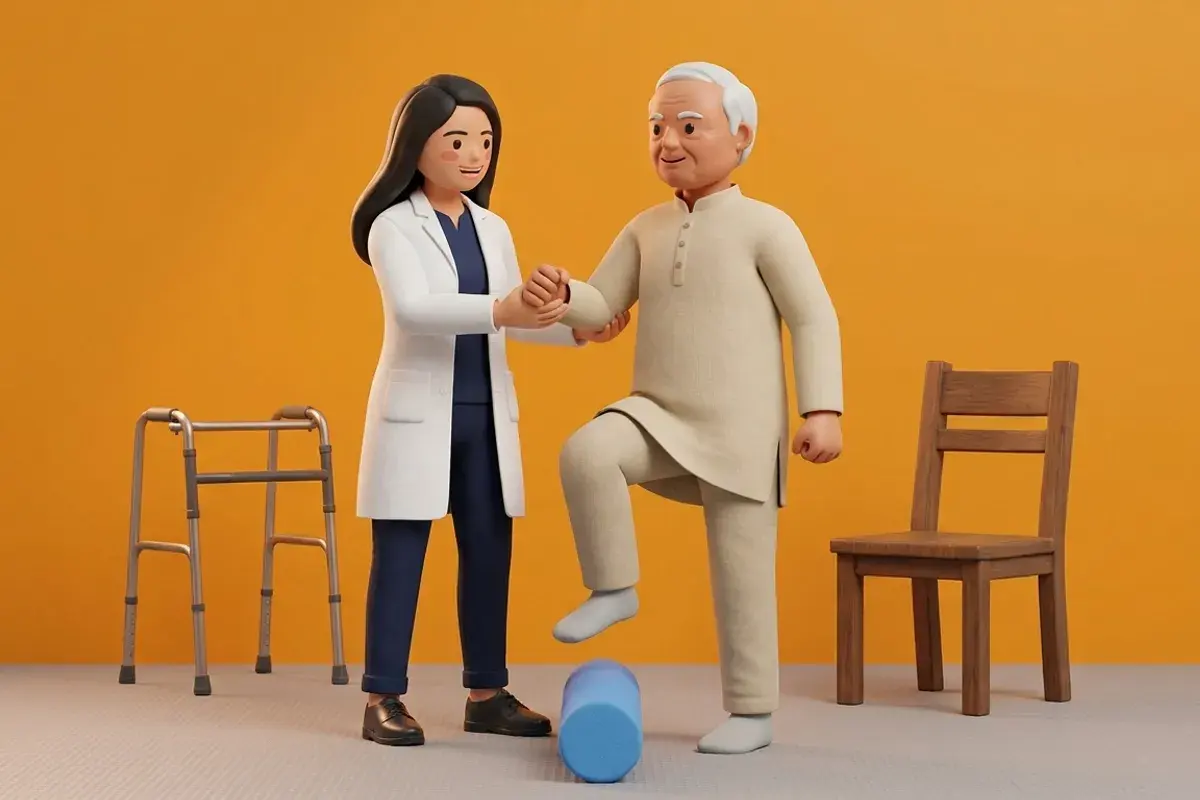
Physiotherapy management for temple circumambulation focuses on interval pacing and proactive joint protection. Devotees are advised to replace continuous walking with a segmented protocol: completing one or two circumambulations, followed by a scheduled two-minute rest seated on a stone bench, veranda ledge, or portable folding stool. Patients should request permission to wear clean, specialized cotton socks with silicone-grip soles, which provide thermal protection against burning or freezing stone while providing subtle traction. In long darshan queues, devotees should practice intermittent weight shifts and gentle pelvic rocking rather than standing frozen in one posture, distributing loads evenly between both limbs. If mobility is severely restricted, utilizing wheelchair services provided by major temple trusts or having family members arrange special elderly darshan access allows full participation without subjecting fragile hip joints to dangerous physical exhaustion.
Barefoot Dynamic Ankle-Foot Kinetic Shock Dampening Drill
Objective: Train the foot and ankle kinetic chain to absorb ground reaction forces during barefoot temple walking
- 1Stand barefoot on a firm, comfortable mat with your feet positioned shoulder-width apart.
- 2Take a small, deliberate step forward with your affected leg, landing gently on the outer edge of your heel.
- 3Roll smoothly through your midfoot to the ball of your foot, feeling your arch actively engage to cushion the step.
- 4Gently push down through your big toe while maintaining a tall, upright spine and level hips.
- 5Step back smoothly to the starting position and repeat with the opposite leg, focusing on quiet, soft foot landings.
| Temple Activity | Traditional High-Stress Habit | Joint-Sparing Ergonomic Strategy |
|---|---|---|
| Pradakshina Circumambulation | Walking 7 to 21 continuous rounds without stopping | Interval pacing: 2 rounds followed by a 2-minute seated rest break |
| Barefoot Walking on Stone | Direct barefoot contact on hard, hot, or cold granite | Wear thick, clean white cotton socks with non-slip silicone tread pads |
| Extended Darshan Queues | Standing frozen in place for 2 to 4 hours on hard floors | Frequent gentle weight shifting; carry lightweight portable folding cane-seat |
| Prostrations / Floor Homage | Rapid dropping to stone floor (Sashtanga Namaskara) | Perform standing anjali mudra with gentle bow; avoid sharp floor impacts |
During peak summer months across India, stone temple courtyards can reach surface temperatures exceeding fifty degrees Celsius. Devotees with sensory neuropathy or peripheral vascular disease should never walk barefoot on hot stone due to the severe risk of painless thermal burns and skin ulceration. Seek designated carpeted walkways or early morning visit hours.
Frequently Asked Questions
Can I still complete my traditional 21 rounds of pradakshina with hip osteoarthritis?
Yes, but you should modify your approach from continuous walking to interval pacing. Instead of walking all 21 rounds at once, walk 3 rounds, then sit and rest on a bench or ledge for two to three minutes while doing your quiet prayers, then complete the next set. This rest allows your joint fluid to redistribute and relieves muscle fatigue, allowing you to complete your spiritual vows safely without causing joint inflammation.
Do I need a doctor referral to see a hip physiotherapist on BookPhysio.in?
BookPhysio.in does not require a doctor referral. Under the National Commission for Allied and Healthcare Professions (NCAHP) Act 2021, patients across India enjoy direct access to autonomous registered physiotherapists. Through BookPhysio.in, you connect directly with verified clinicians and pay per session with transparent fees, completely free from advance package commitments, commission markups, or platform subscription charges.
Related condition guides



Related recovery guides & articles
BookPhysio.in Editorial Team
The BookPhysio.in editorial team writes and maintains this content, checking it against reliable clinical sources. Content follows our medical review policy: general information only, and no page claims a clinical review until a named registered physiotherapist has signed it off.
Read our medical review policy