
Upper-Extremity Septic Arthritis: Shoulder and Elbow Glenohumeral Glides
In short
Septic arthritis of the shoulder or elbow causes rapid capsular contracture. Learn targeted glenohumeral glides and elbow mobility protocols to prevent joint freezing.
In this guide (5 sections)
Septic arthritis of the upper extremity, though less common than lower extremity infections, carries severe consequences for personal independence. The glenohumeral joint of the shoulder and the humeroulnar joint of the elbow possess thin, compliant synovial capsules that, when distended by purulent effusion, undergo rapid inflammatory destruction. Bacterial enzymes and synoviocyte apoptosis rapidly degrade the delicate hyaline articular cartilage. Following emergency arthroscopic or open arthrotomy debridement, early rehabilitation must prevent dense adhesive capsulitis in the shoulder (frozen shoulder) and unyielding fibrous contracture in the highly reactive elbow joint.
Domestic and Cultural Indian Realities
In Indian daily life, functional upper limb range of motion is essential for basic cultural routines. Eating meals with fingers requires at least 120 degrees of elbow flexion and full forearm supination. Performing morning hygiene (such as washing hair or using a lota/bidet), tying saree blouses, or reaching for high pantry shelves demands significant shoulder external rotation and overhead abduction. Physiotherapists guide Indian families to set up adaptive dressing aids, position dining tables to avoid excessive reach, and initiate gentle, frequent home gliding exercises.
Capsular Anatomy, Fluid Distension, and Fibrotic Scarring
The glenohumeral joint relies on capsular laxity to permit its vast range of motion. In septic arthritis, purulent distension predominantly inflames the dependent axillary pouch and rotator interval. If immobilized, dense collagen cross-linking obliterates the axillary recess within three weeks, abolishing shoulder abduction and external rotation. The elbow joint is notoriously sensitive to surgical trauma and capsular hematoma; anterior capsular scarring rapidly produces a flexion contracture, while posterior fibrosis blocks terminal extension. Early passive accessory glides prevent capsular adhesion without compressing damaged articular surfaces.
Staged Glenohumeral Glides and Elbow Range Progression
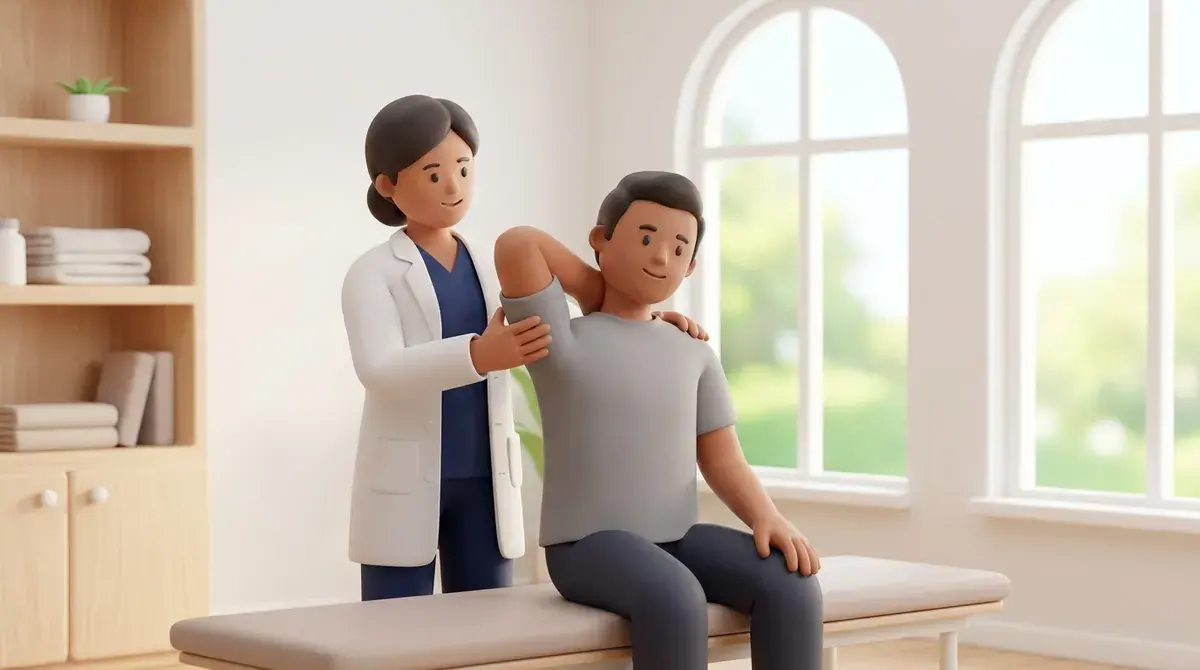
Rehabilitation begins within 24 to 48 hours post-drainage under intravenous antibiotic coverage. Initial interventions prioritize low-amplitude, oscillatory accessory glides. For the shoulder, gentle inferior and posterior glenohumeral glides stretch the axillary pouch and posterior capsule without triggering rotator cuff reflex spasm. Pendular Codman exercises provide pain-free synovial fluid circulation. For the elbow, gentle active-assisted flexion-extension and pronation-supination within a comfortable arc are performed with the forearm supported to avoid valgus or varus strain.
Supported Passive Glenohumeral Inferior Glide with Table Slide
Objective: Gently stretch the inferior axillary pouch of the shoulder without active muscular contraction
- 1Sit comfortably in a chair positioned sideways next to a smooth dining table or plinth.
- 2Rest the forearm of your affected shoulder flat on a smooth silk cloth or sliding sheet on the table.
- 3Keep your shoulder and neck muscles completely relaxed, avoiding any active lifting of the arm.
- 4Slowly lean your upper body forward and toward the table, allowing your arm to glide outward into abduction.
- 5Hold the gentle end-range stretch for 5 seconds when you feel light capsular tension, then gently lean back.
| Clinical Dimension | Glenohumeral (Shoulder) Joint Sepsis | Humeroulnar (Elbow) Joint Sepsis |
|---|---|---|
| Vulnerable Capsular Structure | Axillary recess and rotator interval; prone to dense adhesive obliteration | Anterior and posterior capsular recesses; collateral ligament stiffening |
| Primary Functional Deficit | Severe loss of external rotation and abduction; unable to reach behind head or back | Loss of terminal extension and functional flexion (<100 degrees); unable to bring hand to mouth |
| Manual Therapy Modality | Inferior and posterior accessory glenohumeral glides; Codman pendular swings | Gentle physiological flexion-extension; humeroulnar distraction; active pronation-supination |
| Secondary Complication Risk | Secondary rotator cuff tendon necrosis; long-term subacromial impingement | High risk of heterotopic ossification (HO) and ulnar nerve compression neuropathy |
Red Flags and Specialist Escalation
Seek emergency orthopaedic review immediately if you experience a sudden loss of sensation or persistent tingling in the ring and little fingers (indicating acute ulnar neuritis at the elbow), visible wound breakdown with purulent drainage, or a sudden severe spike in resting joint pain accompanied by fever. These signs indicate nerve compression or uncontrolled joint infection.
Frequently Asked Questions
Why does an elbow joint become so stiff so quickly after an infection?
The elbow is an exceptionally tight, congruous joint surrounded by a thin, highly sensitive capsule and three major nerves. When it becomes inflamed and swollen from infection, the body responds by producing thick, tough scar tissue very rapidly. Without early, gentle movement, the capsule shortens within days, making the elbow lock into a bent position.
Do I need a doctor referral to consult an orthopaedic physiotherapist on BookPhysio.in?
BookPhysio.in does not require a doctor referral. Under the National Commission for Allied and Healthcare Professions (NCAHP) Act 2021, patients in India have direct access to registered physiotherapists. You pay your clinician directly per session with transparent fees and zero booking commissions or platform subscriptions.
Related condition guides



Related recovery guides & articles
BookPhysio.in Editorial Team
The BookPhysio.in editorial team writes and maintains this content, checking it against reliable clinical sources. Content follows our medical review policy: general information only, and no page claims a clinical review until a named registered physiotherapist has signed it off.
Read our medical review policy