
Physiotherapy for Post-Fracture Rehabilitation
Quick answer
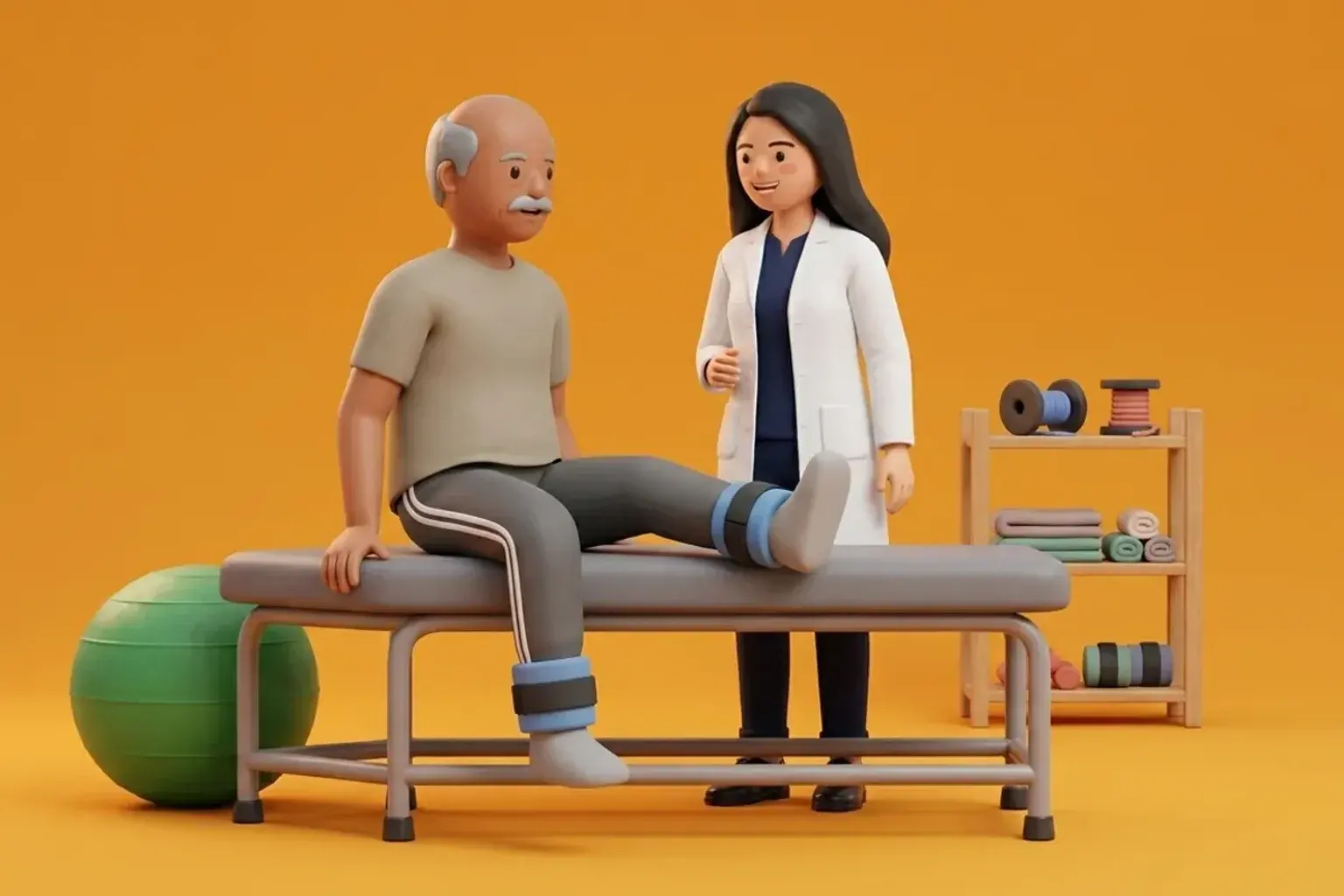
Physiotherapy is essential across all stages of bone healing following skeletal fractures, whether managed in plaster casts or with surgical metalwork (plates, screws, intramedullary nails). An orthopaedic physiotherapist prevents joint contractures, safely progresses weight-bearing as callus forms, restores adjacent muscle strength, and rebuilds independent walking and functional autonomy.
- Rehabilitation begins while still in a cast
- Weight bearing progresses with bone healing
- Prevents muscle wasting in adjacent joints
- Restores normal gait and prevents limp
- Builds bone density and functional strength
What is fracture rehabilitation?
Skeletal fractures of the upper and lower limbs are common across India from road traffic accidents, occupational falls, and domestic slips. While orthopaedic doctors align and stabilise the bone, comprehensive rehabilitation determines the quality of life after union. Extended immobilisation leads to muscle atrophy, bone demineralization, joint stiffness, and compensatory gait limps. Physiotherapy begins immediately with non-immobilised joint exercises and breathing techniques, progressing through gradual partial-to-full weight bearing confirmed by radiographic union, progressive resistance training, and proprioceptive balance exercises.
Orthopaedic Physiotherapy
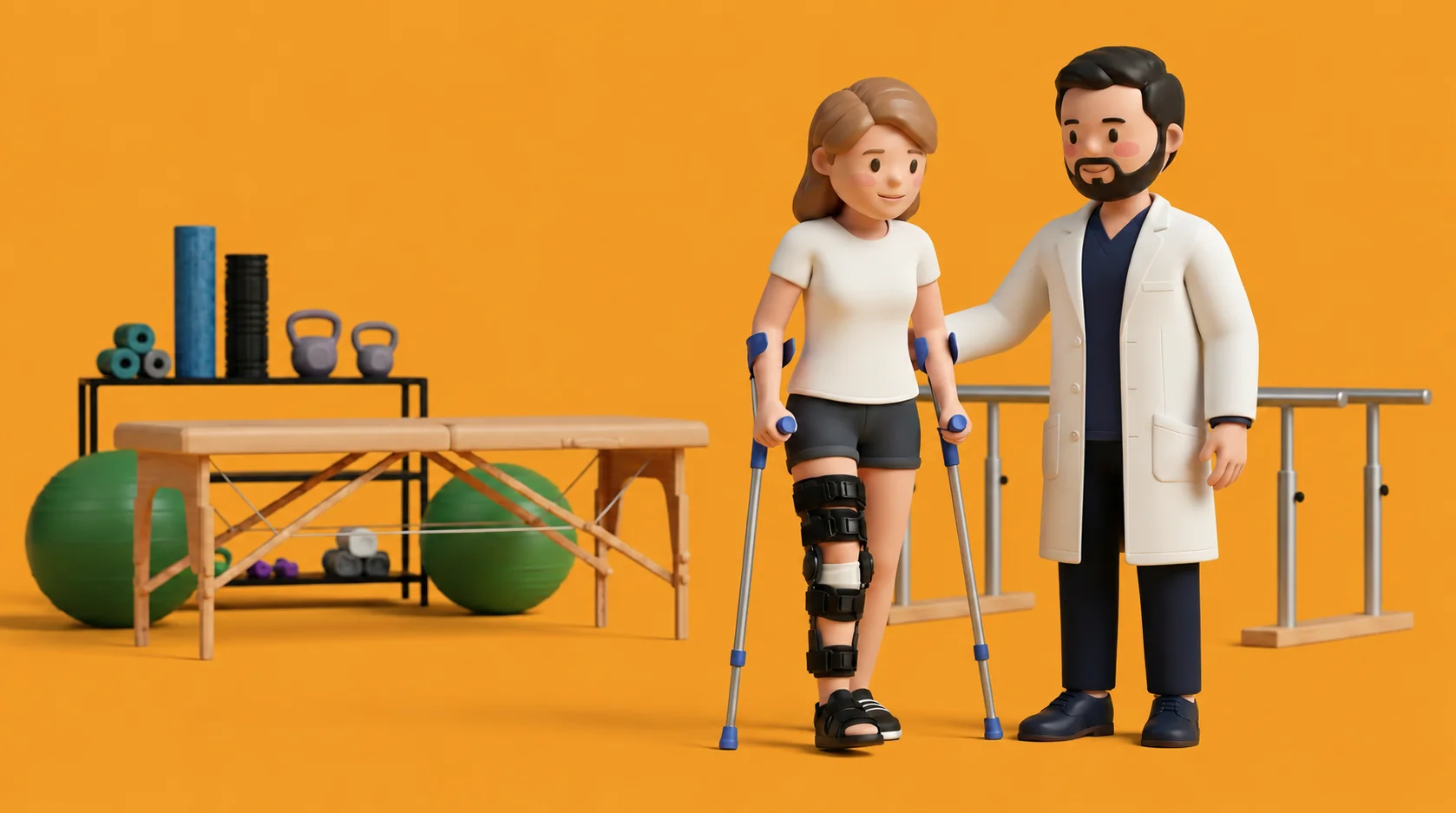
General Fracture Rehabilitation is assessed and treated under Orthopaedic physiotherapy (bones & joints). Bones, joints, muscles, and ligaments. Back pain, fractures, and post-surgery recovery.
How physiotherapy helps
- Adjacent joint active range of motion drills
- Graded partial weight-bearing gait retraining
- Isometric muscle activation under cast cover
- Progressive resistance strength loading
- Balance and proprioceptive stability training
Common signs
- Marked joint stiffness and swelling after plaster cast removal or surgical fixation
- Profound muscle weakness and visible wasting in the injured limb
- Hesitation, apprehension, and pain when starting to bear weight through the healed bone
- Altered walking pattern, limping, and reliance on crutches, walkers, or canes
- Stiffness in joints above and below the fracture site due to weeks of inactivity
In-clinic vs home visit physiotherapy
| What to compare | In-clinic | Home visit |
|---|---|---|
| Typical fee | ₹300 to ₹1,500 a session. It depends on your city. | ₹400 to ₹2,000 a session. It depends on your city. |
| Exact fee | Set by each physiotherapist and shown on their profile | Set separately for home visits and shown on their profile |
| Best for | Equipment-based rehab and first assessments | Limited mobility, post-surgery, and elderly care |
| Equipment | Full clinic setup | Portable equipment the physiotherapist brings |
| Travel | You travel to the clinic | The physiotherapist comes to you |
| Booking | Pick a clinic slot on search | Filter by home visit on search |
Clinical rehabilitation framework
Evidence-informed clinical progression and starter exercise targets for fracture rehabilitation.
Clinical progression criteria & key observations
- Stiffness in joints adjacent to the cast, disuse weakness, and residual oedema are the expected impairments once immobilisation ends, not signs something has gone wrong
Starter exercise targets & evidence-based dosage
When to seek urgent care
Physiotherapy is safe for most people. See a doctor urgently if you have any of these.
- Abnormal mobility, sudden deformity, or severe localized tenderness at the fracture site
- Deep, unrelenting calf ache, warmth, and swelling indicating deep vein thrombosis
- Loss of distal sensation, cold extremities, or absent pulses in the injured limb
- Redness, warmth, and purulent discharge along surgical incision or pin sites
Seek urgent medical care first. Physiotherapy comes after, when it is safe.
Frequently asked questions
When should physiotherapy begin after a bone fracture?
Can I get physiotherapy for fracture rehabilitation at home?
How do I know what weight-bearing load is permitted on my healing broken bone?
How much does physiotherapy for fracture rehabilitation cost in India?
Related conditions & care




Clinical guides & articles for fracture rehabilitation
Evidence-informed articles, recovery timelines, and home care advice from our clinical library.
Fast bowlers and lower back bone stress injuries: when back pain needs assessment
Lower back pain in junior and academy fast bowlers across India should never be dismissed as simple muscular soreness. Learn how sports physiotherapy detects early bone stress injuries.
Fast Bowler Lower Back Stress Fracture: Pars Interarticularis Rehab in Indian Cricket
Lumbar stress fractures sideline promising young fast bowlers across India. Discover how sports physiotherapy diagnoses, protects, and rehabilitates the pars interarticularis.
Post-Hip Fracture Home Mobilisation in Indian Seniors: Safe Timeline, Toilet Transfers, and Physio
Immobility after hip fracture surgery carries severe risks for seniors. Discover clinical weight-bearing timelines, safe toilet transfers, and home physiotherapy.
Paediatric Supracondylar Elbow Fracture: Post-Cast Stiffness, Safe Physio, and Avoiding Myositis Ossificans
Aggressive traditional massage of a stiff child's elbow triggers heterotopic bone formation (Myositis Ossificans). Discover safe active-assisted paediatric elbow physio.
Find physiotherapists for fracture rehabilitation by city
Verified physiotherapists treat fracture rehabilitation in these cities. Home visit and in-clinic options vary by physiotherapist.
Find a physiotherapist for fracture rehabilitation
Compare physiotherapists by fee, experience, and availability. Clinic visits and home visits across India.
This page is for general education and booking guidance. It does not diagnose your condition or replace medical care.
If your symptoms are severe, sudden, or getting worse, seek urgent medical care first. The same applies with fever, chest pain, breathlessness, fainting, new weakness, loss of bladder or bowel control, or unexplained bleeding.
Always consult a qualified physiotherapist or doctor about your condition.