
Physiotherapy for Back Pain in Pregnancy

Quick answer
Physiotherapy for back pain in pregnancy eases the lower-back ache caused by changing posture and ligament softening, with safe exercises, hands-on treatment, and posture advice tailored to each trimester.
- Safe, trimester-appropriate treatment
- Home visits suit later pregnancy
- Clinic and home visits available across India
- We check every physiotherapist’s registration details before their profile goes live
What is back pain in pregnancy?
Back pain is very common in pregnancy as posture changes, the bump grows, and ligaments soften. Physiotherapy offers safe, trimester-appropriate care that eases the pain and builds the support your back needs, with advice you can use through the rest of your pregnancy and after birth, working alongside your maternity team.
Women's Health Physiotherapy
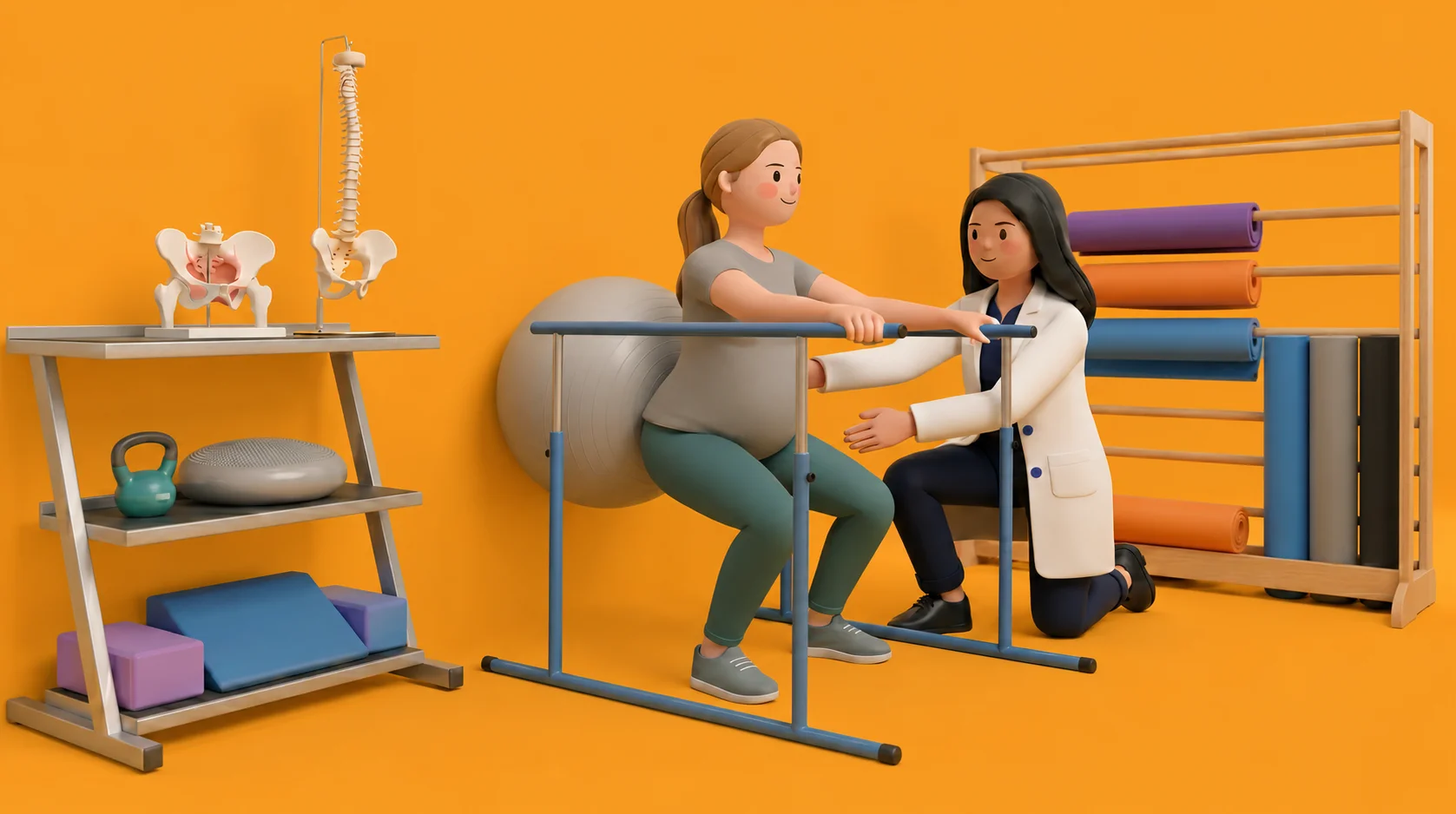
Back Pain in Pregnancy is assessed and treated under Women's Health physiotherapy (pregnancy & pelvic health). Prenatal, postnatal, and pelvic floor physiotherapy for every stage of a woman's life. Requires relevant specialty training and works alongside your medical team where needed. Any intimate or internal assessment is consent-based, private, and optional, and you can stop at any time. Internal assessment is not mandatory to book or begin care.
How physiotherapy helps

- Safe exercises tailored to your trimester
- Hands-on therapy for the lower back
- Posture and daily-movement advice
- Core and pelvic support work
- Trimester-appropriate pain relief strategies
Common signs
- Lower back ache that worsens through the day
- Pain with prolonged standing or sitting
- Stiffness
- Pain that eases when lying down
- Difficulty with everyday tasks
In-clinic vs home visit physiotherapy
| What to compare | In-clinic | Home visit |
|---|---|---|
| Indicative fee band | BookPhysio guide: ₹300 to ₹1,500 a session. This is not a measured average; check the physiotherapist's current profile for the exact fee. | BookPhysio guide: ₹400 to ₹2,000 a session. This is not a measured average; check the physiotherapist's current profile for the exact home-visit fee. |
| Exact fee | Set by each physiotherapist and shown on their profile when an in-clinic fee is listed | Set separately for home visits and shown on their profile when a home-visit fee is listed |
| Decision factors | A clinic setting may offer equipment or facilities that are useful for some sessions. Ask the physiotherapist what is available and appropriate for your appointment. | A home visit can reduce travel when mobility, transport, or convenience matters. Confirm the service area and whether a home visit is appropriate with the physiotherapist. |
| Equipment availability | Varies by clinic and physiotherapist. Ask what equipment or facilities are available. | Varies by physiotherapist and appointment. Ask what they bring for a home visit. |
| Travel | You travel to the clinic | The physiotherapist comes to you |
| Finding an option | Choose an in-clinic option only when the physiotherapist lists it on their profile | Use the home-visit filter and confirm the physiotherapist covers your area |
Clinical rehabilitation framework
Evidence-informed clinical progression and starter exercise targets for back pain in pregnancy.
Clinical progression criteria & key observations
- The active straight-leg raise improving with manual pelvic compression supports a force-closure problem and predicts a good response to a belt trial
- Book a pelvic-health physiotherapy referral early when incontinence or prolapse symptoms coexist
Starter exercise targets & evidence-based dosage
When to seek urgent care
Physiotherapy is safe for most people. See a doctor urgently if you have any of these.
- Vaginal bleeding, leaking fluid, or reduced baby movements
- Severe abdominal pain
- Severe leg weakness or numbness, or loss of bladder or bowel control
- Severe headache, vision changes, or sudden swelling of the face or hands, which can signal pre-eclampsia and needs urgent maternity review
Seek urgent medical care first. Physiotherapy comes after, when it is safe.
Frequently asked questions
Can I do exercises for back pain while pregnant?
Can I get physiotherapy for back pain in pregnancy at home?
How much does physiotherapy for back pain in pregnancy cost in India?
Related conditions & care

Clinical guides & articles for back pain in pregnancy
Evidence-informed articles, recovery timelines, and home care advice from our clinical library.
Symphysis Pubis Dysfunction (SPD) in Pregnancy: Physiotherapy and Relief
Symphysis pubis dysfunction (SPD) and pregnancy-related pelvic girdle pain make turning in bed, walking, and climbing stairs intensely uncomfortable. Learn safe physiotherapy techniques, pelvic belt guidance, and daily adjustments that help.
Diastasis Recti Postpartum: Closing the Abdominal Gap Safely Without Crunches
Abdominal separation after pregnancy requires functional deep-core rehabilitation rather than cosmetic crunches. Discover how to rebuild midline tension safely.
Pelvic Girdle Pain in Pregnancy: Walking Comfortably and Relieving Symphysis Pubis Ache
Stabbing pubic bone ache and sacroiliac pain make walking during pregnancy agonizing. Learn how pelvic health physiotherapy stabilizes your pelvis safely.
Pelvic Girdle Pain (PGP) in Pregnancy: ASLR Test, Sacroiliac Stabilization & Pelvic Belts
Pelvic girdle pain makes turning in bed, walking, and climbing stairs agonizing during pregnancy. Learn how targeted sacroiliac stabilization and ergonomic belts restore pain-free movement.
Search for a physiotherapist
Keep back pain in pregnancy as your search context, then review each current profile for specialties, listed conditions, visit types, fee and availability before you request an appointment.
This page is for general education and booking guidance. It does not diagnose your condition or replace medical care.
If your symptoms are severe, sudden, or getting worse, seek urgent medical care first. The same applies with fever, chest pain, breathlessness, fainting, new weakness, loss of bladder or bowel control, or unexplained bleeding.
Always consult a qualified physiotherapist or doctor about your condition.