
Pelvic Girdle Pain (PGP) in Pregnancy: ASLR Test, Sacroiliac Stabilization & Pelvic Belts
In short
Pelvic girdle pain makes turning in bed, walking, and climbing stairs agonizing during pregnancy. Learn how targeted sacroiliac stabilization and ergonomic belts restore pain-free movement.

In this guide (5 sections)
Etiology and Presentation of Pelvic Girdle Pain (PGP)
Pelvic Girdle Pain (PGP) affects up to 20 to 25 percent of pregnant women, manifesting as pain between the posterior iliac crest and the gluteal fold, particularly in the vicinity of the sacroiliac joints (SIJ), with or without radiating discomfort down the posterior thigh. It can also occur concurrently with pubic symphysis pain.
Historically blamed solely on the hormone relaxin loosening ligaments, modern pain neuroscience demonstrates that PGP is a motor control and load transfer failure. As the gravid uterus shifts the body's center of gravity forward, altered neuromuscular recruitment fails to stabilize the pelvic ring during asymmetrical, single-leg weight-bearing.
The Active Straight Leg Raise (ASLR) Test
Developed by Prof. Andry Mens, the Active Straight Leg Raise (ASLR) test is the validated clinical tool to assess pelvic load transfer capacity. In supine, the patient lifts one leg 20 centimeters off the table with the knee straight and rates the effort from 0 (no effort) to 5 (unable to lift).
The examiner then applies manual compression across the anterior superior iliac spines (ASIS). If compressing the pelvis makes lifting the leg significantly easier or eliminates pain, it confirms a 'force closure' deficit responsive to stabilization therapy and pelvic belts.
| Score (0-5) | Patient Sensation | Underlying Mechanical Deficit | Treatment Priority | |
|---|---|---|---|---|
| 0 | Effortless, symmetrical movement | Normal form and force closure | General antenatal fitness maintenance | |
| 1 to 2 | Noticeable heaviness, mild pelvic pinch | Mild motor control delay in deep core | Gluteal strengthening and pelvic alignment | |
| 3 to 4 | Severe effort, trunk rotation, pain | Significant force closure failure | Sacroiliac belt, bed transfer pacing, aquatic therapy | |
| 5 | Completely unable to lift leg off bed | Severe mechanical and neurogenic inhibition | Immediate support belt, hands-on joint mobilization, crutches if needed |
Principles of Sacroiliac Support Belts (Serola / Trochanteric)
A non-elastic pelvic support belt provides artificial force closure across the sacroiliac joints, substituting for temporarily inhibited deep core musculature.
Correct belt placement is vital: it must sit low around the greater trochanters of the hips, not high around the fleshy waist, to effectively compress the pelvic ring without increasing downward pressure on the bladder.
- Log-Rolling Bed Transfers: Keep knees squeezed together and roll shoulders and pelvis as a single unit when turning over in bed to avoid painful SIJ shearing.
- Symmetrical Weight-Bearing: Sit down to put on pants, socks, and shoes rather than standing on one leg.
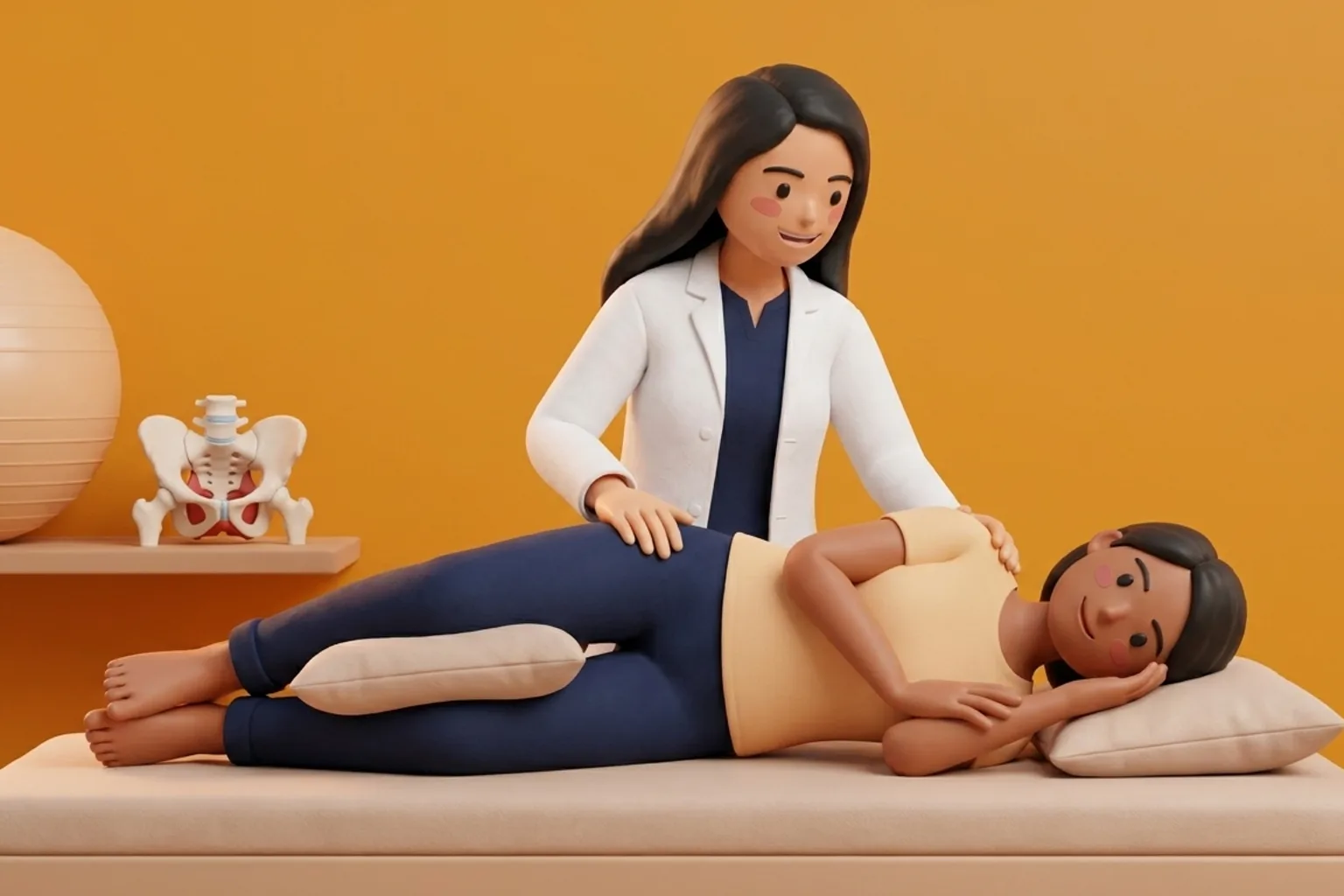
- Side-Lying Pillow Support: Place a full-length body pillow between the knees and ankles to keep the pelvis in neutral alignment while sleeping.
Progressive Active Stabilization Exercises
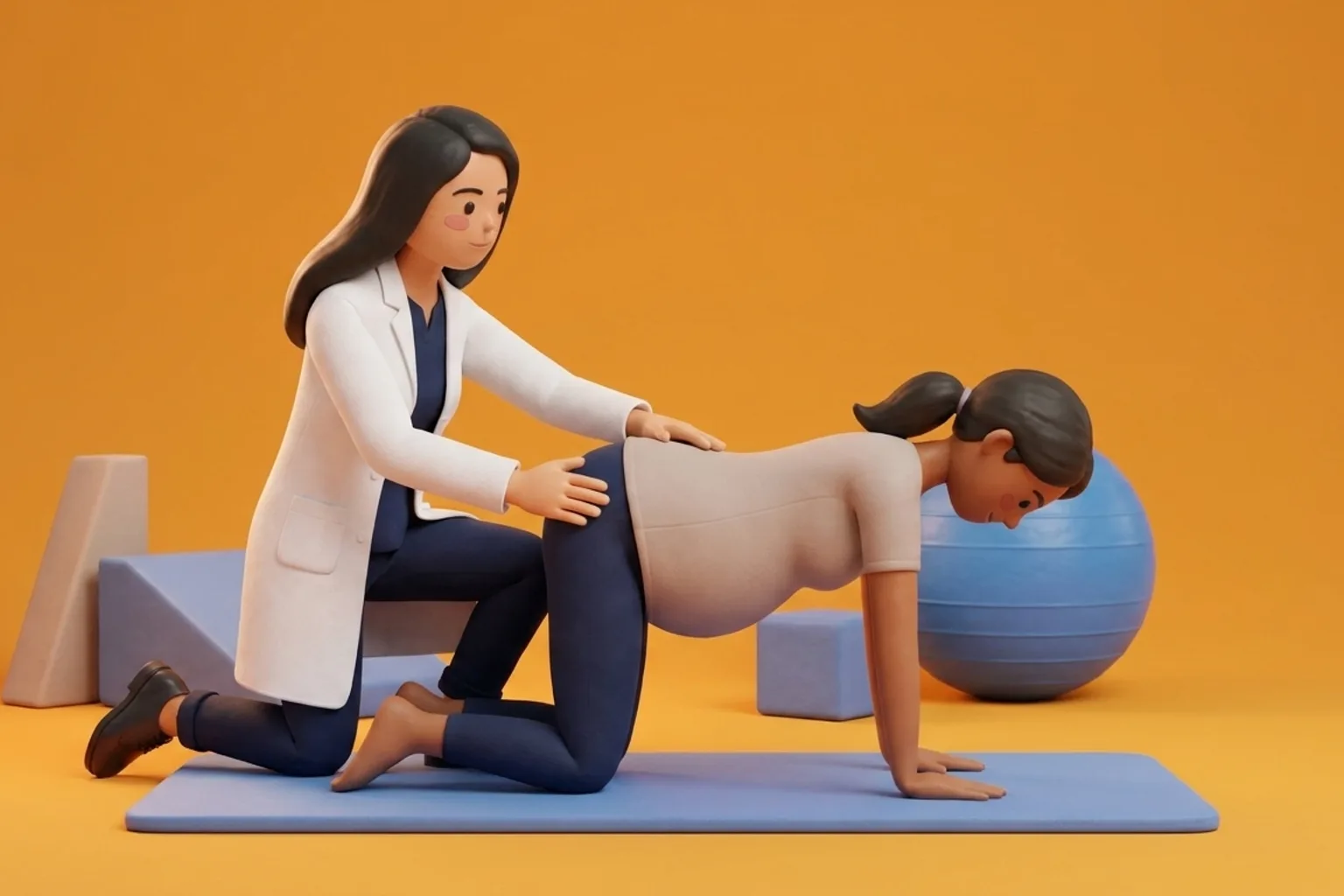
Rehabilitation strengthens the posterior oblique sling (latissimus dorsi connecting via thoracolumbar fascia to the contralateral gluteus maximus) and the lateral sling (gluteus medius and adductors). Safe antenatal exercises include quadruped bird-dog variations, clamshells with mini-bands, and supported bridge holds.
Frequently Asked Questions
Will pelvic girdle pain damage my baby during childbirth?
No. PGP affects the musculoskeletal joints and ligaments of your pelvis; it does not harm the baby or prevent a safe delivery. A physiotherapist can guide optimal, comfortable birth positions that minimize joint strain.
Can I wear my pelvic support belt all day and while sleeping?
Wear the belt during standing, walking, and shopping. Remove it when sitting for extended periods and during sleep, relying on side-lying pillow support between your knees at night.
Does PGP go away immediately after giving birth?
For most women, mechanical pain improves dramatically within 6 to 12 weeks postpartum as hormones normalize and pregnancy weight is resolved. Targeted postnatal rehabilitation resolves residual weaknesses.
Related condition guides
Related recovery guides & articles
BookPhysio.in Editorial Team
The BookPhysio.in editorial team writes and maintains this content, checking it against reliable clinical sources. Content follows our medical review policy: general information only, and no page claims a clinical review until a named registered physiotherapist has signed it off.
Read our medical review policy