
Physiotherapy for Meniscus Tear
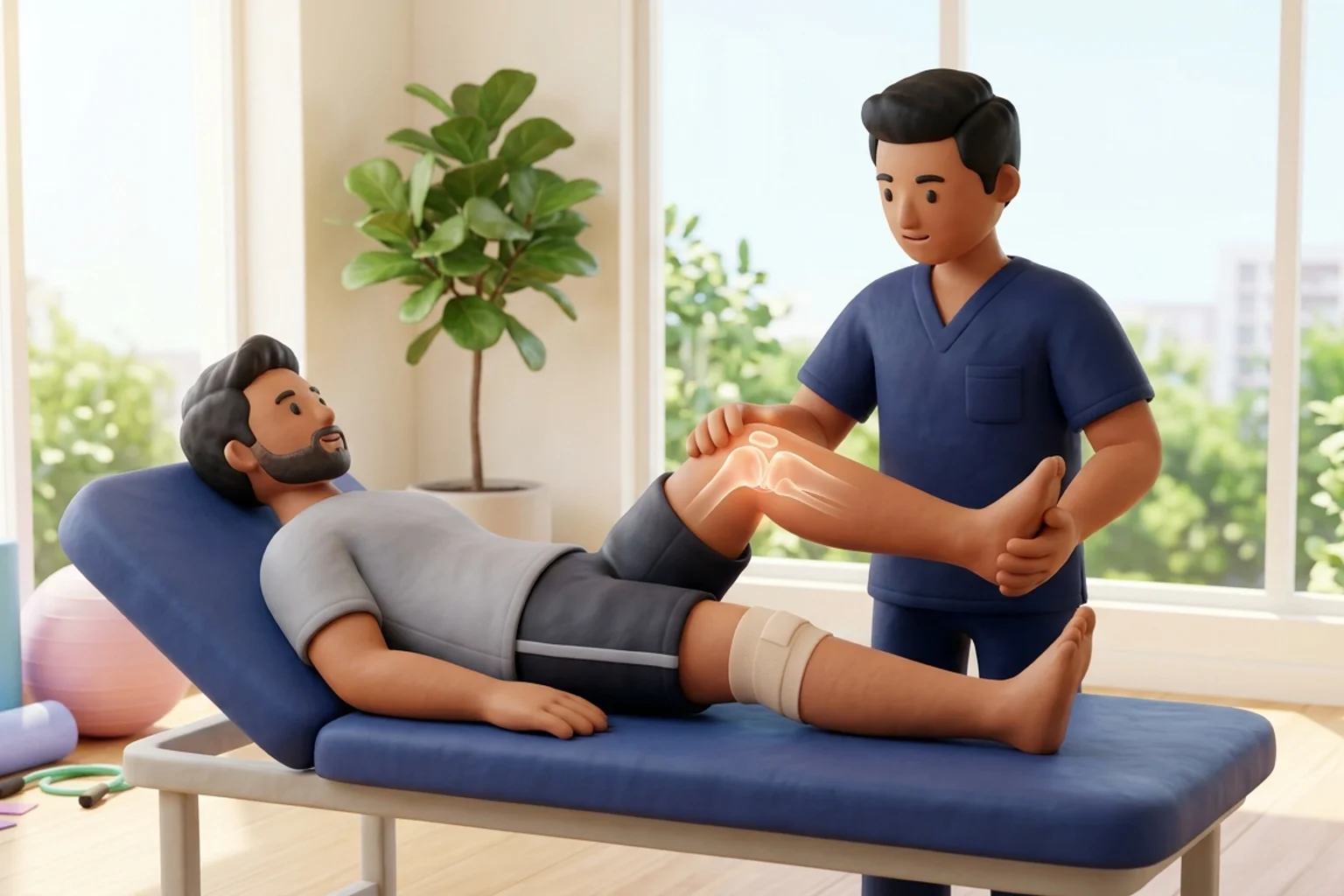
Quick answer
Physiotherapy is an effective, evidence-backed first-line treatment for meniscus tears. A sports physiotherapist guides structured quadriceps strengthening, knee joint loading, hamstring flexibility, and neuromuscular stability exercises to resolve knee swelling, restore full extension, and return safely to daily activity and sports.
- Common knee twisting or degenerative injury
- Physiotherapy matches surgery for many tears
- Quadriceps strength unloads the meniscus
- Terminal knee extension restores normal gait
- Active rehab avoids unnecessary surgery risks
What is meniscus tear?
The menisci are two crescent-shaped fibrocartilage pads (medial and lateral) that act as shock absorbers and load distributors in the knee joint. Meniscus tears can occur traumatically from a sudden twisting injury with a planted foot, or degeneratively over time in middle-aged and older adults. High-quality randomised controlled trials consistently demonstrate that conservative physiotherapy produces clinical outcomes comparable to arthroscopic surgery for degenerative tears, without surgical risks. Physiotherapy focuses on progressive quadriceps and hip abductor strengthening, swelling reduction, restoring terminal knee extension, and sport-specific plyometric training.

Sports Physiotherapy
Meniscus Tear is assessed and treated under Sports physiotherapy (athletic injuries). Injury prevention, athletic rehabilitation, and return-to-play programmes.
How physiotherapy helps
- Quadriceps and VMO progressive loading
- Restoring terminal knee extension range
- Hip abductor and gluteal stability drills
- Low-impact joint loading and cycling drills
- Sport-specific agility and hop progression
Common signs
- Joint line pain along the inside or outside of the knee that worsens when squatting, twisting, or pivoting
- Gradual knee swelling and stiffness developing several hours or the morning after an activity
- A catching, clicking, or giving-way sensation when walking or bending the knee
- Difficulty bending or straightening the knee fully due to joint effusion or tissue tightness
- Pain when descending stairs or rising from a low Indian floor seating position
In-clinic vs home visit physiotherapy
| What to compare | In-clinic | Home visit |
|---|---|---|
| Typical fee | ₹300 to ₹1,500 a session. It depends on your city. | ₹400 to ₹2,000 a session. It depends on your city. |
| Exact fee | Set by each physiotherapist and shown on their profile | Set separately for home visits and shown on their profile |
| Best for | Equipment-based rehab and first assessments | Limited mobility, post-surgery, and elderly care |
| Equipment | Full clinic setup | Portable equipment the physiotherapist brings |
| Travel | You travel to the clinic | The physiotherapist comes to you |
| Booking | Pick a clinic slot on search | Filter by home visit on search |
Clinical rehabilitation framework
Evidence-informed clinical progression and starter exercise targets for meniscus tear.
Clinical progression criteria & key observations
- The single biggest rehab-pacing decision is meniscectomy vs repair: mixing up the two protocols is a real risk (over-restricting a meniscectomy delays recovery for no reason; under-restricting a repair risks the suture line)
- Quadriceps inhibition after any knee surgery is common and can persist if not actively addressed early: prioritise quad activation from the first session regardless of procedure type
Starter exercise targets & evidence-based dosage
When to seek urgent care
Physiotherapy is safe for most people. See a doctor urgently if you have any of these.
- A true locked knee that is physically blocked and mechanically incapable of straightening, requiring urgent orthopaedic review
- Severe knee swelling that appears within two hours of a traumatic injury, indicating joint hemarthrosis
- Knee joint that is hot, visibly red, and swollen with fever, which may indicate septic arthritis
- Inability to bear any weight on the leg immediately after an acute injury
Seek urgent medical care first. Physiotherapy comes after, when it is safe.
Frequently asked questions
Can a meniscus tear heal without surgery?
Can I get physiotherapy for meniscus tear at home?
How long does rehabilitation take for a meniscus tear?
How much does physiotherapy for meniscus tear cost in India?
Related conditions & care



Clinical guides & articles for meniscus tear
Evidence-informed articles, recovery timelines, and home care advice from our clinical library.
Meniscus Tears in the Knee: Can Conservative Physiotherapy Succeed Without Arthroscopic Trimming?
Arthroscopic meniscus trimming (meniscectomy) often accelerates knee osteoarthritis. Learn how structured conservative physiotherapy heals degenerative and traumatic meniscus tears without surgery.
Cross-Legged Sitting (Sukhasana) Stiffness: Hip Mobility, Meniscal Protection, and Physio Protocols
Struggling to sit cross-legged for meals or puja rituals indicates hip and meniscal restriction. Discover evidence-based hip opening and knee-safe physiotherapy.
McMurray and Apley grind tests for meniscus tears: clinical technique, sensitivity, and rehabilitation
The McMurray test and Apley grind test are standard clinical provocative maneuvers used by orthopedic physiotherapists to detect torn knee menisci. Learn the biomechanical mechanism, hand placement, sensitivity, specificity, and non-operative rehabilitation protocols.
Degenerative Meniscal Tears: Exercise Therapy vs Arthroscopic Surgery (FIDELITY Trial Evidence)
Arthroscopic surgery for degenerative meniscus tears is no better than sham surgery. Learn the landmark FIDELITY trial evidence, McMurray testing, and knee exercise therapy.
Find physiotherapists for meniscus tear by city
Verified physiotherapists treat meniscus tear in these cities. Home visit and in-clinic options vary by physiotherapist.
Find a physiotherapist for meniscus tear
Compare physiotherapists by fee, experience, and availability. Clinic visits and home visits across India.
This page is for general education and booking guidance. It does not diagnose your condition or replace medical care.
If your symptoms are severe, sudden, or getting worse, seek urgent medical care first. The same applies with fever, chest pain, breathlessness, fainting, new weakness, loss of bladder or bowel control, or unexplained bleeding.
Always consult a qualified physiotherapist or doctor about your condition.