
Cervical Spondylotic Myelopathy in Older Adults: Clinical Signs and Early Recognition
In short
Cervical spondylotic myelopathy is the most common cause of non-traumatic spinal cord dysfunction in adults over 55. Learn upper motor neuron signs, gait changes, and safety guidelines.
In this guide (5 sections)
Patho-Anatomy and Clinical Presentation of CSM
Cervical spondylotic myelopathy (CSM) develops when age-related osteophytes, facet hypertrophy, and ligamentum flavum buckling cause mechanical compression of the cervical spinal cord, most commonly between C5 and C7.
Unlike radiculopathy, which causes sharp dermatomal pain and lower motor neuron weakness in a single arm, myelopathy produces progressive upper motor neuron dysfunction: bilateral hand clumsiness (dropping cups, struggling to button kurtas or shirts), a stiff-legged spastic gait, and subtle sphincter urgency.
Because onset is insidious, symptoms are frequently misattributed to normal aging, peripheral neuropathy, or carpal tunnel syndrome, delaying surgical or conservative intervention until substantial cord parenchymal damage has occurred.
Clinical Upper Motor Neuron (UMN) Cluster Tests
Cook et al. established a validated clinical diagnostic cluster for cervical myelopathy. When 3 or more of the 5 signs are present, the positive likelihood ratio increases significantly.
| Clinical Sign | Examination Technique | Positive Test Response | Physiological Mechanism | |
|---|---|---|---|---|
| 1. Hoffman Reflex | Flick distal phalanx of middle finger into flexion | Reflex flexion and adduction of ipsilateral thumb and index finger | Loss of corticospinal descending inhibitory tract suppression. | |
| 2. Inverted Supinator Sign | Tap styloid process of radius (brachioradialis tendon) | Exaggerated finger flexion with minimal elbow flexion | Hyperreflexia below level of C5-C6 cord compression. | |
| 3. Babinski Sign | Stroke lateral sole from heel across metatarsal heads | Great toe dorsiflexion (upgoing) with fanning of other digits | Classic pyramidal tract upper motor neuron disinhibition. | |
| 4. Gait Ataxia | Tandem gait test (walking heel-to-toe in straight line) | Wide-based, unsteady, spastic or staggering stepping | Dorsal column posterior cord proprioceptive impairment. | |
| 5. Age Threshold | Patient chronological age screening | Patient age 45 years or older | Degenerative spondylosis prevalence increases with age. |
Nurick Classification and Functional Staging
The Nurick classification grades the severity of spinal cord compression based on gait impairment.
Grade 0 represents signs of cord compression without gait involvement. Grade 1 indicates mild gait difficulty without interfering with employment or daily life. Grade 2 involves gait difficulty that impairs routine activities. Grade 3 requires assistance or cane to walk. Grade 4 permits ambulation only with bilateral support. Grade 5 represents chairbound or bedridden status.
Patients with Nurick Grade 2 or higher, or rapidly progressive neurological decline, require immediate spine surgeon consultation for consideration of decompression (ACDF or laminoplasty).
- Cervical Collar Immobilization Caution: Rigid cervical collars should be used sparingly under supervision to prevent profound paraspinal muscle atrophy.
- Spinal Traction Contraindication: High-load cervical mechanical traction is strictly contraindicated in confirmed cervical myelopathy due to risk of cord ischemia.
- Postural Kinetic Retraining: Retrain deep cervical flexors (longus colli, longus capitis) using gentle craniocervical flexion nodding to stabilize the segmental spine.
Indian Cultural and Functional Considerations
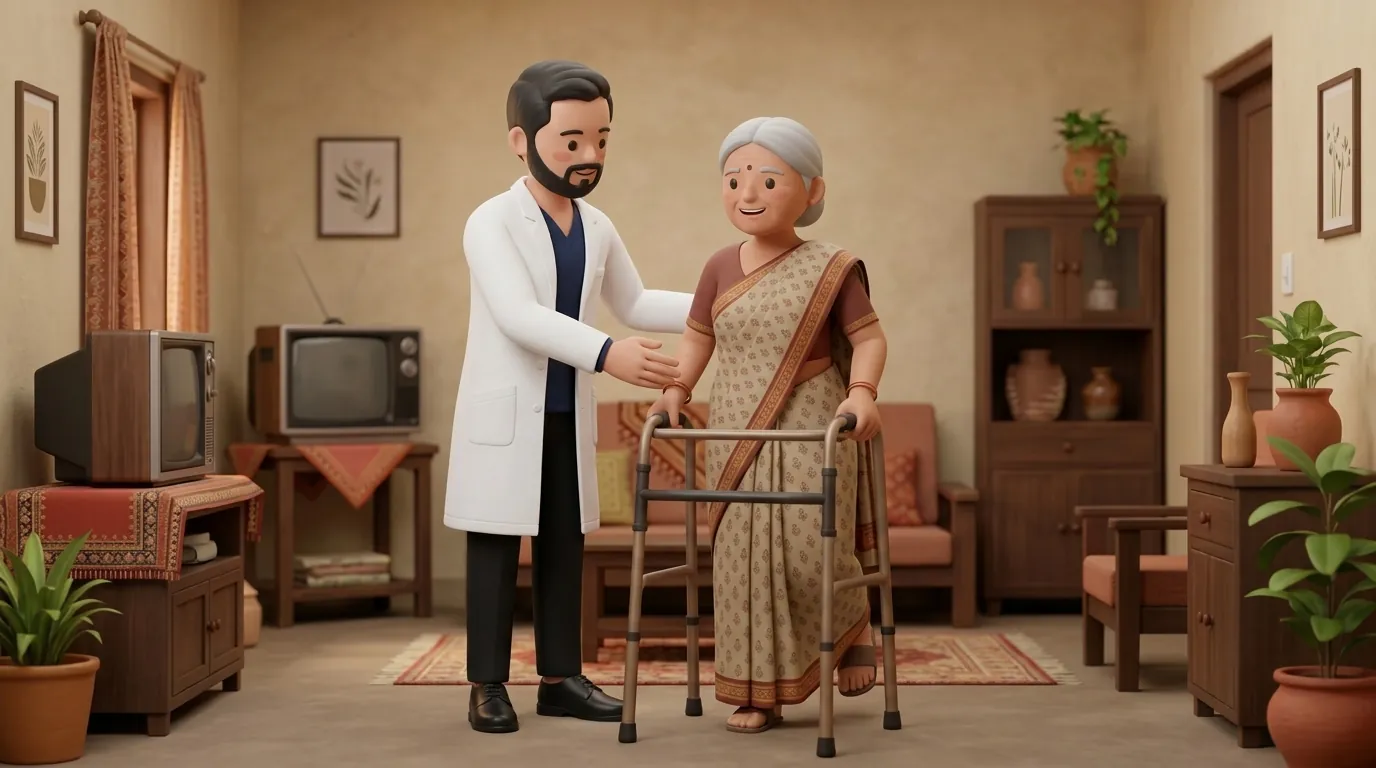
In Indian joint households, older adults frequently disguise hand dexterity deficits until unable to mix rice and dal, roll chapati dough, or tie sari petticoat knots.
Home-visit physiotherapists perform targeted functional fine motor screening and fall prevention risk assessments, coordinating care with local spine teams while adapting Indian washroom grip access.
Frequently Asked Questions
Can physiotherapy reverse cervical spondylotic myelopathy?
Physiotherapy cannot reverse structural spinal cord compression caused by bony spurs. Conservative care aims to optimize posture, preserve gait stability, and prevent falls in mild, non-progressive cases (Nurick Grade 0-1). Moderate to severe cases require surgical evaluation.
Why do patients with CSM drop utensils and cups?
Compression of the corticospinal tracts and dorsal columns causes loss of intrinsic hand muscle coordination (myelopathy hand) and decreased thumb-index finger proprioceptive feedback.
What imaging confirms cervical myelopathy?
Magnetic Resonance Imaging (MRI) of the cervical spine is the gold standard, showing cord compression, canal narrowing, and hyperintense T2 cord signal changes (myelomalacia).
Related condition guides
Related recovery guides & articles
BookPhysio.in Editorial Team
The BookPhysio.in editorial team writes and maintains this content, checking it against reliable clinical sources. Content follows our medical review policy: general information only, and no page claims a clinical review until a named registered physiotherapist has signed it off.
Read our medical review policy