
Chronic Whiplash-Associated Disorders (WAD): Cold Hyperalgesia, Brachial Plexus Tension, and Recovery
In short
Chronic whiplash-associated disorders combine cervical joint strain with central sensory sensitization; cold hyperalgesia screening predicts poor prognosis and guides gentle neural rehab.
In this guide (4 sections)
Cervical Acceleration-Deceleration Biomechanics and Centralized Whiplash
Whiplash-Associated Disorders (WAD) describe the clinical constellation of symptoms resulting from sudden, violent acceleration-deceleration forces acting on the cervical spine, most frequently occurring in rear-end or side-impact motor vehicle collisions. During rear impact, the occupant's torso is thrust forward by the vehicle seatback while the unsupported head lags behind, subjecting the cervical spine to an acute, abnormal S-shaped curve (lower cervical hyperextension combined with upper cervical flexion) before full rebound hyperflexion.
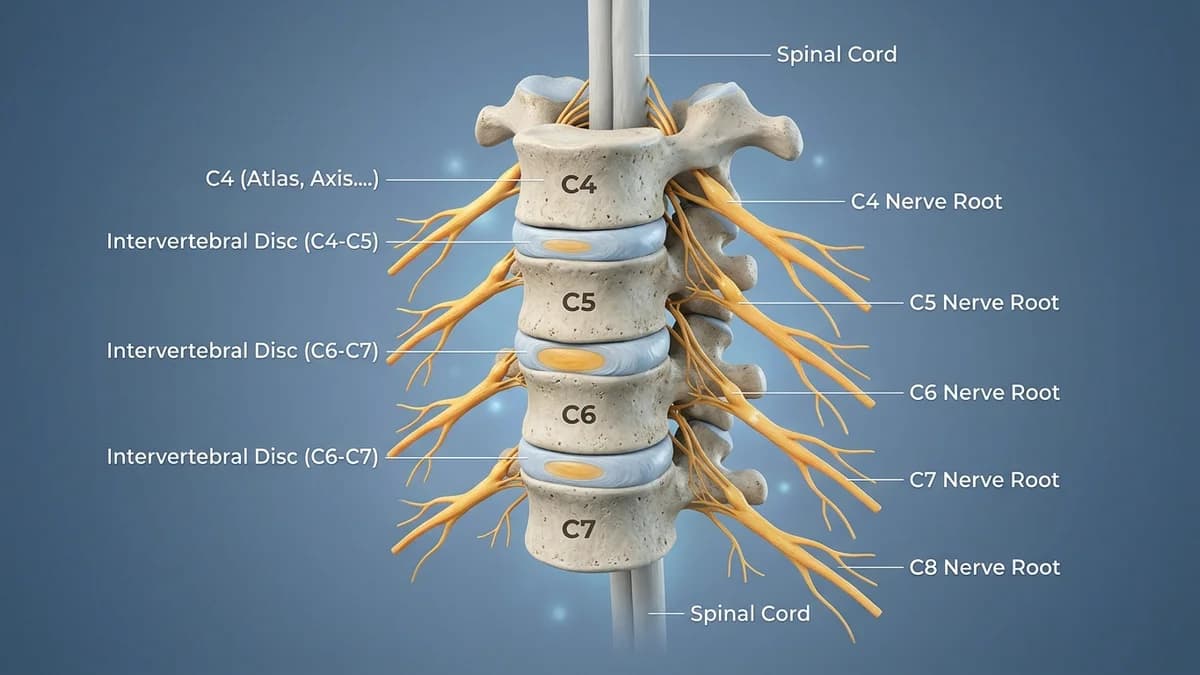
This violent kinematic forces facet joint capsules past physiological limits (causing intra-articular hemarthrosis), tears anterior longitudinal ligaments, compresses suboccipital nerve roots, and stretches the brachial plexus trunks. While WAD Grade 1 and 2 injuries often recover within 2 to 3 months, up to 30% to 50% of individuals transition into severe chronic WAD. Michele Sterling and colleagues proved that chronic WAD is characterized by widespread central sensitization, profound motor control deficits of the deep neck flexors, and a pathognomonic sensory biomarker: systemic cold hyperalgesia.
The Quebec Task Force WAD Classification and Sensory Staging
| WAD Clinical Grade | Physical Examination & Objective Signs | Pathophysiological Profile | Rehabilitation & Prognostic Stratification | |
|---|---|---|---|---|
| WAD Grade 0 | Zero neck pain complaint; zero physical stiffness or clinical signs | Normal anatomical alignment; no tissue disruption | Reassurance; no physiotherapy intervention required | |
| WAD Grade 1 | Neck pain, stiffness, or tenderness only; zero objective physical signs | Microscopic muscle strain; normal range of motion & reflexes | Early active mobilization; reassurance of excellent rapid recovery | |
| WAD Grade 2 | Neck pain PLUS objective musculoskeletal signs (decreased ROM, point tenderness) | Facet joint capsule strain, paraspinal spasm, loss of deep neck control | Active mobilization, deep neck flexor retraining, thoracic mobility | |
| WAD Grade 3 | Neck pain PLUS objective neurological signs (decreased reflexes, weakness, sensory loss) | Cervical radiculopathy or brachial plexus traction injury | Gentle neurodynamic sliders; cervical traction; avoid heavy manipulation | |
| Cold Hyperalgesia Biomarker | Ice cube test (water-filled test tube at 10-15 deg C) held against neck/arm | Pain evoked at > 15 to 20 deg C; intense burning / electric sensation | POOR PROGNOSIS MARKER: Indicates established central sensitization |
Standardized Clinical Rehabilitation Protocols and Neurodynamic Sliders
- The Ice-Cube Cold Hyperalgesia Prognostic Screen: Screen for cold hyperalgesia in acute/subacute WAD by touching a cold metal object (12 to 15 degrees Celsius) to the neck and forearm; patients who report intense, burning, or aching pain from mild cold have profound central sensitization, predicting a 90% risk of poor long-term recovery unless managed with pain neuroscience and gentle pacing.
- Gentle Median Nerve Neurodynamic Sliders (Not Tensioners): Execute gentle upper limb neural sliding (flossing); the brachial plexus is frequently tractioned during whiplash collisions; tensioning stretches sensitized nerve trunks, triggering severe flares; sliding flosser movements restore axoplasmic flow without mechanical strain.
- Early Active Movement and Avoidance of Soft Cervical Collars: Completely prohibit soft foam neck collars; clinical trials prove that immobilizing the neck in a collar doubles long-term disability rates and weakens neck stabilizers; prescribe early gentle active rotation and chin tucks within pain-free boundaries.
Frequently Asked Questions
Why does my neck hurt worse in cold weather or when touching cold objects after a car accident?
This is a recognized clinical sign called cold hyperalgesia. In whiplash injuries where the nervous system has become hypersensitive, the nerve fibers that sense cold get cross-wired with pain pathways in your spinal cord. A cool breeze or ice cube feels like a hot, burning electric shock.
Why shouldn't I wear a soft foam neck collar after a whiplash collision?
Wearing a soft neck collar was common in the past, but modern medical trials show that wearing a collar actually delays healing and makes pain worse! Collars cause your neck muscles to weaken and freeze joint movement. Starting gentle active neck exercises right away gives the fastest, most complete recovery.
How does deep neck muscle training fix my neck stiffness?
During a whiplash collision, the deep supporting muscles right against your spine bones (the deep neck flexors) go into shock and stop firing. Your large outer neck muscles try to compensate by clenching tight, causing stiff knots. Specialized gentle chin-nodding exercises wake up the deep stabilizers, allowing your outer neck muscles to finally relax.
Related condition guides

Related recovery guides & articles
BookPhysio.in Editorial Team
The BookPhysio.in editorial team writes and maintains this content, checking it against reliable clinical sources. Content follows our medical review policy: general information only, and no page claims a clinical review until a named registered physiotherapist has signed it off.
Read our medical review policy