
Heart Failure (HFrEF vs HFpEF): Exercise Training, Safety Rules and Red Flag Monitoring
In short
Exercise is safe and effective in stable heart failure, improving peak VO2 and reducing hospital admissions. Learn HFrEF vs HFpEF exercise prescription and daily red flags.

In this guide (5 sections)
Understanding HFrEF and HFpEF Pathophysiology
Heart failure is a complex clinical syndrome resulting from structural or functional cardiac disorders that impair ventricular filling or blood ejection.
Historically, heart failure was viewed as a contraindication to physical exertion. Landmark clinical trials (HF-ACTION) have fundamentally reversed this dogma: exercise training is a Class 1A recommendation in stable heart failure.
Heart failure is classified into two primary phenotypes: Heart Failure with Reduced Ejection Fraction (HFrEF; left ventricular ejection fraction <= 40%) driven by systolic myocardial loss, and Heart Failure with Preserved Ejection Fraction (HFpEF; LVEF >= 50%) driven by diastolic myocardial stiffness, common in hypertensive, diabetic older adults.
NYHA Functional Classification and Clinical Stratification
The New York Heart Association (NYHA) functional classification grades symptom severity and determines exercise tolerance.
| NYHA Class | Clinical Presentation | Functional Exercise Capacity | Permissible Rehabilitation Focus | |
|---|---|---|---|---|
| Class I | No limitation of physical activity | Ordinary physical activity does not cause fatigue or dyspnea | Full aerobic training; moderate resistance training (60-70% 1RM). | |
| Class II | Slight limitation of physical activity | Comfortable at rest; ordinary activity causes fatigue or palpitations | Continuous aerobic walking, cycling; light resistance bands. | |
| Class III | Marked limitation of physical activity | Comfortable at rest; less than ordinary activity causes symptoms | Short interval walking (2-3 min intervals); seated calisthenics. | |
| Class IV | Unable to carry on any activity without discomfort | Symptoms of cardiac insufficiency present even at rest | In-bed gentle passive/active-assisted range of motion; no active training. |
Exercise Prescription and High-Intensity Interval Training (HIIT)
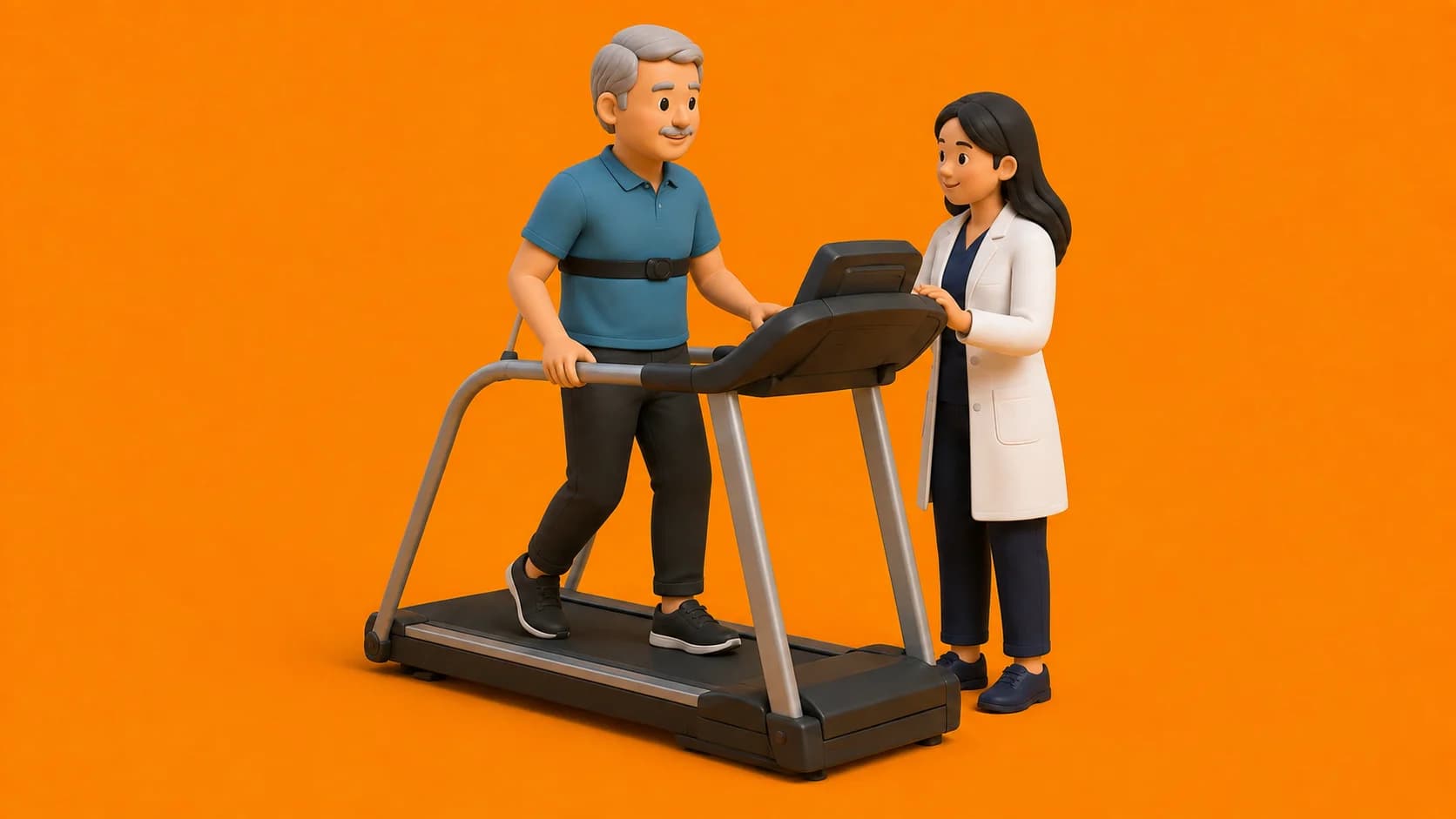
In stable NYHA Class II and III patients, Moderate-Intensity Continuous Training (MICT) or clinical interval training increases peak oxygen consumption (peak VO2), reverses skeletal muscle myopathy, and improves endothelial vasodilation.
- Aerobic Training Parameters: Prescribe 20 to 30 minutes of stationary cycling or walking at 50 to 70 percent of peak VO2 or RPE 11 to 13 on the Borg 6-20 scale.
- Low-Load Resistance Training: Target major peripheral muscle groups with 1 set of 10 to 12 reps at 40 percent 1RM to build peripheral muscle endurance without taxing cardiac output.
- Inspiratory Muscle Training Co-therapy: Combine aerobic exercise with threshold IMT at 30 percent PImax to alleviate chronic diaphragmatic ischemia.
- Prolonged Warm-Up and Cool-Down: Incorporate a minimum of 10 minutes of low-intensity warm-up and cool-down to prevent post-exercise venous pooling and sudden hypotension.
The Daily Weight Rule and Clinical Red Flags
A critical requirement for safe home rehabilitation is daily morning weight tracking after voiding. A sudden weight gain of > 1.5 to 2.0 kg over 48 hours indicates acute fluid retention and impending pulmonary edema.
Exercise must be deferred and the cardiologist contacted if the patient develops worsening bilateral ankle pitting edema, orthopnea (needing extra pillows to sleep), paroxysmal nocturnal dyspnea, or resting pulse > 100 bpm.
Frequently Asked Questions
Can exercise improve ejection fraction in HFrEF?
Exercise produces modest improvements in LVEF (typically 2 to 5 percent), but its primary benefit occurs in peripheral skeletal muscle and vascular beds: improving mitochondrial density, capillary perfusion, and reducing vascular resistance.
Is it normal to feel tired after exercise with heart failure?
Mild fatigue resolving within 1 to 2 hours is normal. Prolonged exhaustion lasting into the next day indicates that exercise volume or intensity was too high and must be adjusted down.
Can patients with an Implantable Cardioverter Defibrillator (ICD) exercise?
Yes. Patients with ICDs can exercise safely, provided the maximum exercise heart rate is kept at least 15 to 20 beats below the programmed tachycardia detection/shock threshold.
Related condition guides

Related recovery guides & articles
BookPhysio.in Editorial Team
The BookPhysio.in editorial team writes and maintains this content, checking it against reliable clinical sources. Content follows our medical review policy: general information only, and no page claims a clinical review until a named registered physiotherapist has signed it off.
Read our medical review policy