
Transitioning from Hospital Physiotherapist to Independent Home Practice in India
In short
Step-by-step career guide for Indian BPT and MPT physiotherapists transitioning from hospital shifts to independent home visit practices with zero commission.
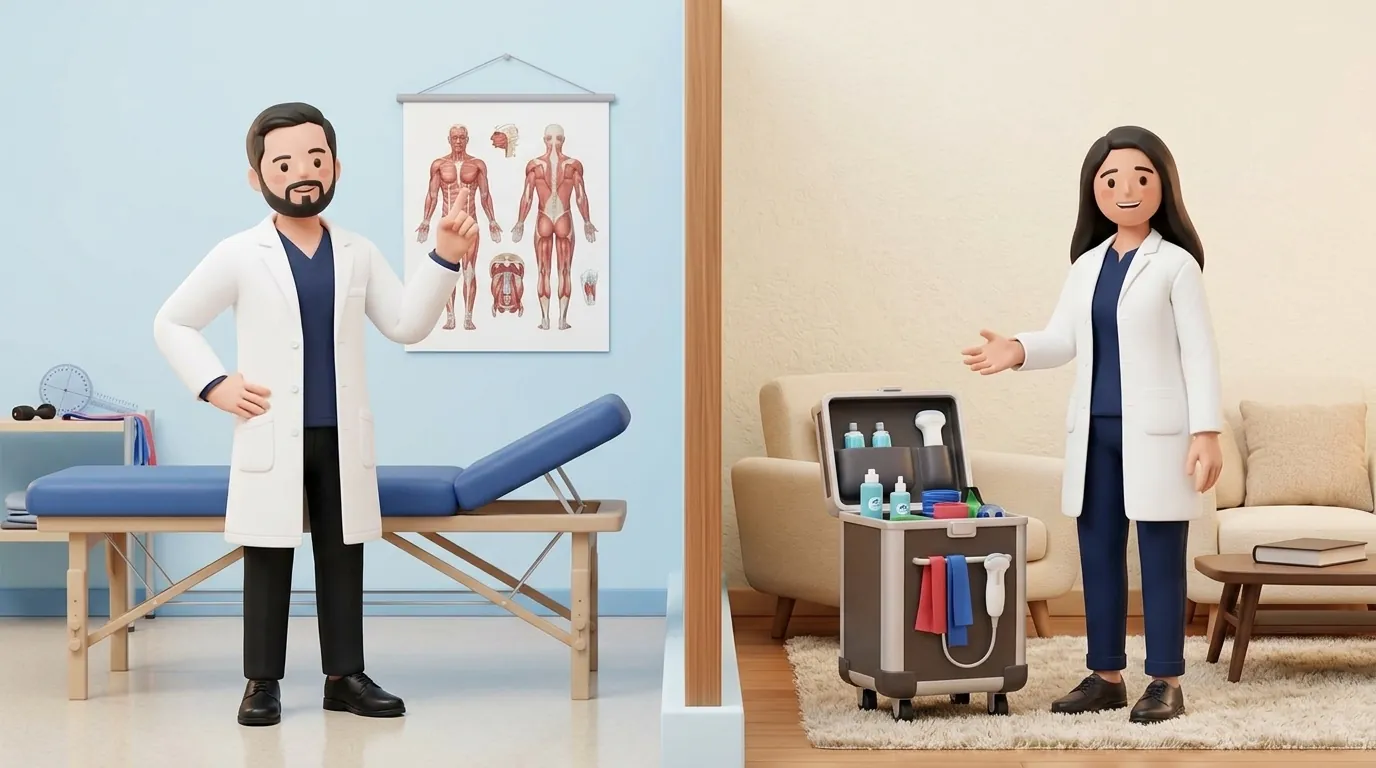
In this guide (4 sections)
Many qualified physiotherapists in India start their careers as staff clinicians in private hospitals, nursing homes, or high-volume outpatient clinics. While these environments provide valuable clinical exposure, clinicians frequently encounter long working hours, modest compensation, and limited decision-making autonomy.
The Clinical Workload Disconnect in Institutional Employment
In many corporate and multi-specialty hospitals, staff physiotherapists are assigned 15 to 25 patients during an 8-hour shift. This rapid rotation leaves barely 15 to 20 minutes per patient, restricting care to passive modalities like hot packs and unattended traction rather than individualized manual therapy and corrective exercise.
| Career Dimension | Private Hospital Staff Role | Independent Home Visit Practice |
|---|---|---|
| Monthly Remuneration | ₹18,000 to ₹32,000 fixed monthly salary | ₹60,000 to ₹1,40,000 based on 4 to 5 daily visits |
| Time Per Patient | 15 to 25 minutes; multiple patients treated simultaneously | 45 to 60 minutes dedicated one-on-one care |
| Clinical Autonomy | Dictated by departmental hierarchies and modality quotas | Independent assessment, diagnosis, and evidence-based planning |
| Schedule Flexibility | Fixed 6-day work weeks with mandatory weekend rotations | Clinician sets exact working days, hours, and travel radius |
Step 1: Build Your Mobile Clinical Toolkit
Launching an independent domiciliary practice does not require large capital expenditure. Unlike establishing a physical clinic, a home practice requires only lightweight, high-grade diagnostic and therapeutic tools.
- Diagnostic essentials: A calibrated digital blood pressure monitor, pulse oximeter, 360-degree goniometer, reflex hammer, and sensory monofilaments.
- Therapeutic exercise gear: Loop resistance bands, progressive elastic tubing, trigger point release balls, and non-slip gait transfer belts.
- Portable electrotherapy unit: A compact, battery-operated dual-channel TENS/EMS unit for targeted pain modulation and neuromuscular re-education.
BookPhysio.in enables independent clinicians to publish their real availability, service localities, and consultation charges with ₹0 listing fee and 0% commission. Patients book directly and pay you at the session via UPI, cash, or card.
List your practice on BookPhysio.inCore Stability Exercise: Supine Diaphragmatic Core Activation
A fundamental exercise taught to post-operative and chronic spinal pain patients during home consultations is coordinated diaphragmatic breathing with transversus abdominis engagement.
Supine Diaphragmatic Core Bracing with Neutral Spine
Objective: Establish deep lumbo-pelvic stabilization and restore intra-abdominal pressure control without spinal flexion.
- 1Lie supine on a firm surface with knees bent at 90 degrees and feet flat on the floor.
- 2Place one hand on your upper chest and the other hand on your abdomen just below the rib cage.
- 3Inhale slowly through your nose for 3 seconds, feeling your abdomen rise while keeping the chest quiet.
- 4Gently exhale through pursed lips while drawing your navel softly toward your spine to engage the deep core.
- 5Hold the gentle brace for 5 seconds while continuing normal rhythmic breathing, then relax.
Frequently Asked Questions
Do I need a commercial clinic license to offer home visit physiotherapy?
No. Individual domiciliary physiotherapy does not require a physical Clinical Establishments Act facility license, provided the clinician holds statutory registration with their State Council or the Central NCAHP register.
How do I manage invoicing and receipts for home visit patients?
Use digital practice management tools to issue itemized receipts containing your statutory registration number and SAC 999312 classification. Physiotherapy healthcare services are exempt from GST under Notification No. 12/2017 Central Tax (Rate).
Related condition guides




Related recovery guides & articles
BookPhysio.in Editorial Team
The BookPhysio.in editorial team writes and maintains this content, checking it against reliable clinical sources. Content follows our medical review policy: general information only, and no page claims a clinical review until a named registered physiotherapist has signed it off.
Read our medical review policy