
Idiopathic Toe Walking in Toddlers: Calf Stretches, Sensory Checks, and Footwear Guidance
In short
Persistent toe walking in toddlers can tighten calf muscles and disrupt posture. Discover how paediatric physiotherapy restores a confident heel-to-toe gait.
In this guide (5 sections)
Idiopathic Toe Walking (ITW) is an equinus gait pattern characterized by persistent walking on the balls of the feet and toes without any demonstrable underlying neurological, orthopaedic, or sensory pathology. While intermittent toe-walking is common and completely benign when toddlers first learn to walk between 12 and 18 months, persistent toe-walking beyond the age of two years warrants clinical attention. In India, parents frequently worry whether their child's toe-walking signals cerebral palsy or autism, or whether it is simply a harmless behavioural quirk.
If left unaddressed, habitual toe walking creates a progressive biomechanical cascade. The triceps surae (gastrocnemius and soleus) and the Achilles tendon physically shorten over time, resulting in structural fixed equinus contractures. This altered gait reduces the base of support, shifts the centre of mass forward, increases knee hyperextension (genu recurvatum), and causes compensatory lumbar lordosis. Paediatric physiotherapy combines calf muscle lengthening, sensory modulation, and active gait retraining to restore natural heel strike.
1. Biomechanical vs Sensory Drivers of Toe Walking
Clinical research reveals that idiopathic toe walking typically stems from one of two primary drivers: musculoskeletal tightness or sensory processing differences. In children with musculoskeletal ITW, the Achilles tendon and calf muscles are congenitally stiff or shortened, making foot-flat standing physically uncomfortable or impossible without bending the knees.
In children with sensory-driven ITW, the child may be sensory seeking (seeking intense proprioceptive impact through the metatarsal heads) or sensory defensive (experiencing hypersensitivity to cold, slippery, or textured floor surfaces, and elevating their heels to minimize surface contact area). Understanding which driver predominates is the key to designing an effective rehabilitation programme.
| Diagnostic Parameter | Idiopathic Toe Walking (ITW) | Mild Spastic Diplegia (CP) | Autism-Associated Toe Walking |
|---|---|---|---|
| Passive Ankle Dorsiflexion | Initially full passive dorsiflexion (> 10°); tightens gradually if untreated | Severe spastic catch on rapid dorsiflexion; clonus often present (> 3 beats) | Typically full passive range of motion; tightness rare in early years |
| Heel-Strike Ability on Command | Child can stand flat-footed or walk on heels when asked to do so | Unable to achieve heel strike even with verbal prompting due to spasticity | Variable; child can walk flat when prompted, but reverts when distracted |
| Birth History & Milestones | Normal full-term birth, unremarkable motor milestones, walking by 12-15 mo | Frequently history of prematurity, low birth weight, or NICU stay; motor delay | Full-term birth; communication, social, and sensory differences present |
| Primary Physio Treatment | Calf stretching, squat play, sensory integration, supportive footwear | Spasticity reduction, botulinum toxin adjuncts, rigid AFO orthotics | Sensory modulation, deep pressure, environmental adaptations, motor games |
2. Indian Household Flooring and Baby Walker Influences
Household environments in India play an influential role in toe walking habits. Many Indian homes feature cold, hard marble, vitrified tile, or polished stone flooring. For toddlers with tactile defensiveness, the sensation of cold, hard stone against bare heels can trigger immediate heel elevation as a protective reflex.
Furthermore, the prolonged use of traditional baby walkers (ghodagadi) remains a widespread contributor. Walkers position an infant upright before their vestibular balance and core muscles are mature, forcing the infant to propel the apparatus by pushing backward off their tiptoes. This repetitive motor programming reinforces the equinus pattern. Discontinuing walkers and providing textured rugs or warm play mats helps normalize sensory input.
3. Three-Phase Active Gait and Stretching Protocol
Rehabilitation focuses on lengthening tight gastrocnemius-soleus complexes, activating anterior tibialis dorsiflexors, and integrating sensory grounding.
Three-Phase Heel-to-Toe Gait Retraining Protocol
Objective: Restore full passive ankle dorsiflexion, strengthen ankle dorsiflexors, and re-establish natural heel strike during dynamic locomotion.
- 1Phase 1 (Deep Squat Play and Prolonged Passive Calf Lengthening): Have the child play in a deep flat-footed squat position (such as playing with building blocks or coloring on the floor). Deep squatting naturally stretches the Achilles tendon under body weight while promoting ankle dorsiflexion. Pair with gentle passive calf stretches: with the child lying on their back with knees straight, cup the heel and slowly guide the foot toward the shin. Hold for 30 seconds, 3 times per leg.
- 2Phase 2 (Playful Dorsiflexor Activation and Heel Walking): Practice penguin walks: walking exclusively on the heels with toes pointed up toward the ceiling. Play squashing the bubble: place bubble wrap on the floor and encourage the child to stomp their heels down hard to pop the bubbles. This reinforces the sound and tactile sensation of heel impact.
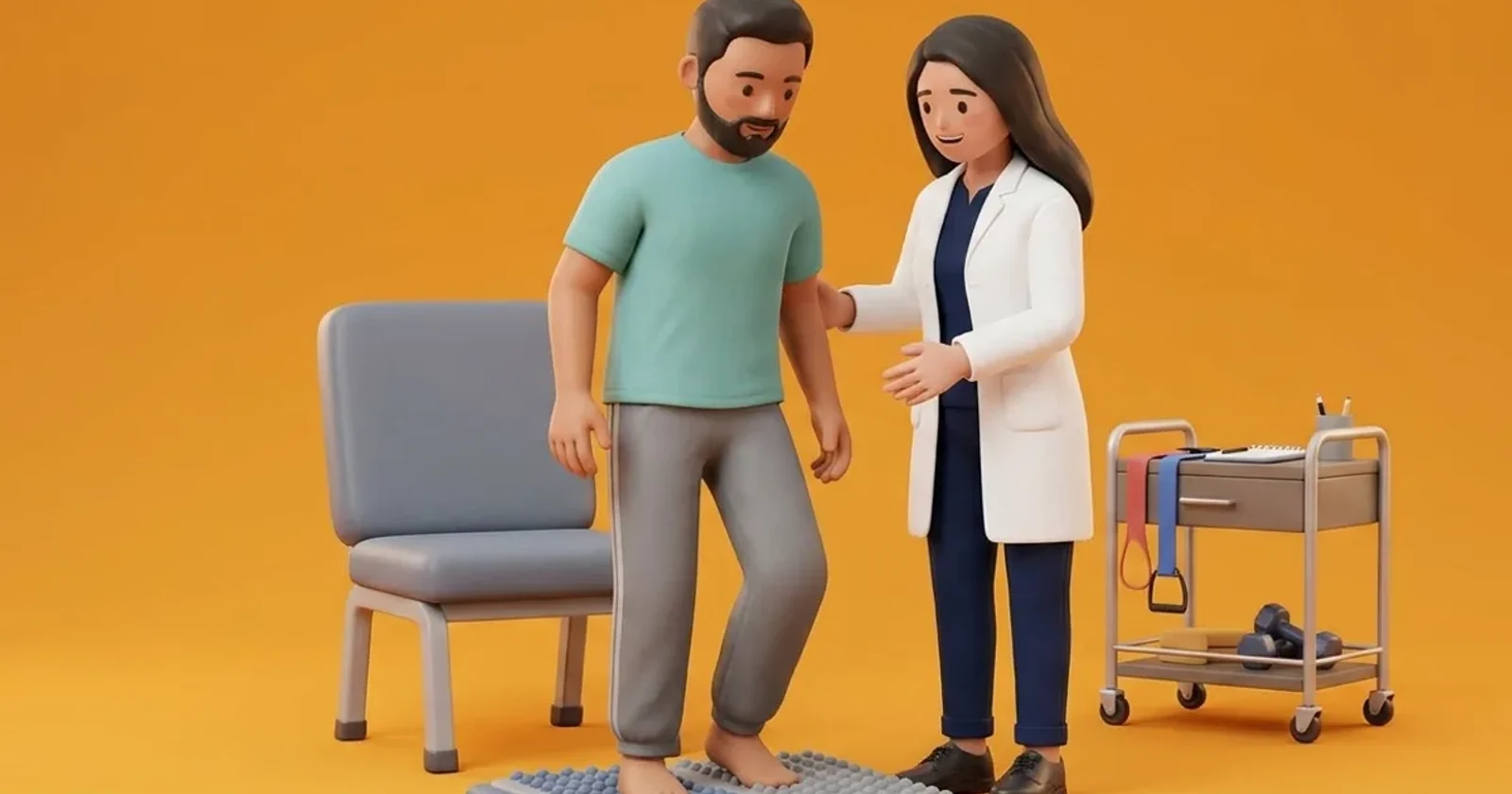
- 3Phase 3 (Incline Ramp Walking and Sensory Footpath Games): Encourage walking up inclined ramps or grassy hills, which mechanically forces the ankle into dorsiflexion. Create a tactile sensory path at home using varying safe textures (soft foam, bubble wrap, textured rubber mats, artificial grass) for the child to explore barefoot to normalize plantar sensation.
- 4Footwear Strategy: When outdoors, dress the toddler in supportive, high-top shoes with a firm heel counter and a rigid sole that resists bending at the midfoot. Rigid footwear prevents the child from easily rising onto their toes.
4. Red Flags Requiring Urgent Specialist Referral
While idiopathic toe walking is benign, clinicians must rule out serious underlying neuromuscular or spinal pathology. Red flags requiring urgent paediatric neurologist or orthopaedic evaluation include unilateral toe-walking (walking on the toes of only one foot, which is always abnormal and strongly suggests hemiplegic cerebral palsy), persistent ankle clonus (> 3 rhythmic beats), hyperactive patellar reflexes, regression in bowel or bladder continence (which suggests tethered cord syndrome), or progressive muscle weakness where the child loses the ability to jump or run.
Frequently Asked Questions
Does toe walking automatically mean my child has autism spectrum disorder?
No, definitely not. While toe walking can be seen in some children with autism due to sensory processing differences, the vast majority of children who toe-walk have Idiopathic Toe Walking and are neurotypical. Toe walking alone, in the absence of social, speech, and communication challenges, is not a diagnostic indicator of autism.
Can toe walking damage my toddler's feet and legs permanently?
If persistent toe walking is left untreated for years, the Achilles tendon and calf muscles physically adapt to the shortened position, creating fixed structural contractures. This leads to rigid flatfoot deformities, persistent knee hyperextension, frequent tripping, and foot pain in later childhood. Early conservative physiotherapy prevents permanent structural changes.
What kind of shoes are best for a toddler who walks on their toes?
Look for supportive shoes with a firm heel counter (the back of the shoe should be stiff when squeezed), a slightly stiff sole that does not bend easily in the middle, and high-top ankle support. Avoid flexible barefoot-style shoes, flimsy foam slip-ons, or flip-flops, which allow the child to rise effortlessly onto their tiptoes.
When is night splinting or serial casting considered for toe walking?
If a child has developed fixed contractures where passive ankle dorsiflexion is restricted past 90 degrees, a paediatric physiotherapist and orthopaedic team may recommend serial casting (a series of below-knee casts changed weekly to gently stretch the calves) or night-time Ankle-Foot Orthoses (AFOs) to restore tendon length without surgery.
How do I arrange a home paediatric physiotherapy assessment through BookPhysio.in?
BookPhysio.in connects parents with verified paediatric physiotherapists who evaluate your toddler's gait, joint angles, and sensory habits at home (₹600 to ₹2,000) or in private clinics (₹400 to ₹1,500). Parents pay their treating physiotherapist directly with zero platform commission.
Related condition guides


BookPhysio.in Editorial Team
The BookPhysio.in editorial team writes and maintains this content, checking it against reliable clinical sources. Content follows our medical review policy: general information only, and no page claims a clinical review until a named registered physiotherapist has signed it off.
Read our medical review policy