
Palliative Oncology Mobility: Bed Mobility, Dignified Transfers, and Caregiver Ergonomics
In short
Palliative physiotherapy preserves patient comfort and dignity during advanced disease through gentle bed positioning, slide sheet transfers, and caregiver injury prevention.
In this guide (4 sections)
The Transition from Curative Rehabilitation to Palliative Comfort Care
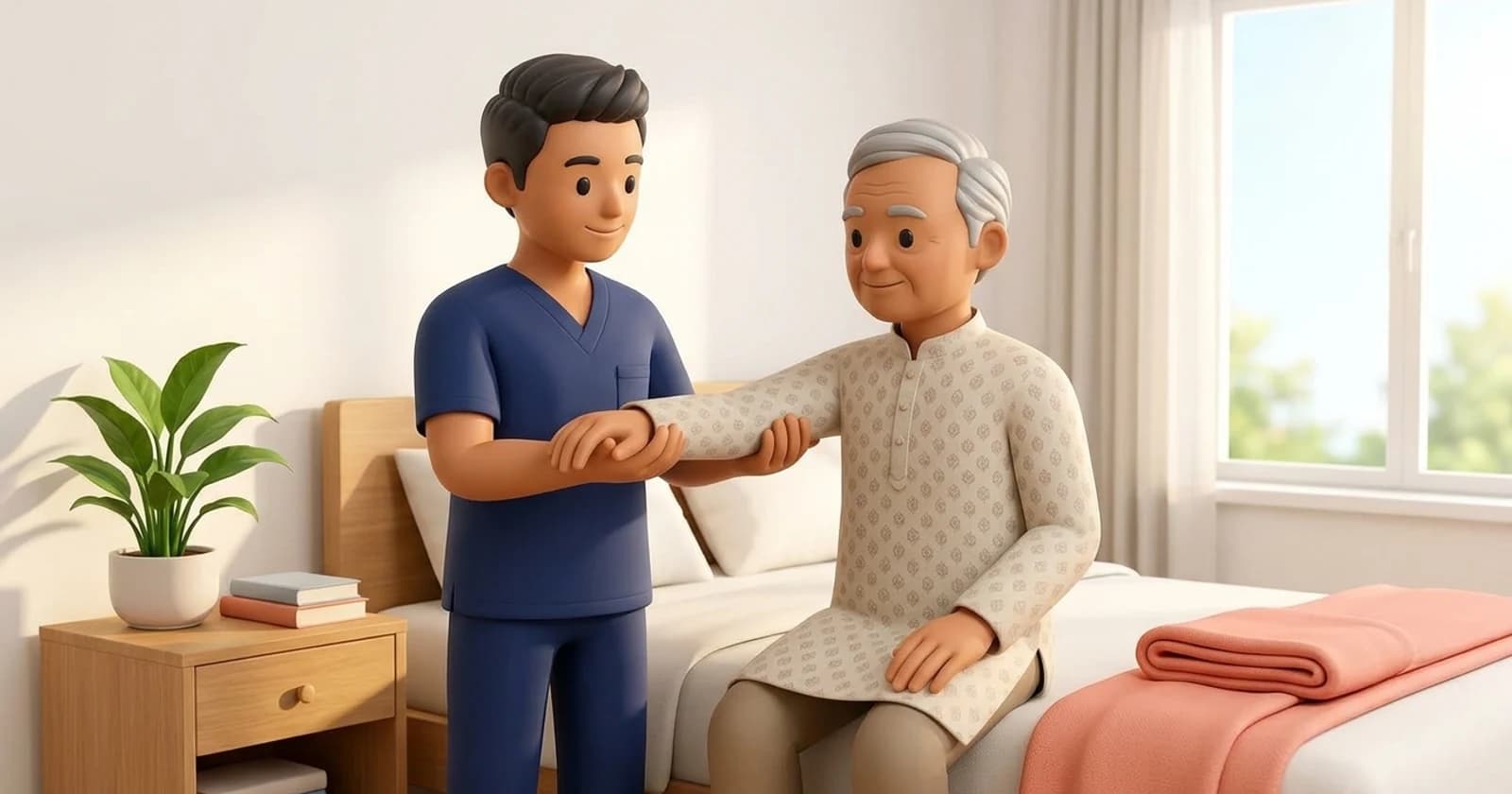
In advanced metastatic oncology and end-stage disease, the therapeutic goal of physiotherapy pivots from restorative functional recovery to palliative comfort, symptom management, and preservation of personal dignity. Patients face progressive multiorgan failure, severe refractory cachexia, bone metastases, malignant fatigue, and severe generalized weakness. In this phase, forced intensive exercise is inappropriate and distressing; instead, physiotherapy focuses on facilitating painless movement, comfortable bed positioning, and enabling meaningful social participation (such as sitting in a chair with family).
A critical clinical priority is supporting family and hospice caregivers. As the patient becomes progressively bedridden, family members frequently suffer acute lumbar disc herniations, rotator cuff tears, and severe physical burnout from manually lifting and repositioning their loved one. Integrating low-friction assistive transfer devices, mechanical ceiling or floor lifts, and ergonomic principles transforms caregiving into a safe, sustainable, and gentle process.
Standardized Clinical Outcome Measures: PPS and Caregiver Strain
| PPS Level Percentage | Ambulation & Functional Status | Caregiver Assistance Level | Physiotherapy Mobility & Equipment Strategy | |
|---|---|---|---|---|
| PPS 70% to 80% | Full ambulation or reduced; moderate disease evidence | Normal self-care or minimal assistance required | Rolling walker; energy conservation; fall prevention pacing | |
| PPS 50% to 60% | Mainly sit/lie; unable to perform most chores / work | Requires moderate to extensive assistance with self-care | Elevated toilet seat; transfer commode; manual wheelchair | |
| PPS 30% to 40% | Mainly bedridden; severe disease; unable to do self-care | Total assistance required for all transfers and hygiene | LOW-FRICTION SLIDE SHEETS; stand-assist hoist; pressure relief mattress | |
| PPS 10% to 20% | Totally bedridden; unable to take oral feeds; somnolent | Total nursing assistance required around the clock | Strict comfort positioning; 2-hour gentle turning; contracture cushions | |
| Zarit Burden Interview (ZBI) | Caregiver strain and burnout assessment questionnaire (0 to 88) | Score > 21 indicates significant caregiver emotional/physical strain | Caregiver ergonomic transfer training; introduce mechanical hoists |
Standardized Clinical Rehabilitation Protocols and Ergonomic Techniques
- Low-Friction Tubular Slide Sheets for Effortless Bed Repositioning: Train caregivers to use double-layered tubular nylon slide sheets; slide sheets reduce frictional shear forces by over 80%, allowing a single caregiver to boost a bedridden patient up in bed or turn them into side-lying without bending their back or pulling the patient's fragile skin.
- The Golden Rules of Caregiver Back Ergonomics: Instruct caregivers to adjust the hospital bed height to their hip level before initiating any turn; maintain a wide base of support, keep elbows bent close to the torso, and shift body weight through the legs rather than bending or twisting at the lumbar spine.
- Proactive 30-Degree Tilt-Turn Pressure Injury Prevention: Reposition bedridden patients every 2 hours using a 30-degree tilted side-lying posture supported by high-density wedge pillows; avoid full 90-degree lateral side-lying, which concentrates dangerous pressure directly over the bony greater trochanter and lateral malleolus.
Frequently Asked Questions
How can family members turn a bedridden patient without hurting their own backs?
Never lift with your arms and back. Use a silky, low-friction slide sheet placed under the patient. Slide sheets let the patient glide smoothly across the bed with a gentle push of your body weight through your legs, completely eliminating the strain of heavy lifting.
Why is raising the hospital bed height so important during caregiving?
Bending over a low bed forces your lower back into a dangerous hunched posture that easily causes slipped spinal discs. Raising the bed so the mattress is level with the caregiver's hips allows you to stand upright with a straight back while helping your loved one.
What is the 30-degree tilt position for preventing bedsores?
Instead of rolling a person all the way onto their side (which crushes their hip bone), tuck a soft foam wedge under their back so they are tilted just 30 degrees. This distributes body weight comfortably across soft tissue, keeping bones safe from pressure sores.
Related condition guides


Related recovery guides & articles
BookPhysio.in Editorial Team
The BookPhysio.in editorial team writes and maintains this content, checking it against reliable clinical sources. Content follows our medical review policy: general information only, and no page claims a clinical review until a named registered physiotherapist has signed it off.
Read our medical review policy